

What if the biggest gap in your home insurance isn’t a lack of coverage, but an assumption about what your policy includes? Common exclusions or limitations can involve gradual damage, maintenance issues, certain types of water damage, and specific property or home-use situations. The answer to what is not covered by homeowner's insurance in Canada depends on the cause of the damage, your policy wording, and any endorsements you’ve added.
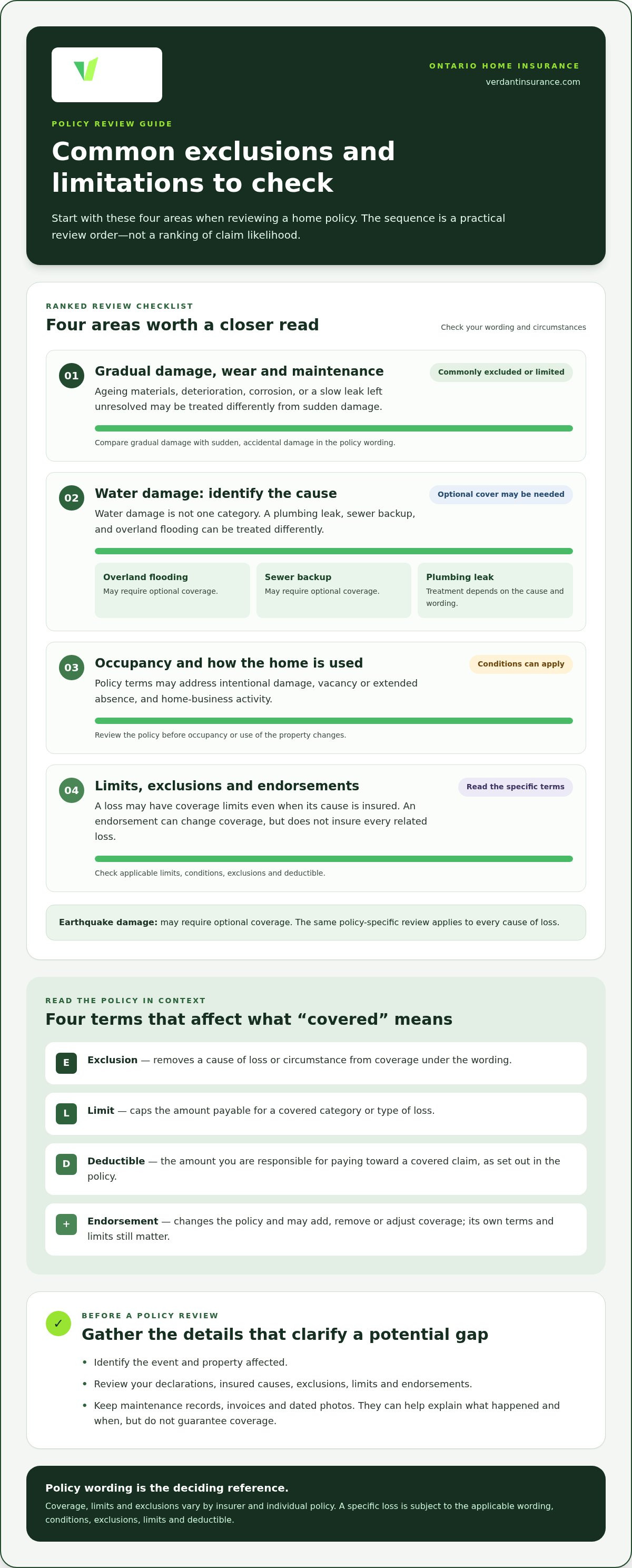
In Ontario, overland flooding, sewer backup, and earthquake damage may require optional coverage, while gradual damage and maintenance issues are commonly excluded. These are general patterns, not universal rules. Coverage, limits, and exclusions vary by insurer and individual policy. Even losses that seem similar may be treated differently under the wording.
This guide explains common exclusions and limitations, shows how to review your policy, and highlights practical details to look for, including differences between types of water damage. Use it to prepare focused questions for a policy review before a loss occurs.
Key Takeaways
- Understanding what is not covered by homeowner's insurance in Canada starts with your own policy, since exclusions can differ by insurer and policy form.
- Review how your policy treats gradual damage, wear and tear, and unresolved maintenance issues to spot potential gaps.
- Water damage isn’t one category: outside flooding, sewer backup, and a plumbing leak may be treated differently.
- Check your declarations, insured causes, exclusions, coverage limits, and endorsements. A limit can restrict payment even when the cause is insured.
- Gather details about your home and questions before reviewing coverage with an Ontario insurance broker.
What Is Not Covered by Homeowner’s Insurance in Canada?
Home insurance policies commonly exclude or limit certain causes of damage, types of property, and circumstances. There isn’t one exclusion list that applies to every Ontario homeowner. Insurers use different policy forms, and policies with similar names can differ in what they cover, the limits they set, and the conditions that apply.
That means the answer to what is not covered by homeowner's insurance in Canada depends on the policy in force when a loss occurs. A broad-sounding label such as “comprehensive” isn’t a substitute for reading the contract. In general, comprehensive coverage responds to losses unless they’re excluded, while a named-perils policy covers specified causes of loss. The details depend on the insurer’s wording.
Wikipedia offers a general overview of exclusions in Canadian home insurance policies. Treat it as background, not as a guide to whether a specific claim is covered. Your policy wording, declarations, limits, and conditions determine the terms that apply to your home.
Why there is no single national list of exclusions
Homeowners buy policies issued by insurers, rather than relying on one standard national contract. Policy forms and wording vary between insurers and may also differ based on the coverage selected. An exclusion in one policy shouldn’t automatically be treated as universal. Check your own documents to understand which causes are insured and what conditions or limits apply.
For example, two policyholders might both describe their coverage as comprehensive but have different endorsements or limits. Their coverage for a particular event or category of property may therefore differ. A general list can help you know what to look for, but it can’t replace the policy’s actual terms.
What “not covered” can mean in a policy
“Not covered” can refer to several different policy features. An exclusion removes a cause of loss or circumstance from coverage under the wording. A limit caps the amount payable for a covered category or type of loss. A deductible is the amount you’re responsible for paying toward a covered claim, as set out in the policy. These terms affect a claim in different ways.
An endorsement changes the policy and may add, remove, or adjust coverage. For instance, an endorsement may address a specific type of loss that the base policy treats differently. Read its terms, limits, and conditions carefully. An endorsement doesn’t mean every related loss is insured.
The policy wording determines whether a specific loss is covered, and any payment is subject to the policy’s applicable limits, exclusions, conditions, and deductible. When reviewing a potential gap, identify the event, the property affected, and the relevant policy section. This is a more useful starting point than relying on a broad label or another homeowner’s experience.
Common Homeowner’s Insurance Exclusions Ontario Homeowners Should Know
Questions about what is not covered by homeowner's insurance in Canada often come up when damage develops gradually or when a home is used in a way the policy wasn’t designed to cover. These are common areas to review, not automatic exclusions in every Ontario policy. The exact treatment depends on the insurer’s wording, applicable conditions, and your circumstances.
Wear, tear, maintenance, and gradual damage
Home insurance is generally intended to respond to insured losses, not to act as a maintenance plan. Policy wording may exclude or limit damage linked to wear and tear, deterioration, corrosion, or a maintenance issue that worsens over time. For example, ageing materials or a slow leak left unresolved may be treated differently from a sudden event. The distinction doesn’t decide a claim by itself; the full circumstances and policy terms matter.
Gradual damage and sudden, accidental damage may be treated differently, subject to the policy wording and the facts of the loss. If you notice a problem, keep a record of what you observed and the steps taken to address it. Review the policy’s exclusions alongside its duties and claim conditions. Don’t assume damage is covered simply because you discovered it unexpectedly.
Maintenance records, invoices, and dated photos can help you keep a clear history of repairs and changes to the property. They don’t guarantee coverage, but they may help explain what happened and when if you report a loss.
Intentional acts, vacancy, and home-business activity
Coverage can also depend on the circumstances surrounding the home and its use. Policy wording may address intentional damage, whether the property is occupied, and activities carried out from the home. These details can affect how a loss is assessed, and requirements vary. Don’t assume the home remains insured on the same terms if its occupancy or use changes.
- Intentional damage: Policy terms may treat deliberate acts differently from accidental events. The person involved and the circumstances may matter.
- Vacancy or extended absence: The policy may set conditions for an unoccupied or vacant home. Read the wording for any notice or precautions that apply.
- Home-business activity: Business equipment, visitors, and liability exposures may not be treated like ordinary household use. A personal home policy may have relevant limits or exclusions.
If you’re starting a business at home, planning an extended absence, or changing how the property is used, review the relevant policy wording before relying on assumptions. Verdant Insurance is an Ontario brokerage that helps homeowners review home insurance options through partner insurers. You can also explore Ontario home insurance options.
Water, Flood, and Earthquake Damage: What May Be Excluded or Limited?
Water damage isn’t one single cause of loss. Water flowing into a home over land, water backing up through a drain, and water escaping from a pipe are different scenarios. A policy may treat each differently, so the source of the water and the wording matter when assessing potential coverage.
For Ontario homeowners, coverage for overland water, sewer backup, and earthquake damage depends on the policy wording and any applicable endorsement. Some policies exclude or limit these losses unless additional coverage is included. Don’t assume an event is covered or excluded based only on a general description of home insurance.
Overland water and sewer backup are not the same event
Overland water generally refers to surface water flowing over land and entering the home, such as water from heavy rain or an overflowing river. Sewer backup is water or sewage that enters through a drain or sewer system. Water escaping from plumbing describes a source inside the home, such as a leaking or burst pipe. The insurer’s definitions and policy terms determine how each event is treated.
| Event | Possible policy treatment | Wording or endorsement to review |
|---|---|---|
| Surface water enters from outside | May be excluded from base coverage or addressed through optional coverage. | Definitions and exclusions for overland water or flood, plus any related endorsement and limits. |
| Water backs up through a drain | May be excluded or require specific coverage, depending on the policy. | Sewer backup wording, applicable limits, conditions, and deductible. |
| Water escapes from plumbing | A sudden escape may be treated differently from gradual leakage. Coverage depends on the circumstances and wording. | Water escape provisions, exclusions, duties, and claim conditions. |
| Earthquake causes damage | May require a policy provision or optional endorsement. | Earthquake coverage, covered causes, deductible, and any sublimits. |
This table is educational only. It can’t determine whether a specific claim is covered. The insurer assesses the loss under the applicable policy wording and circumstances.
Earthquake and other large-scale damage
Earthquake damage may be excluded from base coverage or addressed by a separate provision or endorsement. Check how the policy defines earthquake and which resulting damage it covers. Look for a separate deductible or sublimit too, since either can affect the amount payable even if the cause of loss is insured. Terms vary by insurer and individual circumstances, so review the current wording for your Ontario property rather than relying on a general rule.
To compare the details in your documents, note the event you’re concerned about, the relevant wording, and any deductible or limit shown. This helps distinguish an exclusion from a limit or a change made by endorsement, and gives you a focused basis for understanding what is not covered by homeowner's insurance in Canada under your policy.
Exclusions, Coverage Limits, and Endorsements: How to Review Your Policy
A policy review is easier when you follow the documents in order. Start with the details that identify your insured home, then trace how the policy treats causes of loss, exclusions, limits, and changes made by endorsement. This helps distinguish a loss that isn’t insured from one that may be covered only up to a stated amount.
A practical five-step policy wording check
Set aside your current policy documents, including the declarations page and any endorsements. Use this sequence to identify areas that may need clarification:
- Read the declarations. Confirm the insured property, coverage amounts, and deductibles shown. Check that the information reflects your home and the coverage you intended to arrange.
- Find the insured causes of loss. See whether the policy lists specific insured events or uses broader coverage subject to exclusions. Locate the wording relevant to the type of loss you want to understand.
- Review the exclusions. Look for terms that remove or restrict coverage, and read related conditions. A heading alone may not explain how the wording applies to a particular situation.
- Check limits and sublimits. A cause of loss can be insured while payment for a particular category of property or loss is capped. For example, a special limit may apply to a category of belongings, so compare the stated amount with what you own.
- Review endorsements. Note each policy change and the coverage, limits, exclusions, or conditions it adds or adjusts. Record unclear terms to discuss with a qualified Ontario insurance professional.
Keep a copy of each renewal and compare the wording, not just the summary page. Coverage terms, limits, deductibles, and endorsements may change between policy periods. If you’re weighing price alongside protection, remember that the premium alone doesn’t describe what a policy covers. Verdant’s guide to the average cost of home insurance in Ontario offers additional context, while your own policy documents show the terms that apply to your home.
When an endorsement or coverage change may be worth discussing
If you’re concerned about water damage or earthquake loss, check whether your policy addresses those risks and what limits, deductibles, and conditions apply. An endorsement may add or adjust protection, but it can also change the premium and other policy terms. Options and eligibility vary by insurer, property, and individual circumstances, so review the actual wording before deciding whether a change suits your needs.
Understanding what is not covered by homeowner's insurance in Canada starts with your own contract, not a general checklist. Verdant Insurance is an Ontario insurance brokerage that can explain policy options from partner insurers and compare relevant wording. Coverage remains subject to the insurer’s terms and your individual circumstances.
Learn more about home insurance options for Ontario homeowners.
What Ontario Homeowners Can Do About Potential Coverage Gaps
A coverage review is more useful when you bring clear information about your home and how it’s used. Gather your current policy, note any changes since it began, and write down the situations you want to understand. This preparation makes it easier to discuss potential gaps without relying on memory or assumptions.
Prepare for a useful home insurance review
Start with the policy documents, then add details that help explain your circumstances. Photos, receipts, and maintenance records can help you track renovations, repairs, and valuable belongings. They don’t determine coverage, but they can make your questions more specific.
- Collect your current policy, declarations, renewal documents, and endorsements.
- Record changes to the home, such as renovations, additions, or updates to major systems.
- Make a list of concerns about water damage, extended absences, valuables, or home-business use.
- Note maintenance or repairs that may be relevant to the condition of the property.
- Mark unclear wording and ask how the relevant exclusions, limits, deductibles, and endorsements apply to your situation.
Be specific about what you’re trying to protect. For example, if you’re concerned about a valuable item, ask whether a category limit applies and how the policy defines that property. If you’ll be away from home or changing how you use part of it, note that too. The aim is to understand which policy terms are relevant, not to assume a general description settles what is not covered by homeowner's insurance in Canada.
Understand how Verdant can help Ontario homeowners
Verdant Insurance is an Ontario insurance brokerage, not an insurance company. It connects homeowners with partner insurers and provides online policy support. A broker can help explain relevant wording and compare available options, while the insurer’s policy terms, limits, exclusions, and conditions determine the coverage that applies. Options and eligibility vary by insurer and individual circumstances.
If you’re new to working with a broker, Verdant’s guide to choosing an online insurance broker explains the broker’s role and what to expect from the process. Bring prepared questions to a coverage discussion so you can focus on the issues that matter to your home.
Explore homeowner’s insurance options with Verdant.
Make Your Next Policy Review More Intentional
Make insurance part of your regular home-planning routine, especially when your circumstances change or your policy comes up for renewal. Keep a short record of questions as they arise instead of waiting until you need to make a claim. This can help you have a focused conversation and understand how your current wording relates to what is not covered by homeowner's insurance in Canada.
Coverage decisions are personal. What matters is whether the policy’s terms, limits, and conditions fit your home and situation, not simply whether a particular type of coverage appears on a checklist. If a clause is unclear, ask for an explanation before relying on an assumption. Actual coverage remains subject to the insurer’s policy wording and your individual circumstances.
A clearer understanding of your policy can help you make a more informed decision. Review Ontario home insurance options with Verdant, an Ontario brokerage serving homeowners through partner insurers.
Frequently Asked Questions
Does homeowner’s insurance in Ontario cover water damage?
Sometimes, but coverage depends on how the water entered, your policy wording, and any applicable endorsements or limits. A dishwasher hose that suddenly releases water, a drain backup, and rainwater entering from outside may be assessed under different provisions. Note where the water first appeared and what caused it, then review the relevant policy terms and follow the insurer’s claim-reporting instructions if you’re reporting a loss.
Is flooding covered by homeowner’s insurance in Canada?
It depends on what “flooding” means in the situation and what your policy includes. Surface water entering a basement and water backing up through a floor drain may fall under different wording. Check how your policy defines each event, along with related deductibles and limits. The phrase what is not covered by homeowner's insurance in Canada has no single answer for every policy or flood scenario.
Does homeowner’s insurance cover mould in Ontario?
It may, depending on what caused the mould and how the damage developed. Mould found after a covered sudden event may be considered differently from mould linked to ongoing moisture, but the policy wording and facts control. Keep photos, repair records, and notes about when the problem appeared. If you’re dealing with mould, report the circumstances through the insurer’s stated process and review which policy terms apply.
Are home renovations covered by homeowner’s insurance?
Not automatically in every circumstance. A renovation can change the home’s value, layout, materials, or occupancy while work is underway. Before a major project, share the planned work and relevant changes with your broker or insurer, and keep copies of contracts and receipts. Review how the policy addresses the property during construction and whether any project-related conditions apply. The answer depends on the policy and the details of the work.
Are jewellery and other valuables fully covered by homeowner’s insurance?
Not necessarily. A policy may treat jewellery, collections, or other high-value belongings differently from everyday contents. Make an inventory with descriptions, photographs, and available proof of ownership, then compare it with the personal property wording and any category limits. If the stated terms may not reflect the value or type of items you own, discuss possible options with your broker before a loss occurs.
What should I do if I think my home insurance claim may be excluded?
Don’t decide that a claim is excluded based only on a general article or a policy heading. Preserve relevant records, document the damage, and follow the insurer’s claim-reporting instructions. Read the definitions, exclusions, limits, deductibles, and claim conditions that relate to the event. The insurer assesses the specific facts against the policy. A broker can help explain the wording, but the insurer determines how it applies to a claim.


