

What if a telematics program could recognize careful driving, but also affect your premium based on your habits behind the wheel? For drivers considering usage based car insurance Ontario, the data collected and the program’s rules matter as much as the possibility of a discount.
Before enrolling, find out what the app or in-car device records, how the insurer assesses that information, and whether the result could affect your price. Programs may collect details such as distance driven, trip timing, speed, braking or acceleration. Privacy terms, app permissions and data retention also deserve a close read.
This guide explains how usage-based insurance works, what information a program may collect, and which terms to review before deciding. Program features and their effect on pricing vary by insurer and individual circumstances, so compare the written terms rather than relying on a program name or advertised benefit.
Key Takeaways
- Usage based car insurance Ontario programs may assess driving behaviour, kilometres travelled, or both. Identify which approach a program uses.
- Before enrolling, review what the app or device collects, how the insurer assesses it, and how long the program runs.
- Compare eligibility, participation requirements and possible pricing effects. Terms and pricing vary by insurer and individual circumstances.
- Consider whether a mileage-based option fits your driving routine, and weigh any potential benefit against your comfort with sharing driving data.
- When discussing auto insurance with a Verdant broker, be ready to describe your vehicle use, mileage pattern, coverage priorities and data concerns.
What Is Usage-Based Car Insurance in Ontario?
Usage-based car insurance is an auto insurance program that may use information about how much a vehicle is driven, how it’s driven, or both, to assess the program’s effect on a driver’s insurance. Information may be collected through an app or an in-car device, depending on the insurer’s program. The data collected, assessment process and possible effect on pricing are program-specific.
A mileage-focused program isn’t necessarily assessing driving behaviour, and a behaviour-focused program isn’t necessarily priced mainly by kilometres. Some programs may consider more than one type of information. The general concept of usage-based insurance is to connect vehicle-use information with insurance, but individual programs can work differently.
For Ontario drivers, usage based car insurance Ontario is an option to evaluate, not a guaranteed discount. Eligibility, program design and pricing effects vary by insurer and individual circumstances. Read the terms before deciding whether participation suits your driving habits and privacy preferences.
How Is Usage-Based Insurance Different from Traditional Auto Insurance?
A conventional auto insurance rating process uses information selected by the insurer to assess an application and determine pricing. A telematics program may also use information collected about a vehicle’s mileage or driving patterns under the program’s rules. It doesn’t replace the rest of the insurance application, and collected information doesn’t have the same role in every program. The insurer’s terms explain how it is used.
What Do Pay-As-You-Drive and Driving-Behaviour Programs Mean?
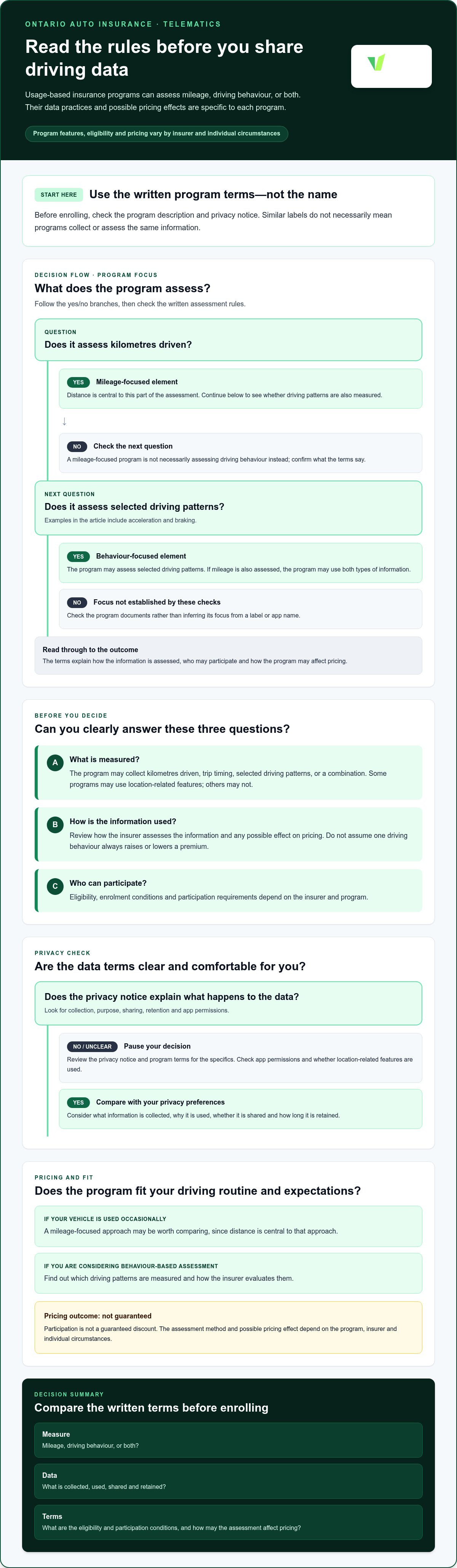
A mileage-focused, or “pay-as-you-drive,” approach centres on how far a vehicle travels. A driving-behaviour program may assess selected patterns, such as acceleration or braking, if those measures are part of its design. Insurers may use these labels differently, so check the program documents to learn what is assessed and how it may affect pricing.
For example, someone who uses a car occasionally may want to compare a mileage-focused approach, where distance is central. Someone considering a behaviour-based program should find out which driving patterns are measured and how the insurer evaluates them. These examples describe different program focuses, not eligibility or a prediction of premium results.
Before comparing options, separate three questions:
- What is measured? Mileage, driving behaviour, or a combination.
- How is it used? The insurer’s terms describe the assessment and possible pricing effects.
- Who can participate? Eligibility and enrolment conditions are specific to each program.
This check helps you look beyond a discount headline or familiar program label. Focus on what participation involves and how it may affect your insurance. Pricing, eligibility and program conditions vary by insurer and individual circumstances.
How Do Telematics Programs Assess Driving in Ontario?
Telematics programs record selected driving information under program-specific terms. Information may be collected through a smartphone app or a device used with the vehicle. The collection method, assessment period and data categories depend on the insurer’s program. Don’t assume that programs with similar names collect or assess the same information.
The process is easiest to understand as a series of steps:
- Review the terms. Read the program description and privacy notice before enrolling. Check what information is collected, how it may be used and what participation requires.
- Enrol if eligible. Eligibility and enrolment conditions depend on the insurer and program.
- Use the specified app or device. Follow the instructions so required information can be recorded during the assessment period.
- Review the outcome. Check how the insurer explains the assessment and any resulting pricing effect. The timing and format of an update depend on the program.
What Information Might a Telematics App or Device Collect?
Depending on the program, examples may include kilometres driven, trip timing, or selected driving patterns such as acceleration and braking. Some programs may use location-related features, while others may not. App permissions can also affect what information the app can access on your phone. These are examples, not features shared by every insurer.
Read the program’s privacy notice and terms for the specifics. Check what information is collected, why it’s used, whether it’s shared, how long it’s retained and what permissions the app requests. Don’t infer these details from an app’s name or another insurer’s description. The written materials for the program explain the terms that apply.
How Can Driving Information Affect an Insurance Assessment?
An insurer may assess collected information according to the rules disclosed for its program. A mileage-focused assessment may use distance driven, while a behaviour-focused one may consider selected driving patterns. No single behaviour should be assumed to always raise or lower a premium. The program’s rules determine how information is interpreted.
Pricing outcomes, eligibility and assessment methods vary by insurer and individual circumstances. The result depends on the program’s design and the information it considers, so participation isn’t a guaranteed discount. When comparing usage based car insurance Ontario options, review assessment rules and privacy terms alongside any potential pricing effect.
Before deciding, note questions about app permissions, location features, data retention and how results may affect pricing. These details can help you judge whether a program fits your comfort level and driving routine. You can also explore Ontario auto insurance options with a Verdant broker as part of reviewing your broader insurance needs.
Is Usage-Based Car Insurance Worth It for Ontario Drivers?
It may be worth considering, but sharing driving information won’t suit everyone. The decision depends on what the program measures, how it may affect pricing and whether you’re comfortable with its data practices. Lower mileage may make a mileage-focused option worth comparing, but it doesn’t guarantee a lower premium. There’s no universal savings amount or result to expect.
Suitability depends on your driving patterns, data preferences and the insurer-specific terms. Before deciding whether usage based car insurance Ontario makes sense for you, weigh the potential fit against the responsibilities and trade-offs of participating. A program that sounds appealing based on one feature may not match your needs once you review its conditions.
Which Driving Situations May Fit a Usage-Based Program?
Start with your actual routine, not an idealized version of it. Consider how often you drive, roughly how far you travel, when you usually drive, and whether you mainly use the vehicle for commuting, errands or occasional trips. Distance may matter most for a mileage-focused program. A behaviour-focused program may assess selected driving patterns, depending on its terms.
Use these questions to think through the fit:
- Is your annual mileage predictable, or does it change with work, school or family needs?
- Do you regularly drive at times or on routes that could affect the information the program assesses?
- Would you be comfortable using the required app or device as instructed?
- Could your vehicle use change during the assessment period?
Your answers can help identify which program details deserve closer attention. They can’t establish eligibility or predict a particular pricing outcome. Those depend on the insurer’s rules and your circumstances.
What Privacy and Pricing Concerns Should You Weigh?
Before enrolling, read the consent language, app permissions, privacy notice and participation or withdrawal terms. Check what information may be collected, how it may be used, whether location features are involved, how long information is retained and what happens if you stop participating. Don’t assume that every program handles data in the same way.
Then review the possible pricing effects described in the program documents. Consider whether you’re comfortable with the assessment method and any stated consequences of participating or withdrawing. Any premium effect depends on the program wording, insurer decisions and individual circumstances. A potential discount is only one part of the decision.
Compare the potential fit with your personal limits. Predictable mileage may appeal to you, while ongoing data sharing may not. If the terms aren’t clear, review them before enrolling. You can decide that a program isn’t the right fit, even if its headline offer sounds attractive.
How to Compare Usage-Based Insurance Programs in Ontario
Start with the full program terms, not a discount headline. For usage based car insurance Ontario, check how each insurer defines participation, collects information, assesses it and applies any pricing effect. Review the program documents alongside the auto insurance quote to distinguish telematics conditions from policy details.
Use this checklist to compare options:
- Eligibility: Who can enrol, and are there vehicle, driver or account conditions?
- Data collection: What information and app permissions are involved? Are location features used?
- Assessment: What is measured, over what period, and how are results reviewed?
- Pricing effects: Can participation change the quoted price, and are any adjustments conditional?
- Participation terms: What must you do to remain enrolled, and what happens if you stop participating?
For Ontario context, review current insurer program materials alongside applicable guidance from the Financial Services Regulatory Authority of Ontario (FSRA). Don’t assume that a program name or a feature described elsewhere applies to the option you’re considering. Record unanswered questions before accepting terms or sharing driving information.
Which Program Terms Should You Read Before Enrolling?
Read the program terms and privacy notice together. Check what information is collected, how it may be used and who may access it. Look for the assessment period, participation requirements, and any consequences of leaving or not meeting them. Compare the wording directly across programs, since insurers may define similar labels or conditions differently.
Write down anything that remains unclear, such as whether data is retained after participation ends or how an app permission relates to the program. Don’t treat silence in a promotional summary as an answer. The program documents should explain the terms that apply.
How Can You Compare a Telematics Quote Fairly?
Compare quotes on an equivalent basis. Review the coverage details, limits, deductibles and policy conditions shown. A lower displayed amount may reflect different policy details or a program adjustment, so check what the quoted premium includes before drawing a conclusion.
Keep the base quote separate from any conditional adjustment or estimate linked to participation. Check what assumptions apply and whether the amount could change after assessment or renewal. Quotes reflect individual circumstances and insurer-specific terms; they aren’t a guaranteed future price. A broker can help you review auto insurance quote options alongside program conditions.
Compare your notes before deciding. To review Ontario auto insurance options, discuss your auto insurance needs with a Verdant broker.
Discussing Usage-Based Auto Insurance with a Verdant Broker
A conversation with a Verdant broker can help connect telematics questions with your broader auto insurance needs. Verdant is an Ontario insurance brokerage. Its brokers can discuss quote options and help explain distinctions between insurer programs. The insurer sets each program’s terms, eligibility requirements, assessment approach and pricing.
You don’t need to decide before starting the conversation. A clear picture of how you use your vehicle and which questions matter to you can make it easier to consider whether a program is worth exploring. The goal is to understand your options, not to assume enrolment or a particular premium outcome is assured.
What Information Should You Prepare for an Auto Insurance Conversation?
Think through a typical week or month of driving, including how often you use the vehicle, its main purposes and your approximate mileage. Note whether your routine is steady or changes with work, school, errands or seasonal needs. A general description is a useful starting point; avoid sharing sensitive personal details that aren’t needed for the discussion.
It can also help to write down your priorities and questions in advance:
- Vehicle use: How often you drive and the usual purpose of trips.
- Mileage pattern: Your approximate distance and whether it varies.
- Coverage priorities: The protection details you want to understand in your auto insurance options.
- Data concerns: Questions about app permissions, collected information, its use or participation terms.
This preparation gives the conversation a practical focus. You can describe what matters to you without needing to decide on a telematics program on the spot.
What Can an Ontario Insurance Broker Help Clarify?
A broker can discuss quote options and help you understand how insurer program terms differ, including what information a program may assess and how participation relates to a quote. You can also discuss how your vehicle use and coverage priorities fit into your wider insurance needs. This helps you consider the program alongside the policy details, rather than focusing on one advertised feature.
Final details depend on the insurer’s current terms and your circumstances. Review the applicable policy wording for coverage, limits, exclusions and eligibility, and the program documents for telematics participation. Pricing and program availability can vary by insurer and individual situation. A broker can help clarify options, but can’t guarantee eligibility, a particular price or a specific program outcome.
If you’re considering usage based car insurance Ontario, bring your questions and priorities to a conversation before deciding whether to share driving data. Explore Verdant auto insurance options.
Make Your Next Auto Insurance Decision With Confidence
Before choosing, decide what would make you comfortable participating in a telematics program. You may want the data practices explained clearly, or prefer to keep your driving information private. Let that boundary guide whether you explore usage based car insurance Ontario further.
If a program’s terms don’t feel clear or suitable, take time to weigh the conditions against your priorities. There’s no need to rush a decision about sharing driving information.
Review the program terms and your auto insurance needs, then choose the option that best fits your circumstances.
Frequently Asked Questions
Is usage-based car insurance available in Ontario?
Yes, usage-based programs are available to Ontario drivers, but availability and eligibility depend on the insurer and the driver. Review current program documents for enrolment conditions, the assessment method and participation rules. When comparing quotes, note whether a telematics option is included or offered separately. Insurers may use different program designs.
Can usage-based car insurance increase my premium?
It may, if the insurer’s program terms allow driving information to affect pricing and the assessment leads to an increase. That isn’t a universal result, and no particular outcome can be predicted without the program’s rules and your circumstances. Before enrolling, look for clear wording about how assessment results may affect your premium. Treat any estimated adjustment as an estimate, not a guaranteed future price.
How much can usage-based car insurance save in Ontario?
There’s no fixed savings amount for usage based car insurance Ontario. Any pricing effect depends on the insurer, program, eligibility, driving information and your individual circumstances. For a useful comparison, review complete quotes with equivalent coverage details, limits, deductibles and policy conditions. Keep any promotional estimate separate from the quoted premium. The insurer determines the applicable terms and price.
Does usage-based car insurance track your location?
Some programs may use location-related information, but collection depends on the program’s technology and permissions. Before agreeing to participate, read the privacy notice and check what the app can access, what information is collected, how it’s used and how long it’s retained. Review the app’s location permission on your phone alongside the insurer’s explanation. Don’t assume another program’s practices apply.
What happens if a telematics app stops working?
Next steps depend on the insurer’s program instructions. Review what they say about technical problems, missed trips and participation requirements, then follow the stated process. It may help to note when the problem started and any error message so you can describe the issue clearly. Don’t assume missing data has a particular effect on pricing or eligibility unless the program terms explain it.
Can I leave a usage-based insurance program after enrolling?
Withdrawal options depend on the insurer’s terms. Before enrolling, check how to leave, whether you need to give notice and what happens to information already collected. Look for any stated effect on a quote, policy or program-related pricing adjustment. Don’t assume leaving is consequence-free or that the same process applies across insurers. Review the written terms before opting in.
Does telematics data affect an Ontario auto insurance claim?
Don’t assume telematics data determines a claim outcome. How information may be used depends on the insurer, program terms, policy wording and circumstances. For a specific claim question, review the relevant policy and program documents and discuss the situation with the insurer or your broker. Any coverage decision remains subject to the policy’s wording, limits, exclusions and applicable eligibility requirements.


