

Two quotes for the same Ontario rental property can look similar in price but offer different protection. A landlord insurance quote Ontario landlords receive may depend on the property’s details and how it’s rented, including whether it’s a house, a multi-unit building or a mixed-use property. Insurers may assess occupancy and rental arrangements differently, so accurate information matters from the start.
Key Takeaways
- A landlord insurance quote Ontario landlords receive estimates terms and premium based on the property and rental information provided. Final terms depend on the insurer and policy details.
- Prepare consistent information about the property, occupancy, rental arrangement and intended use before requesting quotes.
- Compare quotes using the same coverage questions, including limits, deductibles, exclusions and covered property interests.
- Review proposed terms carefully, especially if occupancy or the rental arrangement has changed.
- An Ontario brokerage can connect you with partner insurers and help you understand quote options. The insurer sets the policy terms.
What Does a Landlord Insurance Quote in Ontario Tell You?
A landlord insurance quote in Ontario estimates possible policy terms and premium based on the property and rental information provided. It’s a starting point, not confirmation that coverage will be issued on those terms. The insurer’s eligibility assessment and final policy wording determine what applies.
The quote should reflect the property’s rental use. Insurers assess an owner-occupied home differently from a property rented to tenants. The address and details about the building and rental arrangement help describe the specific risk. Provide the property’s actual location, whether it’s in Markham, Toronto, York Region or elsewhere in Ontario. How location affects terms or pricing varies by insurer and individual circumstances.
How landlord insurance differs from owner-occupied home insurance
Insurers assess a property in light of how it’s used. A home occupied by its owner and a home rented to tenants have different occupancy arrangements, so the information used for a quote should accurately describe the rental. Landlord-focused protection may be available under policy terms, but what’s included isn’t automatic. For general background, see Landlord Insurance on Wikipedia, then refer to the proposed policy wording for the details that apply.
Don’t assume a standard homeowner policy fits every rental situation, or that every homeowner policy excludes all rental activity. The policy wording, insurer’s eligibility decision and disclosed use of the property matter. If occupancy changes, make sure that change is reflected when you request a quote or review your insurance.
What a quote does, and doesn’t, confirm
A quote is an estimate based on the details available at that stage. It isn’t the issued policy, and it doesn’t confirm that every loss or circumstance will be covered. Review the proposed limits, exclusions and deductibles, along with the property interests described. Final terms, eligibility and pricing vary by insurer and individual circumstances.
A landlord insurance quote for an Ontario property estimates potential terms and premium based on the information provided. The insurer’s final documents set out the coverage that applies. Treat the quote as a comparison tool, then check that the proposed terms match the property’s actual use before deciding.
Which Ontario Rental-Property Details Can Shape Your Quote?
For a landlord insurance quote in Ontario, start with an accurate picture of the building and how you rent it. Insurers may consider details such as location, construction, occupancy and intended use. The questions asked and their effect on terms or pricing vary by insurer and individual circumstances.
Give the property’s location and describe whether it’s a detached house, condominium, multi-unit building or another property type. An address in Markham, Toronto, York Region or elsewhere in Ontario helps identify the specific rental being considered. Avoid relying on broad assumptions about a city or neighbourhood to answer questions about an individual property.
Property information to have ready
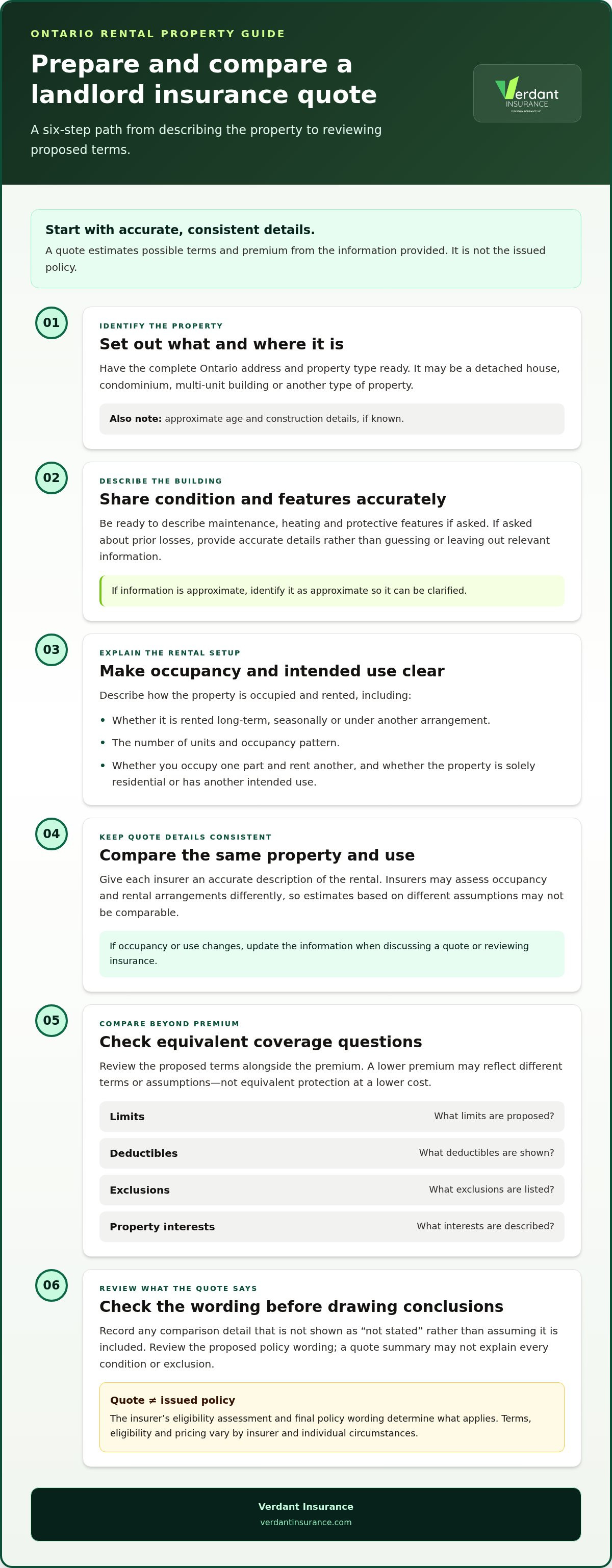
Gather the address, property type, approximate age and construction details, if known. Have information about the building’s maintenance, heating and protective features available in case it’s requested. If the insurer asks about prior losses, provide accurate details rather than guessing or leaving out relevant information.
These details help explain the property, but no single feature guarantees eligibility or a particular premium. Answer each insurer’s questions based on what you know, and identify information that’s approximate so it can be clarified.
Rental details to describe accurately
Explain how the property is occupied and rented. For example, say whether it’s rented long-term, seasonally or under another arrangement, and describe the number of units and occupancy pattern. If you occupy one part of a home and rent another, make that arrangement clear. Describe whether the property is solely residential or has another intended use.
Rental arrangements and insurer requirements can differ, so don’t assume that a setup treated one way in a quote will be assessed the same way by another insurer. If occupancy or use changes, update the information when discussing a quote or policy review. Clear details make quote options easier to compare and reduce the chance of comparing estimates based on different assumptions.
- Location: Provide the complete Ontario property address.
- Building: Note the type, approximate age and construction details you know.
- Condition and features: Be ready to describe maintenance, heating and protective features if asked.
- Rental use: Clarify the arrangement, number of units, occupancy pattern and intended use.
Preparing these facts can make a quote discussion more focused. To discuss your rental-property insurance needs with an Ontario brokerage, explore Verdant’s insurance quote options.
How to Compare Landlord Insurance Quotes Beyond the Premium
To compare a landlord insurance quote in Ontario with another, make sure both are based on the same property details and review equivalent coverage questions. Otherwise, a lower premium may reflect different limits, deductibles, exclusions or covered property interests, not equivalent protection at a lower cost.
Use a simple table to record what each quote says. If a detail isn’t shown, mark it as “not stated” rather than assuming it’s included. Then review the proposed policy wording, since a quote summary may not explain every condition or exclusion.
| Comparison point | What to check |
|---|---|
| Property details | Are the location, building and rental arrangement the same in each quote? |
| Limits | What amounts are shown for applicable insured losses or coverage categories? |
| Deductibles | What portion may you pay for an applicable claim, and does it differ by coverage? |
| Exclusions and conditions | What circumstances, property or types of loss are excluded or subject to conditions? |
| Covered property interests | Does the quote describe the building or other property interests you expect to insure? |
| Rental-related options | Are landlord liability or rental-income protections shown, and what terms apply? |
Compare limits, deductibles and exclusions
A limit is the maximum amount shown for an applicable insured loss or coverage category, subject to the policy wording and its conditions. A deductible is the portion you may have to pay toward an applicable claim. Compare the amounts and how they apply, not just the headline premium. Read the proposed documents to understand which situations may not be covered and what conditions apply.
Check how the policy treats rental risks
Look at how the quote describes the building and any landlord liability protection. If rental-income protection is relevant to you, check whether it’s shown and review its terms, limits and exclusions. These protections aren’t necessarily included in every quote or policy. The insurer’s wording determines what applies, and details vary by insurer and individual circumstances.
Compare matching coverage terms, not premium alone. A side-by-side review helps you see whether quotes address the same property interests and rental risks, and where their terms differ. If one quote is unclear, identify the unanswered items before treating the options as comparable.
How to Prepare for an Ontario Landlord Insurance Quote
Preparing before you request a quote can make the process clearer and help you compare options on consistent terms. Keep the same property and rental details for each request, updating them if anything changes. Insurers may ask different questions, and their requirements, eligibility decisions and proposed terms vary.
A simple quote-request checklist
- Identify the property. Record its full address, property type, approximate age and construction details you know.
- Describe the rental. Note the number of units, who occupies the property, how it’s rented and its intended use.
- Gather supporting details. Be ready to discuss maintenance, prior losses and existing insurance if requested. If you’re unsure about a detail, don’t guess. State what you know and what needs clarification.
- Set the requested effective date. Include the date you want coverage to begin, while understanding that a request doesn’t confirm coverage will take effect on that date.
- Prepare comparison questions. List the limits, deductibles, exclusions and relevant options you want to review across quotes.
Keep a copy of the information you submit. Consistent details make comparisons more meaningful, while accurate disclosure gives the insurer a clearer basis to assess the request. If occupancy, rental use or another material property detail changes, describe the change when discussing the quote or reviewing a policy.
Review the proposed terms before choosing
Before deciding, check that each quote reflects the address, building details and rental arrangement you provided. Compare the insurer’s written terms, not only a summary or premium. Review the limits, deductibles, exclusions and conditions, and note any rental-related options shown. The policy wording and issued documents govern; eligibility, terms and pricing vary by insurer.
If a phrase or condition is unclear, a broker can help explain what the quote documents say and clarify differences between options. General home insurance cost information can provide context, but it isn’t a substitute for a rental-property quote. The details of the rental property and the insurer’s assessment determine the terms and price offered.
Request a Landlord Insurance Quote Through an Ontario Broker
An Ontario insurance broker can help organize your rental-property details and connect you with partner insurers for quote options. You can discuss how your building is used and compare the written terms available for your circumstances. The broker facilitates the process, while each insurer assesses the risk and sets its own eligibility, pricing and policy terms.
What working with a broker can help you do
A broker can help you present property and rental information clearly, then make sense of differences between quote options. If one proposal shows different limits, deductibles or exclusions, review those details rather than judging by premium alone. Verdant Insurance is an Ontario-based brokerage in Markham. It connects customers with partner insurers and provides support through the insurance process.
Whether your rental is in Markham, Toronto, York Region or elsewhere in Ontario, begin with accurate information. Keep property details consistent across quote requests, disclose changes in occupancy or use, and review the insurer’s written terms carefully. A quote request doesn’t confirm eligibility or coverage. Terms and pricing vary by insurer and individual circumstances, and the policy wording, limits and exclusions determine what applies.
Take the next step with your rental property details
Before submitting a request, gather the address, building information, rental arrangement and intended effective date. Note any questions about limits, deductibles, exclusions or relevant coverage options. Once you receive quote information, compare the proposed terms against the details you provided and clarify any wording you don’t understand before making a decision.
Verdant’s online quote and policy-management options give Ontario property owners a practical way to begin exploring their insurance needs. As a Markham-based brokerage, Verdant connects customers with partner insurers and provides support through the process. The insurer sets the quote and policy terms.
Make Your Next Quote Comparison More Confident
A useful landlord insurance quote Ontario landlords can assess starts with accurate details about the property, its location and how it’s rented. Keep those details consistent across requests, then compare written terms, including limits, deductibles and exclusions, rather than relying on premium alone. Final terms and pricing vary by insurer and individual circumstances.
Verdant Insurance is an Ontario-based brokerage located in Markham. It connects customers with partner insurers and offers online quote and policy-management options. A broker can help organize information and explain differences between quote options, while the insurer sets the policy terms.
With your property details ready, you can take the next step and review options suited to your circumstances.
For help discussing your rental-property insurance needs, speak with Verdant Insurance.
Frequently Asked Questions
What information do I need for a landlord insurance quote in Ontario?
Prepare the rental property’s address, type, approximate age and construction details, along with how it’s used and occupied. Be ready to describe the rental arrangement, number of units and intended use. An insurer may also ask about maintenance, heating, protective features, prior losses or existing insurance. A landlord insurance quote Ontario request is easier to compare with others when you provide the same accurate details for each.
How is a landlord insurance quote different from a home insurance quote?
A landlord quote takes the property’s rental use into account, while an owner-occupied home quote is based on a different occupancy arrangement. The information requested and proposed terms can therefore differ. Don’t assume a homeowner policy automatically covers every rental situation or excludes all rental activity. Check the insurer’s eligibility decision and policy wording, including the limits and exclusions that apply to the specific property.
What affects the cost of landlord insurance in Ontario?
Pricing may reflect details insurers consider about the property and its use, such as location, building characteristics, occupancy, rental arrangement and intended use. The limits and deductibles selected, along with other information requested by the insurer, may also shape the quote. There isn’t one price that applies to every Ontario rental property. Pricing and eligibility vary by insurer and individual circumstances, so compare the terms as well as the premium.
Does landlord insurance cover rental income if a property becomes uninhabitable?
Rental-income protection may be available, but don’t assume it’s included in every quote or policy. Check whether it’s shown in the proposed terms and read the wording for applicable limits, exclusions, conditions and circumstances that may trigger coverage. Whether a particular interruption qualifies depends on the insurer’s policy terms. A broker can help explain the written details if the quote summary is unclear.
Does landlord insurance include liability coverage for rental properties?
A quote may show landlord liability protection, but its inclusion and terms aren’t universal. Review the stated limit, exclusions and conditions in the proposed documents rather than relying on a general description of landlord insurance. Coverage is subject to insurer eligibility and policy wording. If liability protection isn’t clear in the quote, a broker can help identify what the insurer’s documents say before you compare it with another option.
Can I get a landlord insurance quote online in Ontario?
Yes, Ontario landlords can start an insurance quote request online. Verdant Insurance is an Ontario-based brokerage that offers online quote and policy-management options and connects customers with partner insurers. The brokerage isn’t the insurer. Each insurer assesses the request and determines its available terms, eligibility and pricing. Provide accurate property and rental details, then review the written quote and policy documents before deciding.
How do I compare two landlord insurance quotes?
First, check that both quotes use the same property and rental details. Then compare the stated limits, deductibles, exclusions, conditions and covered property interests. Look at how each quote treats the building, landlord liability and any rental-income protection you’re considering. If a detail isn’t shown, don’t assume it’s included. A lower premium alone doesn’t establish equivalent protection; the insurer’s policy wording sets out the terms that apply.


