

What needs to be protected before you get the keys to your Ontario home? Arranging home insurance for new owners means coordinating coverage with your purchase and possession dates, understanding the policy terms and providing accurate details about the property.
Coverage and pricing vary by insurer and individual circumstances. Limits, exclusions, deductibles and optional protections can differ too, so comparing policies on price alone may leave important differences unnoticed.
This guide covers what to gather before requesting a quote, which common policy sections to review and how to check the details against your home and move-in plans. Use the checklist to prepare for a practical conversation about coverage before moving in.
Key Takeaways
- Arrange home insurance around the period you’ll own the property, and verify the effective date in the policy documents.
- Review common policy sections, including the dwelling, belongings, personal liability and additional living expenses. Check the wording rather than relying on section titles.
- Compare limits, deductibles, exclusions and optional protections, not just the quoted premium.
- Gather property and household details before requesting a quote, then update relevant information if your plans change.
- An Ontario insurance broker can help you compare options from insurer partners. Coverage and pricing vary by insurer and individual circumstances.
Home insurance for new owners in Ontario: what to arrange before moving
When arranging home insurance for new owners, plan for the period when you’ll own the property and review the proposed terms before relying on coverage. Start with your purchase and possession dates, then confirm the policy’s effective date, limits, exclusions and any conditions. A quote alone doesn’t establish what protection is in force.
This guide focuses on the transition into homeownership: preparing accurate information, understanding the proposed terms and coordinating the intended start date with your move. For background on the general concept, see this overview of homeowners insurance.
What should a new Ontario homeowner review first?
Gather the details you know before requesting a quote. Having consistent property and household information ready makes it easier to discuss the options.
- Property: Note the address, home type, possession date and known construction details.
- Occupancy: Explain when you plan to live there, who will live in the home and whether anyone else will occupy it.
- Changes: Mention planned renovations or other significant changes that could affect how the home is used.
- Lender paperwork: Record any insurance documents your lender has requested and the timing involved. Documentation depends on the purchase and financing arrangements, so requirements may differ between transactions.
If you’re unsure about a detail, identify it rather than guessing. Property information and intended use can affect insurer eligibility and the terms offered. These vary by insurer and individual circumstances.
Why does the move-in timeline matter?
Your purchase, possession and move-in dates may differ. Discuss the intended policy start date before possession so you have time to review the proposed terms and transaction documents. Planning ahead does not, by itself, confirm that coverage is active.
Check the policy documents for the effective date and any stated conditions. If possession is delayed or your occupancy plans change, update the relevant information and review how the change affects the arrangements.
Coverage depends on the policy in force and its wording, including its limits, exclusions and applicable eligibility. Keep the documents accessible and use them to confirm the protection described. A quote or lender paperwork is not a substitute for reviewing the policy.
What home insurance may cover: understand the main sections
A home policy may combine several types of protection, but the sections and terms differ between policies. Start by distinguishing coverage for the building from coverage for belongings, liability and extra expenses. These are common policy concepts, not a guarantee that every policy includes the same coverage or scope.
Review each section alongside its limits, deductible, exclusions and any optional coverage. A section heading or quote summary alone won’t explain how a specific situation is treated. The Financial Services Regulatory Authority of Ontario (FSRA) offers Questions to ask an insurance agent to help guide a policy discussion.
How do dwelling and personal belongings coverage differ?
Dwelling coverage generally refers to the home itself, while personal belongings coverage refers to items kept in it. As you review the proposed terms, consider the home’s features and renovations, as well as furniture, electronics and other belongings you want to account for. Check the wording, limits and exclusions instead of assuming a particular fixture or item is covered or covered up to a certain amount.
| Policy concept | What to review |
|---|---|
| Dwelling | How the policy describes the home and its limits, including how renovations or significant changes are addressed. |
| Personal belongings | Which belongings are addressed, what limits or exclusions apply, and whether optional coverage is relevant to your needs. |
| Personal liability | How the policy describes liability protection, its limit and its exclusions. |
| Additional living expenses | What the policy says may apply if the home can’t be occupied, including any stated limits, conditions and exclusions. |
What do liability and additional living expenses refer to?
Personal liability is a policy concept concerning certain situations where you may be held legally responsible for injury to someone else or damage to their property. The wording sets out the scope and exclusions, so don’t assume a particular event or amount is included.
Additional living expenses is a section to review for situations where the home can’t be occupied. Check which circumstances the wording addresses and what limits or conditions apply. Policy wording, limits, deductibles, exclusions and optional coverage shape actual protection, and terms vary by insurer and individual circumstances.
As you compare options, explore home insurance options with your property and household details in mind.
Compare home insurance choices without assuming lender approval is enough
A lender’s paperwork or an insurer’s quote approval doesn’t automatically mean a policy fits your needs. Lender documentation may address financing requirements; your own review should also account for your property, belongings and household priorities. Compare what each option says it covers, not just whether you have a quote or documents to submit. For buyers managing multiple aspects of a move simultaneously, integrated service providers like Verbrugge Groep illustrate how aligning real estate, mortgages, and insurance under one roof can help ensure no requirements fall through the cracks.
Price is one part of the comparison. Also consider limits, deductibles, exclusions, optional protections and the proposed effective date. Water-related protection and other optional features vary by insurer and policy, so read the wording rather than assuming a particular event is covered. FSRA’s questions to ask your insurance provider can help you prepare for that review.
Which property details can affect the quote and policy options?
Provide complete, accurate details about the home and how you plan to use it. Relevant information can include the home type, age, construction details, location, occupancy and planned renovations. If your occupancy plans or renovation scope change, update the information you provided.
Ontario weather and water-related exposures make it useful to read relevant policy wording carefully. Don’t assume a location or property feature automatically determines an insurer’s decision or the coverage available. Eligibility, price and terms vary by insurer and individual circumstances.
How can new owners compare quotes fairly?
Compare the details side by side. Where possible, look at options with equivalent limits and deductibles, then note differences in exclusions, optional coverage, effective dates and stated conditions. If a detail is unclear or the quotes aren’t comparable, resolve that difference before deciding. A lower quoted premium may reflect different terms.
- Limits: Compare the amounts shown for each relevant coverage section.
- Deductibles: Check what you would be responsible for under the stated terms.
- Exclusions and optional protections: Review what the wording excludes and which additional options are described.
- Dates and conditions: Confirm the proposed effective date and read any conditions in the documents.
For separate cost context, see Verdant’s article, “Average Cost of Home Insurance in Ontario.” Treat cost information as background and assess each quote against its wording and your circumstances. A fair comparison considers the full terms, not price alone.
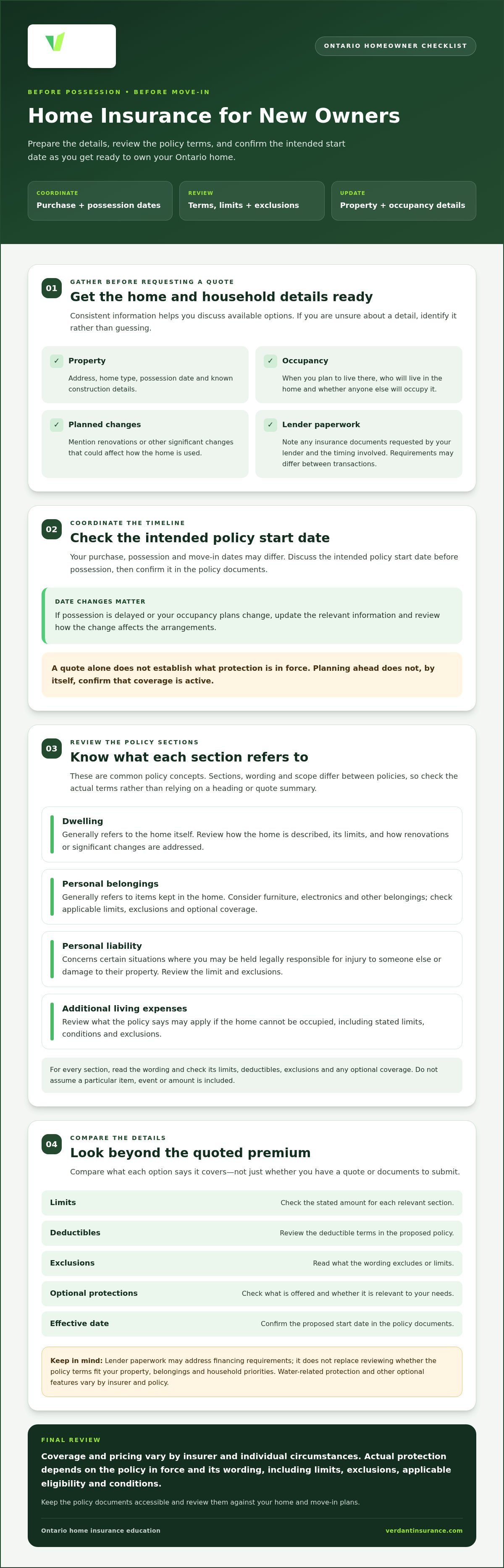
A home insurance checklist for before possession and after moving in
Organize home insurance for new owners around the purchase timeline. Gather the details you have before requesting a quote, compare the terms and verify the policy documents and effective date before relying on coverage. After moving, update relevant information if your plans or circumstances change.
What information should you gather before requesting a quote?
Pull together the property, household and transaction details available to you: the address, home type, age, known construction details, intended occupancy, mortgage information and possession date. Note planned renovations and other changes as well. Accurate details help keep the discussion focused on the home you’re buying and how you expect to use it.
Start an inventory of your belongings. A room-by-room list is a useful starting point; photos or video can help record what you own. Receipts or other records can help you identify valuable items to raise for policy review. An inventory does not establish coverage; the applicable wording, limits and exclusions govern.
What should you revisit after moving in?
Use this checklist to keep the process manageable:
- Gather property facts: Record the address, home type, construction details, possession date, occupancy plans and mortgage information available to you.
- Compare policy details: Review limits, deductibles, exclusions and optional protections across the options you’re considering.
- Confirm dates: Compare the proposed effective date with your possession and move-in plans.
- Review documents: Read the selected policy documents and any stated conditions. Make sure you understand them before relying on the policy.
- Update information: After moving, share relevant changes to occupancy, renovations or household circumstances as appropriate.
Keep the policy documents somewhere accessible and save your inventory and records with them. Verdant’s Home Insurance for First Time Buyers article offers broader beginner context. Coverage and pricing vary by insurer and individual circumstances, so refer to the policy documents for the terms that apply.
Explore home insurance with an Ontario broker when you are ready
Once you’ve gathered property details and questions, an insurance broker can help you explore home insurance options from insurer partners and compare the available terms. Options differ between insurers, and a quote doesn’t guarantee that coverage will be available or suitable for every situation.
Verdant Insurance is an Ontario property and casualty insurance brokerage based in Markham, not an insurance company. Coverage, pricing and eligibility depend on the insurer and your circumstances. The policy wording, limits and exclusions determine the protection provided.
What can a broker help you review as a new owner?
A broker can help you compare quote details and identify where terms differ. Bring questions about limits, deductibles, exclusions and optional coverage. If two quotes look similar, for example, compare the stated limits and exclusions in the documents. Then review the policy wording to understand the terms offered. Available choices vary by insurer, and no particular coverage is guaranteed.
How can you take the next step with confidence?
Before exploring quotes, prepare your property address, home type, known construction details, possession date and intended occupancy. Note planned renovations or other changes, along with questions about your belongings and the protection you want to review. This gives the discussion a practical starting point and helps identify details that still need attention.
Keep the proposed effective date and policy documents in view as you compare options. Check that the information reflects your purchase and plans, and read any stated conditions before relying on the policy. For more context on online brokerages, see Choosing an Online Insurance Broker in Canada.
Verdant’s online platform lets Ontario homeowners explore quotes and manage policies. Compare the available terms with your property details and questions in hand.
Make your move with a clearer insurance plan
For home insurance for new owners, start by coordinating coverage with your ownership and possession dates, then verify the effective date and policy documents. Review the main sections, including the dwelling, belongings, liability and additional living expenses, without assuming every policy treats them the same way. Compare limits, deductibles, exclusions and optional coverage alongside the price.
Gather details about the property and how you’ll use it, note planned renovations, and keep questions about policy terms handy. Coverage, pricing and eligibility vary by insurer and individual circumstances, so rely on the wording and limits in the policy that applies to you.
Verdant is an Ontario-based insurance brokerage in Markham. Its online platform supports quote exploration and policy management, with dedicated support as you review options. Verdant is a brokerage, not an insurer, and can help make available choices easier to compare.
With accurate details and a careful policy review, you can move into your new home better prepared.
Frequently Asked Questions
Do new homeowners in Ontario need home insurance?
Ontario law doesn’t make home insurance mandatory—unlike in jurisdictions where homeowners are legally required to explore İcbari əmlak sığortası (compulsory property insurance)—but a mortgage lender commonly requires proof of insurance as part of its financing conditions. Requirements differ by lender and purchase, so confirm the documentation for your transaction. Even without a mortgage, a new owner may want to consider how they would manage damage to the home, loss of belongings or liability concerns. The policy wording and limits determine what protection applies.
When should I arrange home insurance before closing in Ontario?
Start exploring options early enough to review the proposed terms and coordinate the intended start date with possession. There isn’t one deadline for every purchase. Share your address, possession date, property details and occupancy plans when requesting a quote, then verify the effective date in the policy documents. A quote or application alone doesn’t confirm that coverage is active, so review the documents and any stated conditions before relying on them.
What does home insurance cover for a new owner?
Home policies commonly include sections for the dwelling, personal belongings, personal liability and additional living expenses, but the exact sections and protection vary. Review the wording, limits, deductibles and exclusions for each part. Check how the policy describes the home and your belongings, as well as what it says about liability or expenses if the home can’t be occupied. Don’t assume a particular loss or item is covered based on a section title alone.
Is water damage automatically covered by home insurance in Ontario?
No. Don’t assume every type of water damage is covered automatically. The policy wording, exclusions, limits and any optional protections determine how specific situations are treated, and terms vary by insurer. Read the relevant sections and note any conditions or deductibles. If water-related protection matters to you, raise it while comparing options and review the policy documents rather than relying only on a quote summary.
How much home insurance does a new homeowner need?
There isn’t one amount that fits every home or household. Review the dwelling limit in relation to the property, along with limits for belongings, personal liability and additional living expenses. Consider renovations, fixtures and the belongings you want to account for. Check the wording for exclusions, sub-limits and conditions that may affect particular items or situations. Appropriate options depend on the property, insurer terms and your circumstances.
Does my mortgage lender choose my home insurance policy?
Generally, you choose the policy, while your lender may specify insurance documents or conditions connected with the mortgage. A lender’s review or acceptance of paperwork doesn’t necessarily mean the policy addresses every need you have as a homeowner. Compare limits, deductibles, exclusions and the effective date. Use any lender instructions to understand which documents the transaction requires, then review the policy wording for its protection.
Can I change my home insurance after moving in?
You can review your policy after moving and ask about changes that may suit updated circumstances, such as renovations, occupancy changes or a different household arrangement. Any change is subject to the insurer’s terms, eligibility and policy wording, and could affect coverage or pricing. Read updated documents carefully, including effective dates, limits, deductibles and exclusions. Keep your property and household details current so the information associated with the policy reflects your situation.


