

What if the lowest car insurance quote doesn’t include the coverage you expected? For car insurance for new drivers under 25 Ontario, price isn’t based on age alone. Insurers may also consider driving experience, licence stage, where the car is kept, the vehicle and the coverage selected. Quotes can differ, so price alone doesn’t tell the whole story.
If you’re concerned about managing premiums or unsure what information an insurer will ask for, knowing what affects a quote can make comparing options more straightforward. Gathering accurate details in advance also helps you compare options on a consistent basis.
This guide explains how age, driving history, a G1, G2 or full G licence, location, vehicle and coverage choices can influence a quote. It also covers Ontario’s July 1, 2026 changes to Accident Benefits, including benefits that are now optional, and what to prepare before requesting quotes. Pricing, eligibility and coverage vary by insurer and individual circumstances.
Key Takeaways
- Understand the difference between a quote, an insurance policy and a driver listed on that policy.
- For car insurance for new drivers under 25 Ontario, consider how driving history, vehicle, location and expected use may shape an individual quote.
- Compare limits, deductibles, exclusions and total quoted premiums to see whether options offer equivalent coverage.
- Gather accurate driver, vehicle, address, usage and existing-policy details before requesting quotes.
- Review policy documents and Ontario Accident Benefits options carefully. Coverage and eligibility depend on insurer terms and individual circumstances.
Car insurance for new drivers under 25 in Ontario: how it works
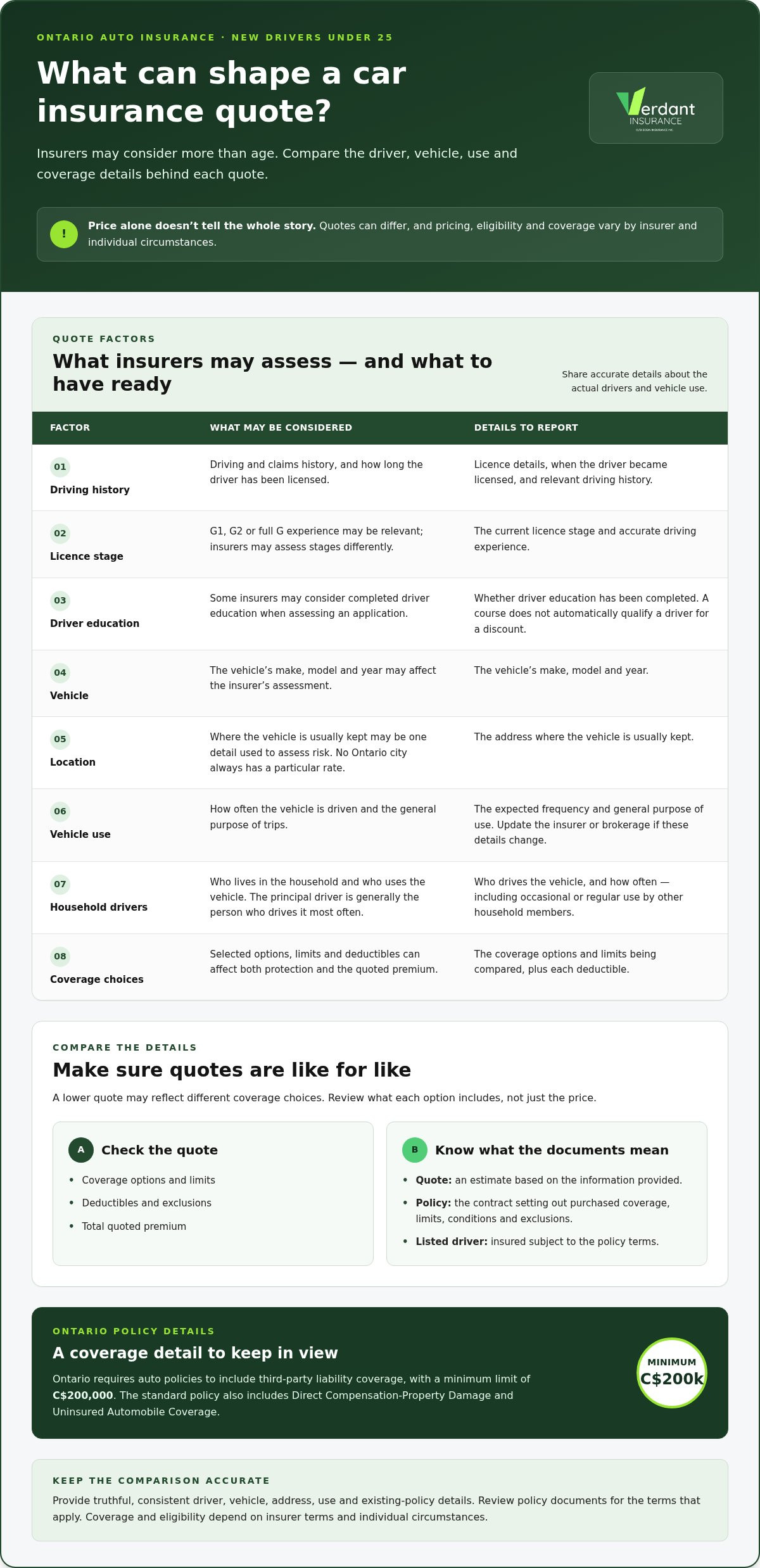
Insurers assess information about the driver, vehicle and intended use. Age may be one consideration, but it doesn’t determine a quote on its own. For car insurance for new drivers under 25 Ontario, a quote is an estimate based on the information provided. A policy is the contract that sets out the purchased coverage, limits, conditions and exclusions. A driver listed on a policy is insured subject to its terms.
Pricing, eligibility and coverage vary by insurer and individual circumstances. This section provides general information, not a personalized assessment or interpretation of a specific policy. Refer to the policy wording for the terms that apply.
How G1 and G2 experience fits into an insurance conversation
Ontario’s graduated licensing system has three stages: G1, G2 and full G. G1 drivers must follow learner-stage conditions, including driving with a qualified accompanying driver. After passing the G2 road test, drivers can drive independently, subject to applicable conditions. The full G licence follows another road test. Ontario’s Ministry of Transportation sets current requirements and restrictions.
Licence stage and time spent driving may matter to an insurer’s assessment, but insurers may assess them differently. When requesting a quote, provide accurate licence-stage details and driving history, including when you became licensed and any relevant driving experience.
Who may need to be included on a household policy?
Insurers may consider who lives in the household and who uses the vehicle. The principal driver is generally the person who drives that vehicle most often. Other household members may also drive it, occasionally or regularly. How to report these details depends on the insurer’s questions and policy terms.
Describe the actual driving arrangement rather than listing someone as the main driver simply because they’re older or more experienced. Misrepresenting who regularly drives the vehicle can cause problems if the information doesn’t match its actual use. If a young driver shares a car with a parent or another household member, explain who drives it and how often when requesting a quote.
Accurate information helps the insurer assess the situation being presented. Keep licence and driving-history details consistent, and answer questions about household drivers and vehicle use truthfully. An Ontario brokerage can help you explore options from different insurers, while the final terms are set out in the insurer’s policy documents.
What affects car insurance quotes for Ontario drivers under 25?
Insurers may assess several details when preparing a quote, and their criteria can differ. A young driver’s experience matters, but so can the vehicle, where it’s kept, how it’s used and the coverage selected. This is why a quote is based on the driver’s and vehicle’s details, not age alone.
Driver history, licence experience, and training
Insurers may consider driving and claims history, as well as how long a driver has been licensed. Licence stage may also be relevant, though insurers don’t all assess G1, G2 and full G experience in the same way. Some insurers may consider completed driver education when assessing an application, but a course doesn’t automatically qualify a driver for a discount. Report your licence details and history accurately.
Vehicle, location, and how the car is used
The vehicle’s make, model and year may affect an insurer’s assessment. So can the location where it’s usually kept, which is one of the details insurers may use to assess risk. This doesn’t mean one Ontario city always has a particular rate. Your quote depends on the full set of details and the insurer’s approach.
Be clear about how the vehicle will be used, including how often it will be driven and the general purpose of the trips. If the vehicle is intended for commercial or business tasks rather than personal driving, commercial policies are required, and firms like Hako Risk Advisors can provide guidance on commercial auto coverage. Provide accurate information about the drivers and vehicle rather than estimating or describing a different pattern of use. If those details change, update the insurer or brokerage.
Coverage choices matter too. The options selected, their limits and any deductibles can affect both the protection provided and the quoted premium. A deductible is the amount the policyholder may have to pay toward an eligible claim, subject to the policy terms. A lower quote may reflect different coverage choices, so compare the details, not just the price. For Ontario auto insurance consumer information, consult the Financial Services Regulatory Authority of Ontario.
Two drivers may receive different quotes because insurers assess their driving histories, vehicles, locations, usage and coverage choices differently.
To explore auto insurance options for your circumstances, review Ontario auto insurance through Verdant.
How to compare Ontario car insurance coverage without focusing only on price
Compare coverage details alongside the quoted premium. If quotes have different limits, deductibles or options, a lower price isn’t a like-for-like comparison. For car insurance for new drivers under 25 Ontario, reviewing the details helps you understand what each quote includes, not just what it costs.
Understand coverage terms before comparing quotes
Third-party liability coverage can help protect an insured person if they’re legally responsible for injury or damage to someone else, up to the policy limit. Ontario requires auto policies to include it, with a minimum limit of C$200,000. Accident Benefits provide specified benefits following an accident, subject to the policy terms. Ontario’s standard policy also includes Direct Compensation-Property Damage and Uninsured Automobile Coverage.
As of July 1, 2026, some Accident Benefits that were previously standard, including Income Replacement, Caregiver, Housekeeping, and Death and Funeral benefits, are optional. Details can depend on when a policy is purchased or renewed and the choices made. Review the policy wording and the Financial Services Regulatory Authority of Ontario’s auto insurance information for current consumer guidance.
Compare limits, deductibles, and exclusions side by side
Use a simple table to record the same details for each quote. Ask for equivalent limits and options before comparing premiums. A deductible is an amount the insured may have to pay toward a claim under applicable coverage, subject to the policy terms.
| Compare | What to record |
|---|---|
| Coverage | Included coverages and selected options |
| Limits | The maximum amount shown for each applicable coverage |
| Deductibles | The amount payable by the insured for applicable claims |
| Exclusions and conditions | Situations or requirements that may affect coverage |
| Total quoted premium | The total premium for the quoted policy, in C$ |
Compare each insurer’s policy documents, not just a summary. Check that the listed drivers and vehicle details are accurate, and review exclusions and conditions that could affect how coverage applies. Actual protection depends on insurer eligibility, policy wording, limits and exclusions. If you’re unsure how two quotes differ, an Ontario brokerage can help you explore options and understand the details before you choose.
Practical ways Ontario new drivers can prepare for insurance quotes
Preparing in advance can help you provide consistent information and make quotes easier to compare. For car insurance for new drivers under 25 Ontario, gather the details below before you begin. Insurers may ask for different information, and preparation doesn’t guarantee a particular price, eligibility decision or quote turnaround time.
Information to gather before requesting a quote
- Driver details: Note each driver’s licence stage, the date they became licensed and relevant driving or claims history. Include household members who drive the vehicle, and identify who uses it most often.
- Vehicle details: Have the vehicle’s year, make and model available. Keep its vehicle identification number handy if requested, and be ready to describe where it’s usually kept.
- Address and use: Use the address where the vehicle is normally kept. Be prepared to explain how it will be used, how often it’s driven and the estimated annual distance if requested.
- Existing insurance: Gather current policy information, if applicable, including listed drivers, coverages and limits. This can help you identify what you want to compare or change.
- Consistent details: Use the same accurate driver, vehicle, address and usage information for each quote. If a detail is uncertain, clarify it rather than guessing.
Questions to ask when a quote or policy term is unclear
Before comparing options, make sure you understand what each quote represents. Check the listed drivers and vehicle details, then ask for clarification on:
- Which coverages and limits are included, and which options were selected?
- What deductibles apply to the coverages shown?
- Which exclusions, conditions or limitations should you review in the policy wording?
- How has the insurer assessed your licence experience, vehicle, household drivers and expected use?
- Is this an estimate or quote, or has the insurer confirmed that coverage is bound and the policy is in force?
Don’t assume a quote means you’re insured. Confirm the policy’s status and effective date through the insurer or your brokerage before relying on coverage. Actual terms depend on insurer eligibility, policy wording, limits and exclusions. A brokerage can help you explore insurer options and explain differences, while the insurer determines the terms offered.
Your next steps for finding Ontario car insurance under 25
Choosing a policy is easier when you work through the details in order. For car insurance for new drivers under 25 Ontario, the goal isn’t simply to find the lowest quoted premium. It’s to understand what’s being offered and whether the policy details fit your needs and circumstances.
A simple decision sequence before choosing a policy
Start with the facts, then compare. This sequence can help you make a considered decision:
- Confirm the drivers and use. Identify who regularly drives the vehicle, who may drive it occasionally, where it’s usually kept and how it will be used. Make sure those details match the information provided for each quote.
- Compare equivalent coverage. Review coverages, limits and deductibles side by side, along with exclusions and conditions. A lower quoted premium may reflect different coverage choices, so check what each option includes.
- Review the insurer’s documents. Read the quote and policy documents carefully. Get an explanation of any unclear term or condition before deciding. Confirm the policy’s status and effective date before relying on coverage.
Keep a note of differences or unanswered questions as you compare. This can help you separate a difference in price from a difference in protection, and revisit a limit or deductible if it doesn’t suit your needs.
When a conversation with an Ontario broker can help
A broker can help you explore options from participating insurers and explain differences between quotes. This can be useful when you’re sorting through licence experience, household drivers, vehicle use or unfamiliar policy terms. A broker isn’t the insurer. The insurer’s policy documents set out the terms that apply.
Availability, eligibility, coverage and pricing vary by insurer and individual circumstances. The right option depends on the drivers and vehicle being insured, the coverage selected and the insurer’s terms. Review the policy wording, limits and exclusions so you understand the offer before proceeding.
Before deciding, check that the quote reflects accurate information and the coverage you intended to compare. If your situation changes, such as a different vehicle or regular driver, make sure those details are included in the discussion. Clear information supports a more useful comparison, but doesn’t guarantee a particular quote, price or eligibility outcome.
Verdant Insurance is an Ontario brokerage that helps drivers explore auto insurance options. Explore auto insurance options with Verdant and discuss your circumstances with a broker.
Take the next step with confidence
Choosing car insurance for new drivers under 25 Ontario starts with accurate details and a careful comparison of equivalent coverage, limits, deductibles and exclusions. Review the insurer’s documents before deciding. The right fit depends on your needs, policy terms and individual circumstances, and pricing, coverage and eligibility vary by insurer.
Verdant Insurance is an Ontario-based property and casualty brokerage located in Markham. Its online platform supports quote requests and policy management, with dedicated customer support. A Verdant broker can help you explore insurer options and understand differences between quotes, without promising a particular premium or outcome.
With clear information and a thoughtful comparison, you can take your next step feeling prepared.
Frequently Asked Questions
Is car insurance more expensive for new drivers under 25 in Ontario?
It can be, but there isn’t one price pattern for every young driver. Insurers may consider age and experience alongside driving and claims history, vehicle, location, expected use and selected coverage. For car insurance for new drivers under 25 Ontario, compare quotes using accurate details and equivalent limits and deductibles. An individual quote depends on the insurer and the driver’s circumstances, so general figures may not reflect your offer.
Can a new driver under 25 in Ontario get car insurance in their own name?
A young driver can explore arranging a policy in their own name, but eligibility and policy arrangements depend on the insurer and individual circumstances. The insurer may ask about the vehicle, licence stage, household drivers and expected use. Being listed on a parent’s or another person’s policy may not fit every situation. Explain who owns and regularly drives the vehicle, then review the insurer’s terms and policy documents.
How much is car insurance for a new driver under 25 in Ontario?
There’s no single dependable price for every new driver under 25 in Ontario. Quotes can vary based on driving history, vehicle, location, how the car is used, selected coverage and the insurer’s assessment. Online estimates or general averages may not match an individual offer. Compare quotes with the same coverage limits and deductibles, and treat any illustrative figures as examples, not a quote or an indication of Verdant’s pricing.
Does driver training lower car insurance for new drivers in Ontario?
Some insurers may consider completed driver education when assessing an application, but their treatment of training and requirements can vary. Taking a course doesn’t guarantee a discount or a particular premium. Keep course documentation available and ask how it applies to the specific quote. Check current insurer guidance rather than assuming every course or driver will receive the same consideration.
Does a G2 licence affect car insurance in Ontario?
A G2 licence and driving experience may be relevant to an insurer’s assessment, but their effect can differ by insurer and applicant. Provide accurate information about your licence stage and driving history when requesting a quote. Ontario’s graduated licensing requirements can change, so consult current provincial guidance for licence rules. Insurance information isn’t a substitute for guidance on driving requirements.
What information do I need to get a car insurance quote in Ontario?
Be ready to provide accurate details about the driver, licence stage, driving history, vehicle, address and how the car will be used. If household members also drive it, describe who uses it and how often. Insurers may ask for different details, so answer each question carefully. Before comparing offers, check that each quote reflects the coverage, limits and deductibles you want to consider.
Can a parent add a driver under 25 to their Ontario car insurance policy?
A parent may be able to add a young driver, but the arrangement depends on the insurer, household, vehicle and actual driving pattern. Be accurate about who regularly uses each vehicle rather than presenting a different person as the principal driver to change a quote. Share household and vehicle-use details with the insurer or broker, then review the policy documents. The insurer’s terms determine the final arrangement.


