

Sewer backup insurance coverage in Ontario is generally an optional endorsement, not an automatic part of a standard home insurance policy. A home may therefore be insured without protection for wastewater or sewage backing up through its drains. Overland water protection is separate: the two cover different ways water can enter a home.
It’s easy to assume one kind of water protection covers every flood-related loss. But the water’s source can affect which coverage applies, the available limit and the costs you may have to pay yourself.
This article explains what a sewer backup is, how it differs from overland flooding and what sewer backup coverage may pay for. It also covers limits, deductibles and restoration costs, plus what to consider when reviewing your Ontario home insurance policy.
Key Takeaways
- Standard Ontario home insurance doesn’t automatically include sewer backup protection; it’s generally added as an optional endorsement.
- Sewer backup and overland water coverage address different sources of water, so one doesn’t necessarily protect against the other.
- Coverage limits, deductibles and restoration costs affect how much of a loss the policy may pay for.
- Backwater valves and sump pumps can help reduce basement water risks, but they serve different purposes.
- Understanding what caused the water damage can help clarify which part of a home insurance policy may apply.
What is a sewer backup?
A sewer backup occurs when wastewater flows the wrong way and enters a home through a toilet, floor drain or other plumbing fixture. Heavy rain, blockages or an overloaded sewer system can push sewage into a basement. Because the water may contain bacteria that can harm people and pets, avoid contact with it. For example, wastewater rising through a basement floor drain can damage flooring, stored belongings and nearby rooms.
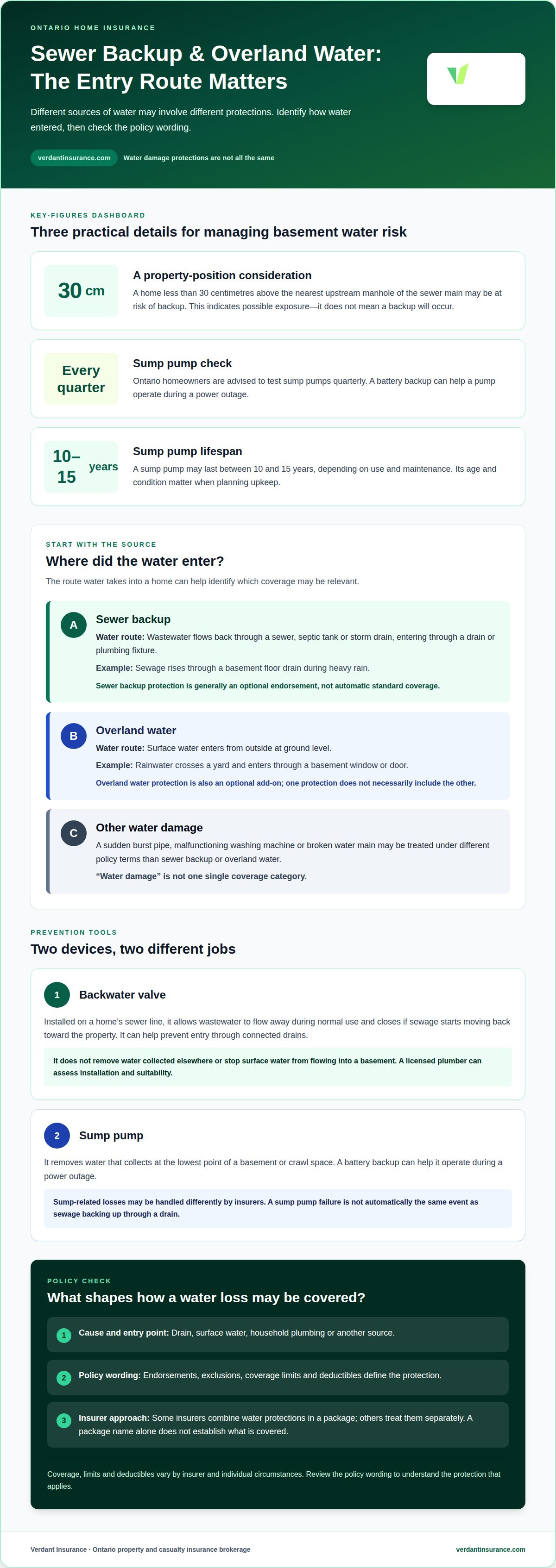
A home’s position can affect its exposure. A property less than 30 centimetres above the nearest upstream manhole of the sewer main may be at risk of backup. That doesn’t mean a backup will occur, but it helps explain why homes in the same neighbourhood can face different risks. Slow drains, gurgling toilets and recurring clogs can also signal a blockage that needs attention before wastewater enters the home.
A backwater valve is a prevention device installed on a home’s sewer line. It lets wastewater flow away from the home during normal use, then closes if sewage starts moving back toward the property. This can help prevent water and sewage from entering through connected drains. A licensed plumber can determine where and how to install the valve.
Installation may be easier during a basement renovation, when the floor is already exposed for other work. If you’re planning to finish a basement, discuss a backwater valve with a licensed plumber before installing flooring. The valve can help limit one route of sewer entry, but it won’t remove water that has collected elsewhere or replace appropriate insurance protection.
A sump pump serves a different purpose: it removes water that collects at the lowest point of a basement or crawl space. A battery backup can help the pump operate during a power outage. Ontario homeowners are advised to test sump pumps quarterly. A sump pump may last between 10 and 15 years, depending on use and maintenance, so its age and condition matter when planning upkeep.
Prevention works best as a combination of measures. A municipality may recommend a backwater valve, sump pump or both, depending on local drainage concerns. Maintain the sump pump, and address slow drains or repeated clogs rather than treating them as routine. A backwater valve might also help a homeowner qualify for a lower home insurance premium, but any effect depends on the insurer and the circumstances.
For a basement near a sewer line, a licensed plumber can assess the plumbing and explain whether a backwater valve is suitable. An insurance broker can clarify how sewer backup protection differs from other water coverage. The valve reduces one possible entry route; it doesn’t guarantee the home will avoid every source of water damage.
Difference between sewer backup and overland water coverage
The key difference is the route water takes into your home. Sewer backup coverage generally applies when wastewater flows back through a sewer, septic tank or storm drain. Overland water coverage addresses surface water that enters from outside at ground level. For example, sewage rising through a basement floor drain points to a sewer backup, while rainwater flowing across a yard and through a basement window is overland flooding. The source matters because these are distinct protections.
Sewer backup protection may be offered separately from standard home insurance. It’s generally offered as an optional endorsement that adds specified coverage to a policy. Overland water protection is also an optional add-on. Some insurers combine these protections in a water-damage package, while others treat them separately. A package name alone doesn’t establish what’s covered: the policy wording, exclusions, limits and deductible define the actual protection.
Consider a home beside a street sewer during heavy rain. If sewage backs up through a basement drain, sewer backup coverage may apply, subject to the policy terms. If rainwater instead runs over land and enters through a door, overland water coverage may be relevant. A property doesn’t need to be beside a lake or river to face surface-water damage. Sloped driveways, low basement entrances and pooling around the foundation can create possible entry routes.
Standard home insurance may cover other kinds of water damage under different terms. A sudden burst pipe or malfunctioning washing machine may be treated as an internal plumbing or appliance loss, rather than a sewer backup. A broken water main can also cause interior damage covered by a typical policy. These examples show why “water damage” isn’t one coverage category. The cause, entry point and policy wording all shape which section may respond.
Sump-related damage also needs careful attention. Some insurers include certain sump pump overflow or failure losses under sewer backup protection; others handle them separately. A sump pump failure that causes groundwater to collect isn’t automatically the same event as sewage backing up through a drain. A backwater valve can reduce the chance of sewer water entering through connected plumbing, but it doesn’t stop surface water from flowing into a basement. These risks require different prevention and coverage considerations.
Can an Ontario municipality be held liable for sewer backup damage, and how do claims work? Potential liability depends on the evidence and circumstances; a backup alone doesn’t establish that a municipality is responsible. A homeowner can document the damage and report the loss to their insurer, while a claim against a municipality follows a separate process. Keep photos, dates and relevant records to help show how the water entered and what it affected.
For a particular loss, identify whether water came through a drain, across the ground or from household plumbing. Then read the relevant endorsement and policy limits alongside the standard home insurance wording. This distinction helps explain why two homes with water damage may have different coverage outcomes.
Sewer backup coverage limits and restoration costs
Sewer backup coverage pays for eligible damage up to the policy limit, after the applicable deductible. In Ontario, limits and restoration needs can differ substantially from home to home.
Does sewer backup insurance cover basement contents, cleanup and temporary living expenses? It may cover eligible cleanup and damaged belongings, subject to the policy limit and deductible. Temporary living expenses depend on the policy wording, so don’t assume they’re covered by the sewer backup limit.
Coverage Limits and Availability
The coverage limit sets the maximum amount available for an insured sewer backup loss. Availability can also depend on the home’s history of seepage, groundwater problems or flooding, which may affect whether an insurer offers this protection.
Contents, Cleanup, and Living Expenses
Eligible sewer backup coverage may pay for cleanup and damage to belongings, walls and flooring. For example, damage to furniture and flooring in a finished basement may draw on the same limit or separate policy provisions. Temporary accommodation is a different expense; the policy wording determines whether it’s covered and how its limit applies. The deductible also affects the amount payable.
Restoration Costs
Restoration costs can include removing contaminated water, cleaning, repairs and replacing damaged property. The final amount depends on the affected area, materials and belongings, and the work needed to restore the space.
Compare the endorsement limit with the value of the basement’s contents and finishes. Contents and improvements can increase the amount of protection a homeowner may need.
The limit doesn’t usually pay to repair the sewer line that caused the backup or install a backwater valve. For instance, a covered basement cleanup and floor replacement may fall within the endorsement, while repairing the damaged sewer line remains outside that coverage. Overland flooding is distinct too, so its treatment depends on separate policy protection.
Review the limit, deductible and exclusions together, then consider whether the amount reflects the basement’s contents, finishes and potential repair needs.
Common causes of sewer backups
Sewer backups can start outside the home or within its plumbing. In Ontario, heavy rainfall and rapid snowmelt can overwhelm a sewer system, forcing wastewater back toward connected homes. Older neighbourhoods with combined stormwater and sewage pipes may be especially vulnerable during extreme weather. In these situations, a floor drain or basement toilet can become the point where wastewater enters.
Blockages in private sewer lines are another cause. Tree and shrub roots can grow into service lines, obstruct wastewater flow and increase backup risk. Grease can build up inside pipes, while wipes and hygiene products may catch on obstructions instead of breaking down. Paper towels and food scraps can add to the blockage. A recurring clog in one drain or several fixtures may signal a problem that needs attention.
- Keep grease, wipes, paper towels, hygiene products and food scraps out of household drains.
- Notice whether slow drainage or gurgling occurs in multiple fixtures, not just one sink.
- Arrange a sewer-line inspection if mature trees grow near the service line; roots can enter damaged or connected pipes.
Heavy rain can affect homes with septic systems too. Saturated ground or flooding may interfere with drainage, causing wastewater to back up through the home’s plumbing. The septic system’s condition and the surrounding soil both matter. Regular professional inspection and pumping can help identify maintenance needs before a blockage or system problem disrupts household drainage.
Downspouts can add to drainage pressure when roof runoff is discharged beside the foundation. Directing them away from the home helps move rainwater away from basement walls and nearby ground. One recommendation is to extend downspouts at least six feet from the basement wall, directing water away from the home and neighbouring properties. Clean and maintain downspouts and eavestroughs at least once a year to keep debris from obstructing runoff.
A malfunctioning sump pump doesn’t directly cause a sewer backup. However, groundwater gathering around a foundation can put added strain on a sewer line. A pump removes water collecting at the basement’s lowest point; it doesn’t clear a blockage in sewer plumbing. Maintaining the pump can help manage groundwater, while sewer-line issues require attention to the line itself.
For homes connected to a municipal sewer system, the pipe between the house and sewer main matters too. Maintenance responsibilities for sewer pipes can vary, so homeowners may want to confirm which pipes they are responsible for maintaining. A blockage along that stretch can affect household drains even when municipal pipes are working. If sewage starts backing up, stop using plumbing, including flushing toilets or running water down drains, and contact a licensed professional experienced with sewer backups to identify the cause.
Whether standard Ontario home insurance includes sewer backup
No. Standard Ontario home insurance doesn’t automatically include sewer backup protection. It’s generally an optional endorsement that adds protection for eligible damage caused by wastewater backing up into the home. Sewer backup coverage isn’t mandatory in Canada. A mortgage lender may require home insurance under a loan contract, but that doesn’t automatically include sewer backup protection.
This distinction matters during heavy rain. A standard policy may cover sudden and accidental water damage from an indoor burst pipe, but sewage entering through a basement drain is a different loss. Overland water damage is separate, even if the same storm caused both events. For example, sewage could back up through a basement drain while rainwater enters through a low doorway. The cause and route of entry help determine which coverage may apply.
An optional endorsement sets out the covered event, limit, deductible and exclusions. Depending on the wording, it may respond to eligible damage from wastewater coming through a sewer, septic tank or storm drain. It generally doesn’t pay to repair the sewer line or install prevention equipment. Repairing a damaged pipe and fixing a floor after sewage enters are different expenses and may be treated differently under the policy.
Sewer backup insurance coverage in Ontario is usually added through an endorsement, but terms depend on the insurer and property. Review the wording for the limit, deductible and exclusions; similar policy descriptions don’t necessarily mean identical protection.
After sewage enters a home, stop using plumbing, including toilets and drains. Avoid standing water if electrical outlets or appliances are submerged, and turn off the main hydro breaker only if it’s safe to reach. Don’t attempt to clean sewage yourself; trained professionals should handle contaminated water. Photograph damage from a safe location and contact your insurer as soon as possible to report the loss.
Keep records that help show what happened and what was affected. Photos of the entry point, damaged rooms and belongings can document the loss. Retain relevant cleanup and repair records, and follow the insurer’s instructions for submitting information. Review the endorsement alongside the policy limit, deductible and exclusions rather than treating these as separate details.
The practical takeaway is to look for sewer backup protection specifically instead of assuming general water-damage coverage includes it. To discuss your policy and Ontario home insurance coverage, consider speaking with an insurance broker.
Verdant Insurance
Verdant Insurance can help Ontario homeowners make sense of sewer backup protection within their broader home insurance needs. As a brokerage, Verdant can discuss how optional water endorsements, policy limits and deductibles relate to a home’s circumstances. This can be useful when reviewing an existing policy, considering a new one or weighing sewer backup protection alongside overland water coverage. Actual coverage depends on the insurer, policy wording, limits and exclusions. If you’re considering Homeowner Insurance, a conversation can help clarify the options and questions to consider, without assuming every policy treats water damage the same way. Contact Verdant Insurance to discuss your Ontario home insurance questions.
Make your next coverage review count
Use your next renewal, move or basement renovation to review how your home and belongings are protected. Understanding sewer backup insurance coverage in Ontario is less about choosing a single number and more about matching protection to how you use your home.
Before reviewing your coverage, note changes such as finished space, newly stored belongings or drainage work. This snapshot can focus the discussion and surface questions a policy summary may not answer. Ask how sewer backup and overland water endorsements coordinate, whether their limits and deductibles are separate, and what documentation may be useful after a loss. Coverage terms and availability depend on the insurer and your property’s circumstances. Revisit your coverage as your home changes rather than relying on assumptions from a previous renewal.
A clear review can help you make an informed decision and feel more prepared to protect your home.
Frequently Asked Questions
Can my septic system cause wastewater to back up into my home?
Yes. A septic system can back up wastewater into a home, particularly during heavy rain or flooding. Saturated ground can interfere with drainage, while a blockage or system issue can prevent wastewater from flowing properly. For example, a drain that gurgles or empties slowly may point to a developing problem. Regular professional inspection and pumping help identify septic maintenance needs before wastewater reaches indoor fixtures.
What should I do if my sewer backs up?
Stop using plumbing, including toilets, sinks and washing machines, to avoid adding water to the system. Keep people and pets away from sewage, and don’t attempt cleanup yourself. If water is near electrical outlets or appliances, avoid standing in it; turn off the main breaker only if it’s safe to reach. Photograph damage from a safe location, contact your insurer promptly and arrange an assessment by a trained cleanup professional.
Does home insurance in Ontario cover sewer backups?
Not automatically under a standard Ontario home insurance policy. Sewer backup protection is generally optional and must be added as an endorsement. Having home insurance for other risks, such as sudden damage from a burst pipe, doesn’t by itself mean sewer backup is insured. Look for a specific sewer backup provision in the policy documents, including its limit, deductible and exclusions, rather than relying on a general reference to water damage.
What sewer backup damage is typically covered or excluded by Ontario home insurance policies?
Where the endorsement applies, eligible costs may include cleanup and repairs to damaged walls, flooring or belongings. The policy limit and deductible affect payment. Coverage generally doesn’t pay to repair the sewer line that caused the loss or install a backwater valve. Overland flooding and indoor plumbing failures are different causes of damage, so they may fall under other policy terms or require separate protection.
How much sewer backup insurance coverage can Ontario homeowners buy?
The amount available depends on the insurer’s terms and the property’s circumstances. Estimate potential needs by considering basement contents, flooring, finished walls and other improvements. For example, a finished basement with furniture and upgraded finishes may need more protection than an unfinished space with few stored belongings.
What are typical sewer backup insurance premiums and deductibles in Ontario?
There isn’t one premium or deductible for every Ontario home. The premium depends on factors such as the property, selected coverage and insurer’s terms; the deductible is the amount the homeowner pays toward an eligible loss. Some insurers set a separate sewer backup deductible. The policy documents show the applicable amounts, and an insurance broker can explain how the selected limit and deductible affect coverage.
Are overland flooding and sewer backup covered separately in Ontario?
Generally, yes. Sewer backup protection addresses wastewater entering through a sewer, septic tank or storm drain, while overland water protection applies to surface water entering from outside at ground level. They’re separate optional protections, although some insurers combine them in a package. For example, sewage emerging from a basement drain and rainwater flowing through a doorway are different water-entry events, so the relevant policy wording matters.
How can Ontario homeowners add sewer backup coverage or increase their policy limit?
Ask for a review of your home insurance policy and whether a sewer backup endorsement can be added or its limit changed. Consider the basement’s contents, finishes and potential restoration needs when discussing the amount. Available options and eligibility depend on the insurer and your property’s circumstances. Read the revised documents for the effective coverage, limit, deductible and exclusions before relying on the change.


