

What if a small home maintenance issue becomes a concern during an insurance inspection? A home insurance inspection checklist in Ontario helps you review the parts of a property that can affect its condition and risk, including the roof, foundation, electrical and plumbing systems, heating, and signs of moisture. Insurers may request an inspection to assess a home’s replacement cost and potential risks.
It’s easy to mistake an inspection checklist for a pass-or-fail test. Instead, use it to identify what needs attention. Note warning signs and recommendations for further investigation, and distinguish urgent safety or water concerns from routine repairs.
This guide explains what an inspection may cover, which red flags warrant closer attention, and how to review findings when discussing repairs or a possible price adjustment during a home purchase. It also explains the limits of a visual inspection, so you can understand the report and plan practical next steps.
Key Takeaways
- Review electrical panels, outlet protection, and alarms for issues that may need attention.
- Look for drainage patterns around the home, and note visible concerns on decks and exterior surfaces.
- Use the inspection report to identify which findings may call for further investigation or repair discussions.
- Pay attention to signs of damage around windows, doors, stairs, and interior finishes.
- Recognize moisture and water-related warning signs, then consider how they may affect your next steps.
Electrical panels, GFCI outlets, and fire alarms
An Ontario home insurance inspection typically reviews accessible features and major systems to help assess a property’s condition and potential risks. These may include the roof, foundation, electrical and plumbing systems, heating, cooling, and ventilation. An inspection is not a guarantee of coverage or a complete examination of every component.
Yes. A home inspection may include the roof, foundation, and exterior drainage. The inspector may note visible concerns such as damaged roofing, foundation cracks, or water draining toward the house. The review is generally visual and limited to accessible areas.
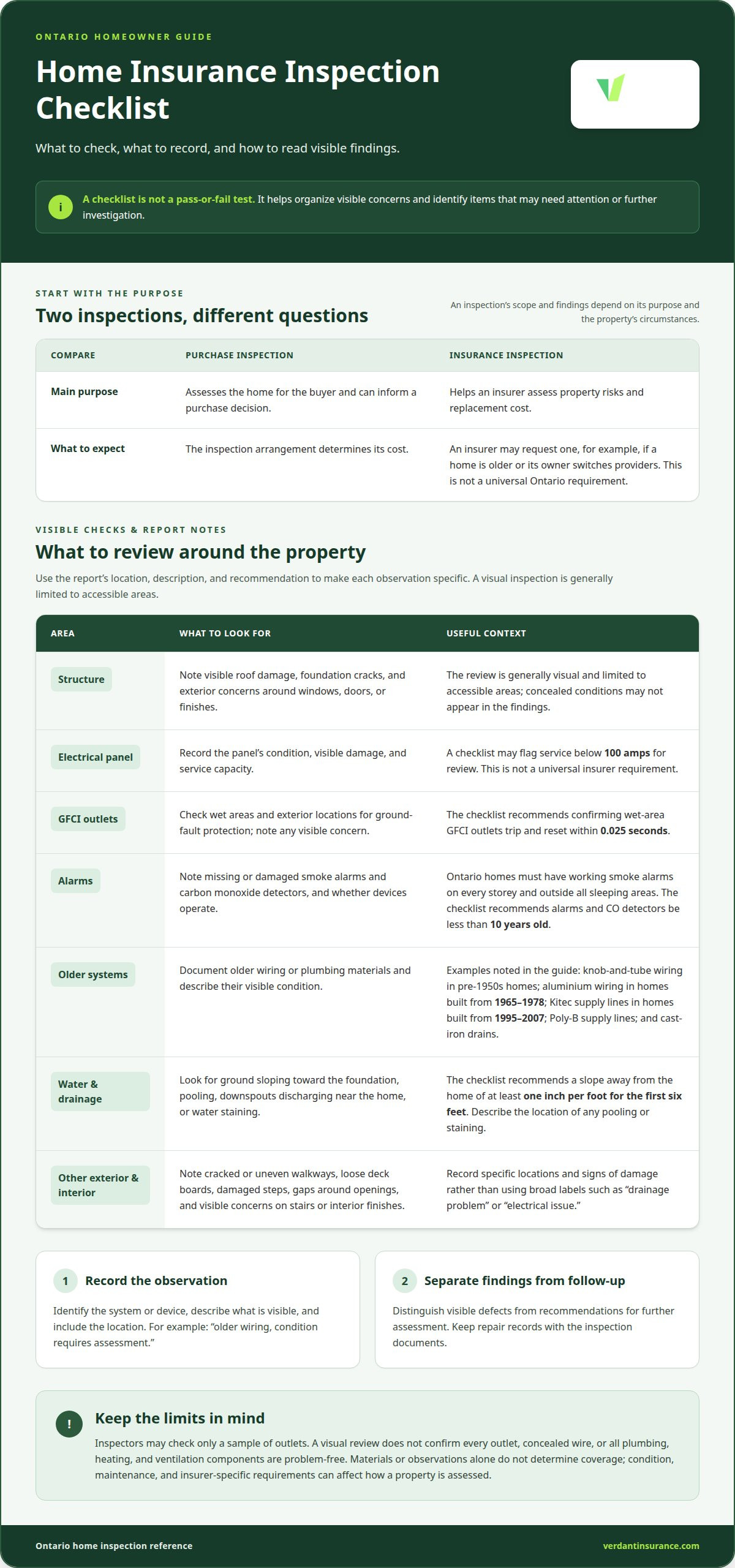
- Panel: Note the panel’s condition, visible damage, and service capacity. A checklist may flag service below 100 amps for review, but that figure is not a universal insurer requirement.
- GFCI outlets: Check outlets in wet areas and exterior locations for ground-fault protection. The checklist recommends confirming that wet-area GFCI outlets trip and reset within 0.025 seconds.
- Smoke alarms: According to the Government of Ontario, homes must have working smoke alarms on every storey and outside all sleeping areas.
- Alarm condition: A checklist recommends smoke alarms and carbon monoxide detectors be less than 10 years old. Confirm they operate and note missing or damaged devices.
Older wiring and plumbing deserve clear documentation. Knob-and-tube wiring may appear in pre-1950s homes, while aluminium wiring is common in Ontario homes built from 1965-1978. Kitec supply lines are prevalent in homes built from 1995-2007; Poly-B supply lines and cast-iron drains can also be insurance concerns. These materials do not determine coverage by themselves. Their condition, maintenance, and insurer-specific requirements can affect how a property is assessed.
Use a practical sequence: record the system or device, describe the visible concern, and note the report’s recommendation. For example, “older wiring, condition requires assessment” is more useful than “electrical issue.” Inspectors check only a sample of outlets, so the report cannot confirm that every outlet or concealed wire is problem-free. Nor does it establish that all plumbing, heating, or ventilation components work perfectly.
As a homeowner, focus on what the report observed and what needs follow-up. Separate visible defects from recommendations for further assessment, then keep repair records with the inspection documents. This gives you clearer information when discussing the property’s condition and insurance needs.
What is a home inspection checklist?
A home inspection checklist organizes visible checks of a property’s structure and accessible systems. For Ontario homeowners, it can help record exterior grading, drainage, decks, roofing, and ventilation. During a purchase, the checklist can also help identify concerns before the buyer proceeds. It guides observations but doesn’t replace a qualified inspector’s examination.
A purchase inspection assesses a home for the buyer, while an insurance inspection helps an insurer assess property risks and replacement cost. The purposes differ: one informs a purchase decision, the other an insurance assessment.
An insurer may request an inspection if a home is older or its owner switches providers. This is not a universal Ontario inspection requirement. Whether one is needed depends on the insurer and the property’s circumstances.
That estimate applies to a purchase inspection, not necessarily an insurer-requested assessment. The inspection arrangement determines any cost for an insurance assessment.
Before an inspection, make accessible areas available and gather records about repairs or known exterior changes. Clear access to the deck, foundation, and utility areas helps the inspector observe visible conditions. Don’t conceal damage with temporary coverings.
Use these exterior checks to organize observations:
- Grading: Look for ground that slopes toward the foundation, where rain or snowmelt may collect. The checklist recommends a slope away from the home of at least one inch per foot for the first six feet.
- Downspouts: Note whether splash blocks direct water away from the building. Check for discharge near the foundation or visible signs of pooling.
- Walkways and driveway: Look for cracks, uneven surfaces, and slopes that carry water toward the home. Record locations so the report can describe specific areas.
- Deck: Note visible loose boards, damaged steps, or separation from the house. These observations can prompt closer assessment of the deck’s condition.
- Exterior openings: Look for gaps around doors and windows, damaged exterior finishes, or spots where water could enter. Note nearby ventilation outlets and whether their openings appear blocked.
Make observations specific: “water pools beside the rear foundation” is more useful than “drainage problem.” A checklist can help organize concerns for an insurer’s property assessment. An Ontario home inspection is generally a non-invasive visual review of accessible areas, so concealed conditions may not appear in the findings. Use the checklist to identify issues that may need further investigation.
Inspection reports and negotiating repairs or price changes
An inspection report records observed conditions, supporting details, and recommendations for follow-up. Read each finding alongside its location and description. For example, a note about basement water staining is more actionable if it identifies the affected wall and recommends investigating the source.
There is no single repair deadline for every Ontario home insurance inspection. Check the insurer’s written requirements for the applicable date and requested work. Keep the notice with the report so the timing and any follow-up steps are clear.
If an insurance inspection identifies a concern, the insurer may request repairs or more information. An old roof, outdated systems, or missing smoke alarms may affect an insurance assessment or premium. The report itself does not change policy wording; coverage remains subject to the insurer’s terms, limits, and exclusions.
Use a simple review process to turn report details into practical next steps:
- Locate each item: Match the finding to a room, exterior area, system, or appliance. “Leak under the kitchen sink” is clearer than “plumbing concern.”
- Separate observations from recommendations: A visible stain is an observation; a request to investigate its source is a next step.
- Group related repairs: For example, list a roof concern separately from a heating issue, even if both appear in one report.
- Keep records: Save invoices, photos, and written repair details with the inspection report. These documents show what work addressed a specific finding.
For a home purchase, inspection results can support a request for repairs or a price adjustment. Identify the report item, explain the concern, and state your request clearly. For example, a buyer might ask the seller to address a documented roof defect or adjust the purchase price. If the report recommends further investigation, a specialist’s assessment can help clarify the finding.
Insurance inspections and purchase negotiations serve different purposes. An insurance finding does not automatically establish a seller’s responsibility or determine a purchase-price change. Keep those discussions tied to the sale agreement and specific inspection evidence.
When reviewing requested work, compare the insurer’s written instructions with the report, then document completed repairs. If a finding concerns the ground around the foundation, for example, record the drainage work and retain supporting documents. Clear records keep repair discussions focused and make the outcome easier to track.
Interior surfaces, windows, doors, and stairs
An interior inspection records visible conditions that may point to damage, maintenance needs, or further assessment. Review ceilings, walls, floors, windows, doors, and stairs as connected parts of the home. A ceiling stain beneath an upstairs bathroom, for example, warrants a different note from a small scuff beside a doorway.
Describe what you can see, where it appears, and whether nearby surfaces show related signs. A crack beside a window, peeling paint under a sill, or a sticking door helps the inspector document a specific area. These observations don’t establish the cause on their own.
- Ceilings and walls: Note cracks, bubbling paint, stains, or uneven surfaces; a stain near a ceiling fixture may need closer review.
- Floors: Record soft, sloped, or visibly damaged areas, especially near plumbing fixtures or exterior doors.
- Windows: Look for cracked glass, damaged frames, gaps, or signs of moisture around the sill. A fogged appearance between panes can also be recorded for assessment.
- Doors: Check whether interior and exterior doors open and close smoothly. Note visible gaps, damaged frames, or a latch that doesn’t meet its strike plate.
- Stairs and railings: Observe loose components, damaged treads, or changes in step height. A handrail that moves when touched is a clear item to document.
Windows and doors can offer clues about the building envelope. Water marks below a window, for example, may call for investigation around the frame or exterior drainage. Drafts may relate to gaps or insulation, but a visual inspection doesn’t measure heat loss or confirm insulation performance inside closed walls.
Interior checks also include visible signs of previous repairs. A recently patched section of drywall, mismatched flooring, or fresh paint over a stain may be worth describing with its location. Maintenance records, receipts, or photographs can help explain what work was completed and when. Keep these details with the inspection report rather than assuming a surface repair resolved the underlying issue.
Use precise descriptions: “crack above the basement window” gives a clearer location than “wall damage.” If a report recommends further investigation, distinguish that recommendation from the visual observation. A checklist organizes visible findings, but it doesn’t replace specialist testing or reveal concealed conditions behind finished walls.
Mould, water damage, drainage, and other red flags
Moisture deserves careful attention because a small stain can point to a larger water issue. Note musty odours, visible mould-like growth, peeling paint, or damp materials. Record each location, such as a basement corner, under a sink, or beside a window. These observations identify areas for further assessment but don’t establish the source of moisture.
In the basement, look for water marks, seepage, or dampness around foundation walls and floor joints. Note whether a sump pump is present and whether the surrounding area shows signs of past water entry. Keep observations factual: “damp patch beside the laundry area” is more useful than a general label such as “mould problem.”
- Drainage: Check whether downspouts direct water away from the building and whether splash blocks are in place. Note pooling or soil erosion near the foundation.
- Water heater: Record visible leaks, rust, or corrosion around the tank and connections. The checklist flags water heaters older than 10 years as carrying a significantly higher risk of tank failure and water damage.
- Bathrooms and kitchens: Look beneath sinks and around tubs for stains, soft surfaces, or damaged sealant. A cabinet base with water marks may warrant closer investigation.
- Ventilation: Confirm bathroom exhaust fans operate, and note whether exhaust ducts lead into the attic. Poorly directed moisture can contribute to damp conditions.
Water protection is not a universal feature of every home policy. Available coverage, exclusions, limits, and eligibility depend on the insurer, policy wording, and individual circumstances. A visible basement water issue also doesn’t, by itself, determine whether a future loss would be covered. Review the policy wording for relevant water-related terms and exclusions.
Distinguish active moisture from old staining during the inspection. A dry mark on a basement wall, for example, differs from fresh dampness around a pipe. Share the report’s exact observations when discussing the property’s condition, and keep repair records or photographs that explain completed work. If the report recommends a specialist assessment, it can help identify the source before repairs begin.
For a final review, match each concern in the report to its location, evidence, and recommended next step. This makes water-damage findings easier to discuss and helps prevent a visible symptom from being mistaken for a confirmed cause.
Verdant Insurance: Homeowner Insurance
Verdant Insurance offers Homeowner Insurance for Ontario homeowners. After reviewing an inspection report, discuss the home’s condition, features, and insurance needs with a Verdant broker. The report provides useful context but does not determine coverage by itself.
A broker can explain what information is useful for a homeowner insurance discussion, such as the property’s age and construction, visible maintenance concerns, major systems, and completed repairs. Clear details help frame a conversation about the home and its risks. Eligibility, available coverage, pricing, policy limits, and exclusions depend on the insurer and individual circumstances.
Bring the inspection report and relevant repair records to the discussion. Point out findings that concern you, such as water damage, older wiring, or a roof condition noted by the inspector. If you’ve completed work, invoices or photographs can help explain what changed. These documents support an informed review but don’t replace the policy wording or guarantee a particular coverage decision.
Consider speaking with a broker when arranging insurance for a newly purchased home, changing providers, or reviewing insurance after an inspection identifies concerns. A broker can discuss homeowner insurance options and explain how property details inform the insurance conversation. If your needs also involve another property or personal insurance matter, share that context so the discussion reflects your circumstances.
Verdant Insurance offers online quote requests and policy management, with dedicated support. Share relevant property information to help make the insurance discussion more focused. A broker can explain the steps and answer questions about the information you provide. Coverage remains subject to insurer eligibility and the policy’s wording, limits, and exclusions.
Home maintenance and insurance planning work best when property information is clear. Keep the inspection report, repair documents, and current policy details together. This makes it easier to describe the home accurately during a review and ask focused questions about the terms that matter to you. If a report identifies a concern, explain what it observed rather than assuming a specific insurance outcome.
Ontario homeowners looking to discuss their property and homeowner insurance needs can contact Verdant Insurance.
Take the next step with confidence
Use a home insurance inspection checklist in Ontario as a starting point for an informed conversation, not as a guarantee of what a policy will cover. Keep the inspection report and repair records together, then focus on the property details you want to discuss. A clear account of your home’s condition can make that conversation more productive.
Verdant Insurance offers Homeowner Insurance, Auto Insurance, and Business Insurance. A Verdant broker can discuss your homeowner insurance needs and explain options for your circumstances. Coverage, eligibility, pricing, limits, and exclusions vary by insurer and individual circumstances.
When you’re ready to discuss your home insurance needs, contact Verdant Insurance.
With relevant questions and property information in hand, you can approach your next insurance conversation with greater clarity.
Frequently Asked Questions
Are home inspections required in Ontario?
Home inspections generally aren’t mandatory under Ontario law when buying a home, but buyers often use them to understand a property’s condition before proceeding. An insurer may separately request an inspection, for example, for an older property or after a provider change. This request relates to the insurer’s assessment, not a general legal requirement for every Ontario homeowner. Read any inspection condition in your purchase agreement and insurer communications carefully.
How to Interpret the Results?
Read each finding as an observation, recommendation, or item requiring further investigation. For example, a report may describe a stain on a basement ceiling and recommend tracing its source. The observation doesn’t identify the cause by itself. Note the location and report wording, then organize questions around unclear findings. Keep assessments, repair records, and photographs together so you can explain what was investigated or addressed.
Why do you need a homeowners inspection?
A homeowner’s inspection can identify visible maintenance concerns and give you a clearer picture of the property’s condition. For instance, it might flag a roof concern or a leak beneath a sink before it worsens. If an insurer requests an inspection, the findings may also inform its assessment of the home’s condition and potential risks. A visual inspection has limits and doesn’t reveal every concealed problem.
What Ontario building, electrical, plumbing, and heating issues can affect home insurance eligibility?
Insurers may consider the condition and age of major systems, the roof, and the home’s construction when assessing eligibility. Potential concerns include knob-and-tube or aluminium wiring, Kitec or Poly-B supply lines, cast-iron drains, visible leaks, or an aging roof. These features don’t determine eligibility by themselves. Insurer requirements and property details matter, so provide accurate information about the home and completed repairs.
What safety features do Ontario home insurers inspect, such as smoke alarms and fire extinguishers?
An inspection may note visible fire-safety equipment, such as alarms or fire extinguishers, and record its location and apparent condition. A visual observation doesn’t test a device or confirm it will work in an emergency. Keep maintenance records and note when equipment has been replaced. Whether an insurer asks about a particular device depends on its requirements and the property and policy details.
Who pays for a home insurance inspection in Ontario, and what does it cost?
The inspection arrangement determines any cost for an insurance assessment.


