

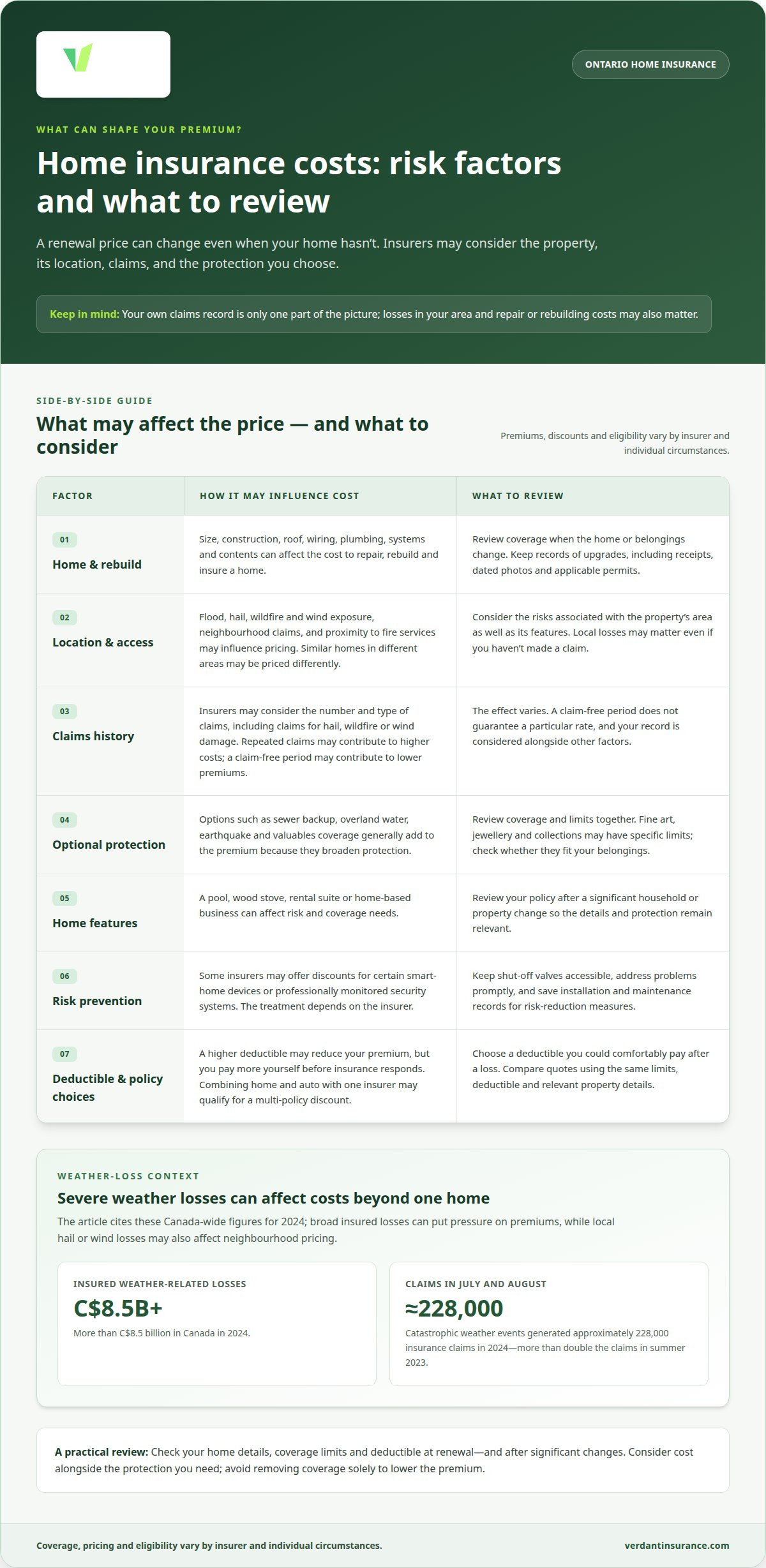
Could the weather around your home affect what you pay, even if the house itself hasn’t changed? Yes. Things that increase home insurance cost can include a home’s age, size, construction, roof and wiring, location and access to fire services, claims history, and exposure to severe weather and flooding.
It’s understandable to wonder why your premium changes at renewal when you haven’t made a claim. Insurers may also consider losses in your area and the cost of repairing or rebuilding homes, so your own claims record is only part of the picture. Features such as a pool, wood stove, rental suite or home-based business can also affect risk and coverage needs.
This article explains how home features, location, severe weather and climate-related losses can affect premiums for Ontario homeowners. You’ll also find practical ways to manage costs, including reviewing your coverage, considering your deductible and discussing risk-reduction measures. The goal is to help you understand what may be driving your premium and which options are worth considering without cutting protection you need.
Key Takeaways
- Your home’s size, construction, roof, systems and contents can affect the cost to rebuild and insure it.
- Location matters: flood or severe-weather exposure, neighbourhood claims and access to fire services can influence premiums.
- Claims history can affect pricing, while severe weather losses may put pressure on insurance costs across a region.
- Consider whether a higher deductible fits your budget, since you’ll pay more yourself before coverage applies to a claim.
- Review your coverage as your home or belongings change, and keep records of upgrades that may help document your property.
How does climate change and severe weather events impact your home insurance premium?
Severe weather can increase home insurance costs by driving up claims and repair losses across affected areas. Your own claims history also matters, along with local risks and the protection included in your policy.
Claims from Hail, Wildfire, and Wind
Claims for hail, wildfire or wind damage can affect premiums by adding to your personal claims history. A hail-damaged roof, wildfire-damaged siding or wind-damaged shingles can each lead to a claim. Insurers consider the number and type of claims when assessing risk and setting home insurance rates. A long period without claims could contribute to lower premiums, while repeated claims may contribute to higher costs. The effect varies by insurer and individual circumstances.
Local Extreme Weather Exposure
Local extreme-weather exposure refers to the risk of weather damage associated with a home’s area. Flood, wildfire, hail and windstorm claims in a neighbourhood can influence insurance prices, even when a homeowner hasn’t filed a claim. For example, a home in an area with repeated flooding may be priced differently from a similar home elsewhere. This helps explain why premiums can depend on location as well as personal claims history.
Optional coverage for sewer backup, overland water, earthquakes and valuables generally adds to premiums because it broadens a policy’s protection. The price impact depends on the insurer, selected limits and the home’s circumstances. Fine art, jewellery and collections may also have specific policy limits, so consider whether those limits fit your belongings.
Canada experienced more than C$8.5 billion in insured weather-related losses in 2024. Catastrophic weather events also generated approximately 228,000 insurance claims in July and August 2024, more than double the claims in summer 2023. These losses can place pressure on premiums as insurers account for more frequent, costly claims. Local hail or wind losses can also affect pricing in the neighbourhoods where damage occurs.
Keep clear records of home improvements that could matter after a weather-related claim. Save receipts, dated photos, inspection reports and applicable municipal permits for upgrades such as a roof replacement or flood-protection work. These records can help document the home’s condition and improvements when a claim is assessed. Store digital copies with your home inventory so they’re easier to find after an emergency.
Claims history and credit score are separate considerations. Some Canadian insurers may offer optional credit-based insurance scoring where provincial rules permit it and the customer consents. This is not the same as a claims record, and it doesn’t replace information about the property, its location or the selected coverage. Discounts and premium calculations vary by insurer, so a claim-free period doesn’t guarantee a particular rate.
How can you lower your home insurance costs?
Managing costs starts with choosing protection that fits your current home and budget. You can review several factors that increase home insurance cost without automatically reducing important coverage.
Plumbing and System Condition
Preventive measures can help keep a small household problem from becoming a larger loss. For example, a monitored leak-detection device may alert you to water escaping near a laundry area or appliance. Some insurers may offer discounts for certain smart home devices or professionally monitored security systems. Ask how a specific measure is treated under your policy, and keep records of its installation and maintenance.
Consider practical steps to protect your home day to day, too. Keep shut-off valves accessible, and arrange repairs when a problem appears rather than allowing damage to continue. These actions don’t guarantee a lower premium, but they can reduce avoidable damage and help document how the property is maintained.
Renovations and Premiums
Before renovating, consider how the availability of construction materials could affect repairs if damage occurs during or after the work. Shortages can make suitable materials harder to source and may affect repair timing. Windstorm- or wildfire-resistant materials may suit some properties, but their insurance impact depends on the insurer’s assessment. Keep material specifications and invoices to document completed improvements.
To manage costs, review your policy at renewal and after a significant change to your household or belongings. A current inventory can help identify items whose value has changed and belongings that may have specific limits. Review optional coverage and limits together, rather than removing protection solely to lower your premium. Coverage and pricing vary by insurer and individual circumstances.
Other options may be worth discussing. Placing home and auto policies with the same insurer may qualify for a multi-policy discount, although eligibility and the discount amount vary. A higher deductible may also reduce your premium, but you’ll pay more yourself before insurance responds to a claim. Consider the deductible in light of what you could comfortably pay after a loss.
Compare quotes using the same coverage limits, deductible, and relevant property details. That makes it easier to see whether a price difference reflects a genuine change in protection or simply different policy terms. Understanding the things that increase home insurance cost can help you focus on changes that fit your home, not just the lowest quoted premium. Some things that increase home insurance cost may be managed through a coverage review, but avoid assuming that every insurer treats a safety feature or improvement the same way. An Ontario homeowner insurance review can help you consider how your coverage and priorities fit together.
Home size, construction and replacement cost
Home insurance premiums reflect the work and materials needed to rebuild a home after a major loss. The home’s size, construction details and belongings all help shape the estimate.
Home Size and Rebuilding Needs
Replacement cost is the amount needed to rebuild a home after an unrepairable loss, excluding the value of the land. A larger home generally requires more materials and labour, so its rebuilding estimate may be higher. For example, a two-storey home with a finished basement has different reconstruction needs from a smaller, unfinished home. Insurers use these details to assess dwelling coverage and calculate insurance costs.
Accurate details matter. A finished basement, custom features, or substantial upgrades can change the work needed to restore the property. Tell the insurer about these features so the estimate reflects the home as it is now, not an older version. Home insurance costs can also change as labour and material prices shift; Canadian home reconstruction costs increased by 4.8% from January 2022 to January 2023.
Construction and Replacement Cost
Construction describes the materials and methods used to build a home, which influence the resources needed for repairs or rebuilding. Brick, wood framing and other materials can involve different labour and replacement needs. The same applies to built-in features and finishes. These differences affect the estimated reconstruction amount, one factor in home insurance premiums.
Belongings are another part of the picture. Furniture, appliances, clothing and electronics may need replacing after a covered loss, subject to policy wording, limits and exclusions. A home inventory can help estimate the value of your contents and identify high-value items, such as jewellery or fine art, that may have specific limits. Record major purchases and update the inventory as rooms change. A monitored security system may also lower premiums with some insurers.
Water lines deserve attention, too. Older galvanized steel or lead pipes are more likely to crack and leak. Replacing them with copper or plastic plumbing may help reduce insurance costs. A finished basement with furniture and appliances also increases the property that may need replacing after water damage. Describe the basement and its contents accurately when arranging coverage.
Roof Replacement and Insurability
Roof replacement affects insurability because an aging or damaged roof can increase the chance of leaks and interior damage. Canadian home insurers generally prefer roofs updated within 20 years, and some may decline homes with roofs needing significant repairs. If a leak occurs after a roof reaches the end of its lifespan, interior damage may be covered while roof damage is not. Policy wording determines the actual response.
Keep roof inspection reports and replacement records with your renovation documents. Accurate information about the roof, plumbing, home size and contents helps the insurer assess rebuilding needs. Reviewing these details after major improvements can help keep the insured amount aligned with the home’s current condition.
Home location and proximity to fire protection
A home’s postal code can affect insurance pricing because neighbourhood risks and access to fire services vary across Ontario. Insurers consider location alongside the property’s construction, age and claims history.
Postal Code and Neighbourhood Risk
A postal code helps identify local conditions that can influence the likelihood and cost of home insurance claims. Insurers assess neighbourhood claims by their number, type and cost when estimating future risk. For example, repeated water-loss claims in one area can affect how insurers view nearby homes, even if an individual homeowner has never made a claim.
Flood exposure, natural-disaster risk and theft risk are also relevant location factors in Canada. Two homes with similar construction can therefore have different insurance costs if their neighbourhood risks differ. A postal code is one part of the assessment, not a complete picture of a property’s risks or insurance needs.
Proximity to Fire Protection
Proximity to fire protection means how close a home is to a fire hydrant or fire station. Insurers may consider a home’s proximity to fire services, but the effect on pricing varies by insurer and individual circumstances. A home farther from these services may be assessed differently from a similar home nearby.
The difference depends on the property’s location, not simply its municipal address. In the GTA, for example, homes in different communities can have different distances to fire services and different neighbourhood claims patterns. Insurers consider these details alongside other factors when pricing policies.
Location-based insurance risk combines a property’s surroundings with the potential frequency and cost of losses. A home near an area with greater flood exposure can face a different risk assessment from one outside that area. Theft patterns and severe-weather claims can also influence how insurers assess a neighbourhood. These factors help explain why home insurance premiums can vary between postal codes, including across York Region and Toronto.
Construction matters alongside location. A home’s age and building materials can affect the estimated cost of repairing or rebuilding it after a loss. Insurers assess these details alongside local risks rather than treating every home in a postal code as identical. For a useful comparison, provide accurate, consistent address and property information with each quote request.
A move within Ontario can change the location factors used to price a policy, even if the new home is similar in size. When arranging coverage for a new address, provide its postal code and building details. This allows the insurer to assess the specific location, nearby fire protection and property characteristics together.
Severe weather and climate-related insurance losses
Severe weather can cause concentrated property losses and increase insurance claims. In Ontario, local exposure and the scale of damage can influence how insurers assess risk and set rates.
Extreme Weather Losses
Extreme-weather losses are the costs of repairing or replacing property damaged by events such as floods, windstorms, hail and wildfires. Widespread damage matters because it can increase demand for labour and construction materials.
The impact on a home depends on what the event damages. Wind may affect exterior structures, while floodwater can damage several parts of a property at once. The repairs, materials and labour required all contribute to the loss. Climate-related patterns can therefore affect insurers’ assessment of exposure, alongside each home’s specific features and location.
Neighbourhood Weather Exposure
Neighbourhood weather exposure is the potential for weather-related damage in a particular area. It matters because claims from nearby homes can inform how insurers assess local risk. For example, recurring flood losses may affect the assessment of homes with similar exposure, even when an individual homeowner hasn’t filed a claim.
The event demonstrates how losses can be concentrated in Ontario communities. Local patterns of flooding, hail or wind damage may affect insurance rates, while the specific assessment also considers the insured property and policy.
After a weather event, keep a record of damage and related repairs. If it’s safe, take dated photos before cleanup, save invoices and note which areas of the home were affected. These documents can help establish the property’s condition and the work completed. Store copies with other home records so they’re accessible if you need to discuss a loss.
Maintenance records can also help show how the home has been cared for. Keep inspection reports and documentation of completed protective work together, then update them when repairs or improvements are made. Records don’t prevent weather damage, but they can make it easier to explain the property’s condition and repair history when discussing a claim.
Ontario homeowners can use local weather exposure as a reason to review their policy and understand the protections they selected. Actual coverage depends on policy wording, limits, exclusions, insurer eligibility and individual circumstances. Consider how your property’s weather risks relate to your coverage needs before the next renewal.
Verdant Insurance: Homeowner Insurance
Verdant Insurance is an Ontario insurance brokerage that helps homeowners explore home insurance suited to their property and coverage needs. If renovations, a change of address, new belongings or severe-weather exposure have changed your circumstances, it may be time to review your policy.
An insurance broker can help you consider your home’s construction, claims history, location and desired coverage, then explain available options. Pricing, coverage and eligibility vary by insurer and individual circumstances. If you also need protection for your vehicle or business, Verdant Insurance offers Auto Insurance and Business Insurance.
Make your next renewal a confident decision
Use your next renewal as a chance to make deliberate choices, rather than simply accepting familiar terms. Understanding the things that increase home insurance cost gives you a clearer basis for discussing what matters to your household and which trade-offs fit your budget. The goal isn’t to remove useful protection just to reduce a premium. It’s to make sure your decisions reflect the home you have now and the financial risk you’re comfortable carrying.
Before making a change, consider what you could manage yourself after a loss and what you’d want your policy to protect. Then bring those priorities into a conversation about available options. Pricing, coverage and eligibility vary by insurer and individual circumstances, so a careful review can help you understand which choices are relevant to your situation.
A clear plan can make your next decision feel more manageable. Take the time to choose coverage carefully and confidently.
Frequently Asked Questions
How does where I live affect my home insurance premium?
Your address helps insurers assess risks associated with the specific property and its surroundings. If you move, provide the new address and occupancy details before arranging coverage. A policy for your previous home may not describe the new one. For a move within Ontario, share accurate information about the property and how it will be used, including whether it will be owner-occupied or rented.
What home improvements might increase your premium?
Improvements that change how the property is used or what it would cost to restore may affect its insurance needs. For instance, converting space into a rental unit or adding a feature such as a pool changes what the insurer needs to know about the home. Keep a concise record of the project’s completion date, permits, invoices and new features, then share relevant updates when reviewing coverage.
Are there ways to save on home insurance for your house or condo?
Start by reviewing your policy against your household’s current needs, then compare quotes using consistent limits and deductibles. Condo owners should account for contents, personal liability and improvements inside the unit. A house policy may require different property details. You can also ask whether placing auto and property insurance with the same insurer may qualify for a multi-policy discount. Terms and eligibility vary.
What factors increase home insurance premiums in Canada?
Insurers may consider the property, its use, selected coverage and information about previous losses when calculating a premium. For a practical review, gather your current policy, a list of major belongings, renovation records and details about any rental or business activity at home. This information helps make quote comparisons more meaningful by keeping the details under assessment consistent across options.
How do a home's age, size, construction materials, and condition affect insurance costs?
These details describe the home the policy is intended to protect. When requesting a quote, provide the correct address, approximate size, number of storeys and any finished living areas. Note distinctive features or recent work that could change the home’s description. For belongings, an updated inventory can help identify items that need particular attention under the policy’s limits and terms.
How do location, crime rates, fire protection, and distance to a fire hydrant affect premiums in Canada?
Insurers use location information to assess factors that may affect the likelihood or cost of a claim. Provide the complete property address rather than relying only on a city name, especially when requesting a quote after moving. The insurer’s assessment may also reflect neighbourhood information and access to fire services. Keep the address consistent across quote requests so the comparison reflects the same property.
How do claims history and previous water damage affect home insurance costs?
Be prepared to describe previous claims and water damage accurately when applying or renewing. Useful records include the loss date, affected area, repair invoices and documents describing completed work. For example, a basement repair file can help distinguish original damage from later maintenance. Insurers assess claims and property details according to their own processes, so disclose relevant information rather than assuming an old loss no longer matters.
How do home insurance deductibles and coverage limits affect the price?
A deductible is the amount you pay toward an eligible claim before the insurer pays the remaining covered amount, subject to policy terms. Coverage limits set the maximum available for particular insured property or losses. Review both alongside exclusions and sub-limits, especially for belongings with higher replacement values. For a useful comparison, request quotes with the same limits and deductible, then consider what out-of-pocket amount fits your budget.


