

Overland water protection insurance in Ontario is usually optional because standard home insurance typically doesn’t cover flooding from heavy rain, melting snow, or overflowing lakes and rivers. This coverage may help pay for insured damage when surface water enters your home, subject to your policy’s wording, limits, and exclusions.
It’s easy to assume all water damage has the same protection, but the source matters. Overland flooding differs from sewer or septic backup, and a home insurance policy may treat each separately.
This guide explains what overland water coverage may protect, what home insurance can exclude, and how to distinguish flood damage from a backup. You’ll also learn what to document and what steps to take when filing a claim, so you can approach a stressful situation with a clearer plan.
Key Takeaways
- Learn how overland water coverage may respond to surface flooding from heavy rain, snowmelt or overflowing freshwater.
- Understand why standard home insurance may not include flood protection and which policy details can affect coverage.
- See how sewer or septic backup differs from overland flooding, and why the protections may be treated separately.
- Find out what water damage exclusions to look for, including gradual seepage and water entering through an open door or window.
- Know what to document after a flood and how to prepare useful records when starting a claim.
Why do you need overland water insurance?
Water entering a home from outside can damage floors, walls, belongings, and finished basements. In Ontario, optional overland water coverage addresses a different source of damage than a burst pipe or water escaping from an appliance.
Protection Against Overland Water
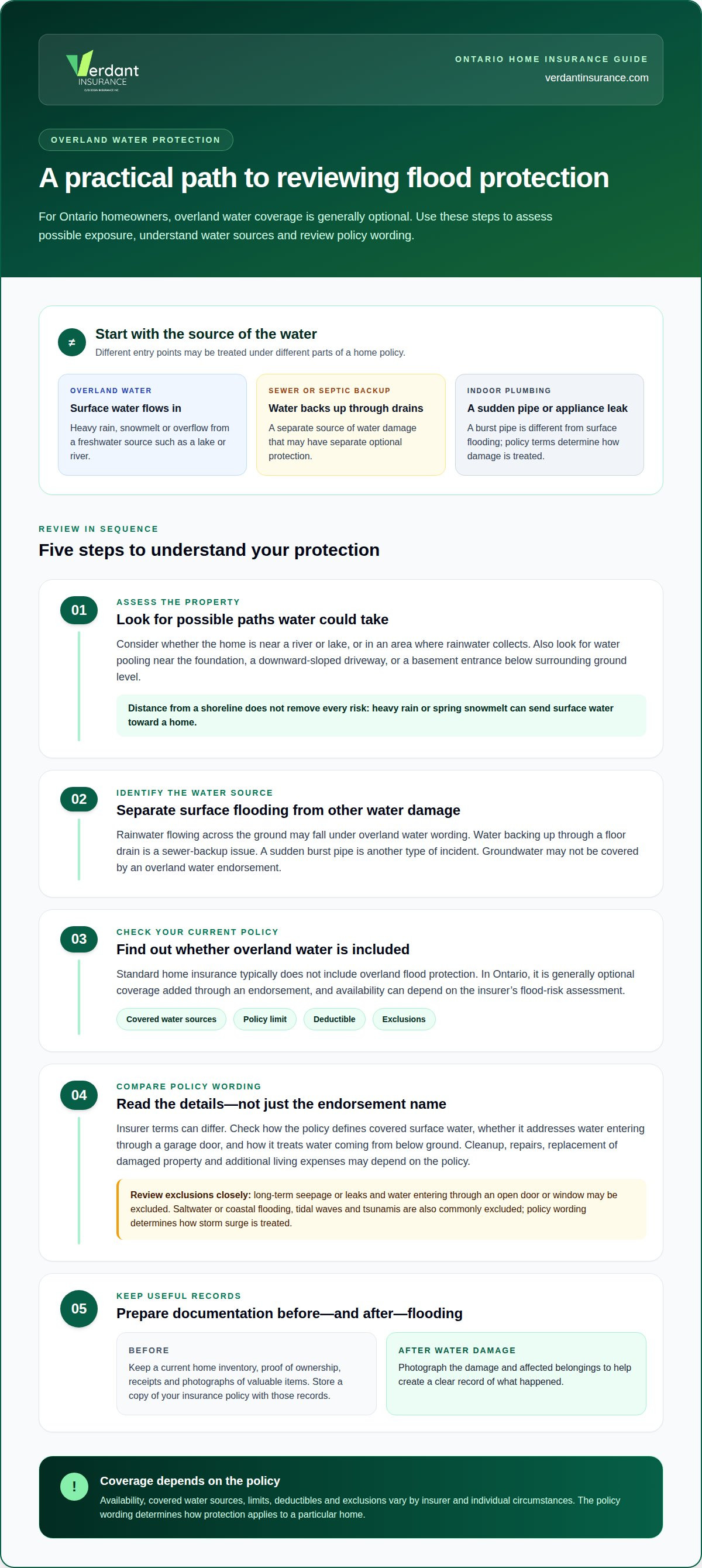
Overland water coverage protects against surface water entering a home after heavy rainfall, snowmelt or an overflow from a freshwater source such as a lake or river. For example, sudden rainwater pooling outside may flow into a basement or through a garage door. The coverage matters because flooding can affect rooms, belongings and essential parts of a home at once.
Depending on the policy, insured damage may include cleanup, repairs, replacement of damaged property, and additional living expenses while a home is repaired. A flooded basement can involve more than removing water: flooring, drywall, and stored items may also need attention.
Optional Coverage and Home Policies
For Ontario homeowners, overland water protection is generally optional coverage added through an endorsement, rather than protection automatically included in a standard home insurance policy. It generally isn’t mandatory. Availability can depend on the insurer’s flood-risk assessment, so identical coverage terms may not be available for every property.
That distinction matters whether a home is near a river or in a neighbourhood where water collects after heavy rain. Flooding can affect homes away from lakes and rivers when surface water accumulates around the property. Review the policy wording for the covered water source, limits, deductible, and exclusions. These details show how the endorsement applies to a particular home, beyond the broad label “flood coverage.”
Pairing Flood and Sewer Backup Protection
Overland water and sewer backup coverage address different ways water can enter a home. Overland protection generally relates to surface water flowing in from outside, while sewer backup protection addresses water or sewage backing up through drains. Insurers may package these optional protections together, but the wording and limits determine how each applies.
Standard home insurance typically covers sudden or accidental water damage from indoor plumbing, heating, or air conditioning. A burst pipe is one example; water escaping from a malfunctioning appliance is another, although the appliance repair itself usually isn’t covered. These incidents differ from rainwater flooding across the ground or a drain sending sewage inside. Identifying the water source helps clarify which part of a policy may respond.
Is this included in my normal home insurance policy?
Standard home insurance typically doesn’t include overland flood protection, so review the policy’s water endorsements and exclusions. Government assistance is separate from insurance; as of April 2026, Canada’s planned National Flood Insurance Program had not yet been implemented.
Homeowners Who May Need Flood Protection
Overland flood protection may be worth considering for Ontario homeowners exposed to surface water, including properties near rivers, lakes, or areas where rainwater collects. Being far from a shoreline doesn’t remove every risk. Heavy rain or spring snowmelt can send water across yards, driveways, and streets toward a home.
Look at the property itself. Water pooling near the foundation, a downward-sloped driveway, or a basement entrance below surrounding ground level can indicate possible routes for water to enter. Flooding can also involve groundwater, which may not be covered by an overland water endorsement. The source and path of the water matter when a claim is assessed.
Government flood assistance should not be treated as a substitute for private coverage. The planned national program’s status in April 2026 does not determine whether a homeowner qualifies for any other assistance; program eligibility and terms are separate considerations.
Comparing Insurer Policies
Insurance companies in Ontario may offer optional residential overland flood coverage, but availability and terms vary with each insurer’s flood-risk assessment. Policy wording differs between companies, so compare covered water sources, exclusions, limits, and deductibles rather than relying on the endorsement name alone.
For example, one policy may define covered surface water differently from another or set a different limit for cleanup and repairs. Check whether the wording addresses water entering through a garage door and how it treats water coming from below ground. These details can shape the protection available for a particular property.
Preparing for a flood can also make a future claim easier to document. Keep a current home inventory with proof of ownership, receipts, and photographs of valuable items. Store a copy of your insurance policy with those records. After flooding, photographs of damage and affected belongings can help create a clear record of what happened.
A practical review of home insurance coverage can help Ontario homeowners understand how flood endorsements fit their existing protection.
Water damage exclusions
Overland water coverage has limits: long-term seepage, leaks, and water entering through an open door or window may be excluded. Saltwater or coastal flooding, tidal waves, and tsunamis are also commonly excluded, while policy wording determines how storm surge is treated. Review the covered water sources, exclusions, deductible, and policy limit together.
The water’s source helps distinguish overland flooding from other water damage. Rainwater flowing across the ground toward a house may fall under overland protection. Water backing up through a floor drain is a sewer backup issue. A sudden burst pipe is a separate incident, usually addressed by the home policy’s water-damage terms.
Gradual damage can be treated differently from a sudden event. For example, water slowly seeping through a foundation or a persistent leak may be excluded, even if the surrounding area later floods. Repeated moisture can also point to maintenance concerns. A sudden, accidental escape of water from indoor plumbing is different, but the policy wording still sets the applicable coverage.
Some exclusions relate to the condition of the home. A roof leak may be covered when damage is sudden, but wear and tear or poor maintenance can affect coverage. For instance, a deteriorated roof that lets water in over time differs from unexpected damage caused by a sudden event. The cause, timing, and policy terms matter when assessing a claim.
Practical maintenance can help protect your home from avoidable water damage, though it doesn’t replace insurance. Clean eavestroughs and downspouts at least once a year. Extend downspouts at least six feet from the basement wall, directing water away from your home and neighbouring properties. Clear gutters so rainwater drains instead of collecting beside the foundation.
Other useful measures address equipment and belongings. Have a professional inspect your HVAC system and sump pump annually. Store valuable or sentimental items on higher levels instead of directly on a basement floor. These steps can reduce exposure, but they don’t change an endorsement’s exclusions or guarantee that every type of flooding will be covered.
Before relying on overland protection, identify the likely water path and the wording that applies. Surface water from heavy rain, water entering through an open window, and sewage coming up through drains aren’t interchangeable claim descriptions. Recording when water appeared, where it entered, and what was damaged can help explain whether the loss involved overland water, a backup, or another cause.
Sewer and septic system backup
Sewer backup happens when wastewater reverses direction and enters a home through a drain, toilet, or other plumbing opening. A basement floor drain is a common place for backed-up water to appear. This differs from overland flooding, where surface water moves across land and enters the building. The source matters because a home insurance policy may treat these events under separate protections.
Damage caused by a sewer backup is typically excluded from standard home insurance. Optional sewer backup coverage may be available as an endorsement, either separately or packaged with flood coverage. For example, rainwater overflowing from rivers and entering the property is an overland water event; sewage rising through basement drains is a backup event. One incident can involve both sources, so the policy definitions and claim facts matter.
Septic systems create another possible route for wastewater to enter a home. If a septic tank or connected drain backs up, the policy wording determines whether the loss falls within sewer backup coverage or another provision. Don’t assume flood insurance automatically covers a septic failure. The cause of the backup, where water entered, and any applicable limits or exclusions can affect how the loss is handled.
Review the endorsement for its coverage limit, deductible, and covered property. A backup may damage basement flooring, stored belongings, finished walls, and household equipment. The policy may treat cleanup and repair costs differently from damaged contents. For instance, an endorsement’s limit may apply to the covered loss, while the deductible is the amount the policyholder pays toward an eligible claim. The wording sets the actual terms.
Mitigation devices can help reduce the chance of wastewater entering through drains. Examples include a backwater valve, which helps prevent reverse flow, and a sump pump, which removes accumulated water. A water alarm can alert occupants when it detects water. These measures don’t replace insurance, but they can be relevant to risk management and an insurer’s requirements after a claim.
- Identify whether the water came through a drain, from outside, or from a septic system.
- Keep photographs of the affected basement and damaged belongings.
- Save repair and cleanup records, along with receipts for damaged items.
- Note any installed mitigation devices, such as a backwater valve or sump pump.
After an insured backup claim, an insurer may offer an allowance for mitigation equipment or require its installation for coverage to continue. The equipment and conditions depend on the insurer and policy. Understanding this possibility before a loss can help homeowners plan for repairs and keep clear records of the incident.
Filing an overland water insurance claim
After heavy rain or a freshwater overflow, document what happened before cleanup changes the scene. Note when water appeared, where it entered, and which rooms or belongings were affected. These details can help distinguish surface flooding from a drain backup, roof leak, or water entering through windows. For a claim involving overland water protection insurance in Ontario, the source and path of the water help explain the loss under the policy wording.
Start with these practical steps:
- Report the loss. Contact your insurer or its claims representative promptly. Describe the rainfall or overflow, when you noticed water, and the route it took into the home.
- Photograph the scene. Capture water levels, the foundation, entry points, damaged rooms and affected belongings. Take wide room photos and close images of specific damage before moving items.
- Prevent further damage. Take reasonable steps to limit additional harm when it’s safe. Keep receipts for emergency supplies or work, and record what you did and when.
- Make an inventory. List damaged items with descriptions, approximate purchase details and proof of ownership. Gather receipts, existing photos and other records that help identify belongings.
- Keep relevant records. Save claim communications, cleanup documents and repair estimates. Record the names of people you speak with and the dates of those conversations.
Don’t discard damaged materials or belongings before documenting them. If cleanup requires removing wet drywall or flooring, photograph the materials in place first, then keep receipts and notes about the work. An insurer may need to assess the damage, so preserve evidence where practical and safe. Keep separate records for building damage and personal property, such as basement flooring and a damaged sofa.
Describe the water source as accurately as possible. Water flowing across the yard after rainfall differs from sewage coming up through a floor drain. If you saw water pooling near the foundation, photograph that area and the path toward the entry point. Avoid stating an assumed cause as certain if you didn’t observe it.
Review the applicable policy wording alongside the claim documents. The endorsement may have its own deductible, coverage limit, and exclusions. Keep those details in mind when discussing cleanup, repairs, or replacement costs. Ask how the insurer wants estimates and receipts submitted, and retain copies of every document you provide.
A clear timeline, photographs, and itemized records help explain the loss from the first water entry through cleanup. For instance, photos taken before removal, followed by dated repair receipts, show the damage and work completed. Organized evidence gives the insurer practical information to assess the claim under the policy.
Verdant Insurance
Verdant Insurance is an Ontario brokerage that can help you understand how home insurance options relate to overland water and sewer backup risks. If you’re reviewing your policy before renewal, buying a home, or reassessing protection after a flood, an insurance broker can explain relevant coverage terms, limits, and exclusions. The exact options available depend on the insurer and your circumstances.
A clear conversation can help you identify which water sources matter for your property and what questions to consider about an endorsement. This is useful if you’re unsure whether a concern involves surface water, a drain backup, or another cause of damage. Verdant also offers Auto Insurance, Business Insurance and Travel Insurance.
Contact Verdant Insurance to discuss your Ontario home insurance questions.
Make water protection part of your home planning
Your home and its surroundings can change over time. Renovations, a newly finished basement, or changes in how you use lower-level rooms may affect what you want protected. Use these changes as a prompt to revisit your home insurance and consider whether the policy still reflects your priorities.
Reviewing overland water protection insurance in Ontario can also be useful when planning for renewal or after a move. Bring questions about the property, the water risks that concern you, and any changes you’ve made. That gives you a practical starting point for discussing suitable options and how they fit your needs.
Verdant Insurance can help Ontario residents discuss homeowner insurance and related coverage questions. Reach out when you’re ready to consider your next step.
A thoughtful review can help you feel more prepared to make decisions about your home.
Frequently Asked Questions
What is excluded?
Common exclusions include gradual seepage, ongoing leaks, and water entering through an open window or door. Coastal flooding and tidal waves may also fall outside coverage. Review the policy’s exclusions alongside any special limits and deductible, since these can affect the amount payable for an otherwise covered loss. For a specific incident, the insurer assesses the cause and circumstances against the wording in force.
What does overland water insurance cover in Ontario?
It may insure eligible damage to the home and belongings after surface water enters from outside. The endorsement’s wording determines which property and related expenses qualify. For example, if water affects both built-in basement finishes and movable contents, the policy may address those categories under different terms or limits. Keep the schedule of coverage with your policy documents so you can identify the applicable limits.
Is overland water coverage included in standard Ontario home insurance policies?
Generally, no. It is usually optional, so look for a specific endorsement or coverage entry in your current policy documents. A renewal can change the policy terms, making the latest declarations and endorsements more useful than an older copy. If you’re arranging a new policy, discuss the protection before purchase; a policy may also be updated during its term, subject to insurer terms.
How is overland water coverage different from sewer backup and flood insurance in Ontario?
The terms describe different coverage concepts, and “flood insurance” can be used broadly. The wording identifies whether a policy responds to a particular water source and how related limits apply. For a property with more than one possible entry route, such as a low exterior doorway and a basement drain, separate definitions can matter when the insurer classifies the reported loss.
How do Ontario insurers assess eligibility and flood risk for overland water coverage?
Insurers assess a property’s flood exposure and apply their own eligibility rules. The assessment may consider location, local flood information, claims history, and protective devices. The result can affect whether coverage is offered and the terms available. If a property has a history of water intrusion, include that information when discussing coverage; accurate property details help the insurer assess the specific risk.
How can Ontario homeowners check whether their property is at risk of overland flooding?
Use local flood maps as one reference, then consider the property’s layout and past water problems. A map may not capture how grading, nearby construction, or a particular entrance directs water around an individual home. Note any previous pooling or water entry and where it occurred. This property-specific picture can help frame a useful discussion about exposure and protection options.
How do you add overland water coverage to an Ontario home insurance policy or make a claim?
Ask about adding the endorsement when buying or renewing coverage, or discuss a policy change during its term. For an existing loss, notify the insurer and follow its claim instructions. Keep the policy documents and a record of the incident details together. An insurance broker can provide guidance on coverage questions or policy changes, while the insurer assesses and handles the claim under its process.


