Who should you contact after a collision: police, a Collision Reporting Centre, or your insurer? It depends on what happened, and deciding what to do next can feel difficult when you’re dealing with damage or stress. A clear record and prompt contact can make the process easier to manage. This guide to reporting a car accident to insurance Ontario drivers can use explains what to do first and who to notify.
You’ll learn when police or a Collision Reporting Centre may be involved, what details and documents to gather, and how to report a collision to your insurer. In Ontario, you generally need to notify your insurer within seven days, or as soon as practicable afterward. Your policy may set out specific instructions, so check its wording and contact your insurer promptly.
This guide also covers what to expect as your claim is reviewed, which records to keep, and how fault and your policy can affect the outcome. The insurer makes claim decisions based on your circumstances and policy terms. With the right information at hand, you can take the next steps in an orderly way.
Key Takeaways
- Prioritize safety at the scene, then document what happened and contact the appropriate parties.
- Police or Collision Reporting Centre reporting is separate from notifying your insurer. Check which steps apply to your collision.
- Use a practical checklist to prepare the details and records you may need when reporting a car accident to insurance in Ontario.
- The insurer assesses fault and coverage based on the circumstances and your policy terms.
- Keep your records together, follow the insurer’s instructions, and ask for clarification if a policy detail or next step is unclear.
What to do immediately after a car accident in Ontario
After a collision, focus on safety first. Once urgent needs are addressed, make a factual record and contact the appropriate parties. You don’t need to determine fault or resolve the insurance claim at the scene.
Make safety the first priority at the collision scene
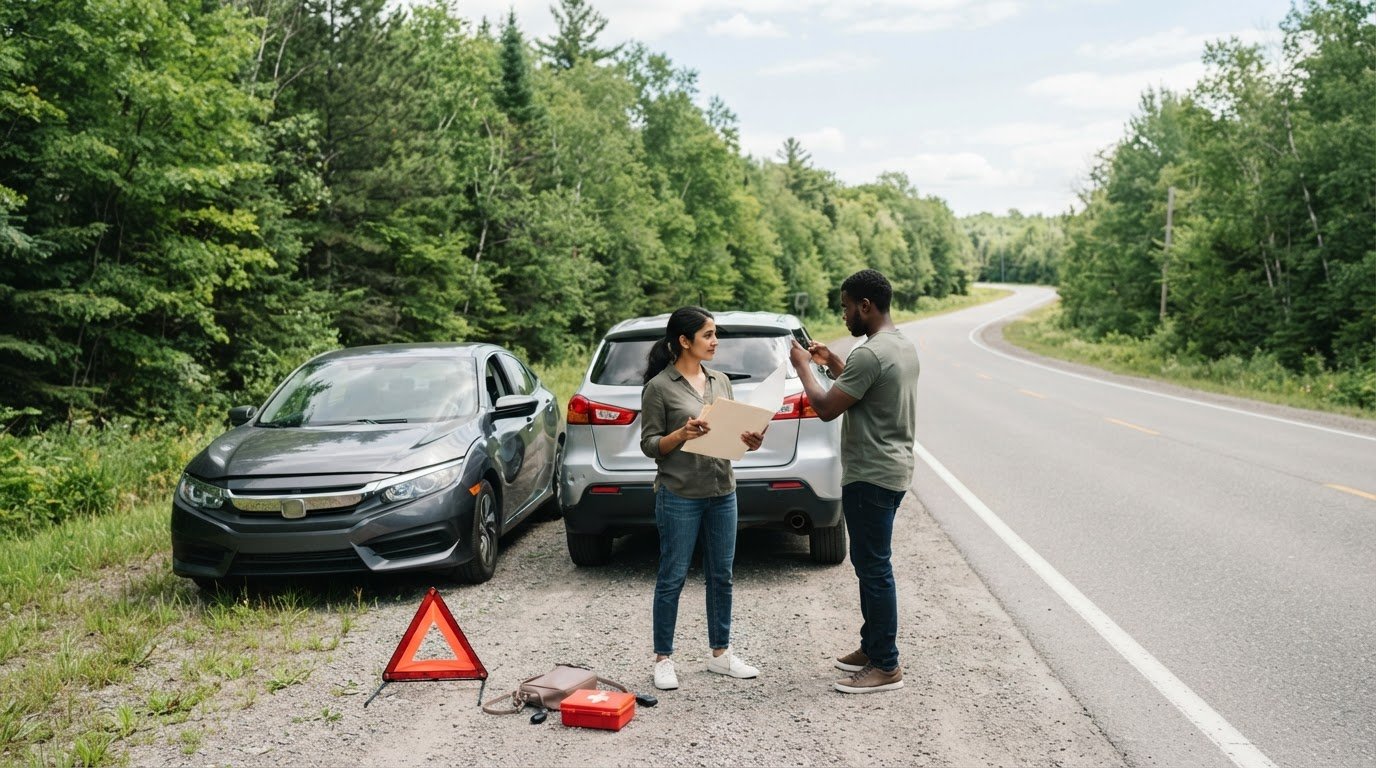
Start with people, not paperwork. Check whether anyone is injured and contact emergency services if urgent help is needed. Don’t put yourself or others at further risk to collect details or take photographs. What’s safe to do depends on the scene and traffic conditions, so keep your attention on immediate safety.
For general background on Ontario road-use legislation, you can read about Ontario's Highway Traffic Act. The steps required after a collision can depend on its circumstances and applicable reporting rules.
Exchange details and record what you observed
When it’s safe and appropriate, exchange relevant details and make brief, factual notes. Record what you observed, not what you assume caused the collision. Photographs can help document the scene and visible damage, but take them only when it’s safe.
A calm account can help you explain what happened later. Avoid guessing about fault, arguing over who caused the collision, or promising that insurance will cover particular repairs or losses. Fault and coverage aren’t decisions to settle at the roadside.
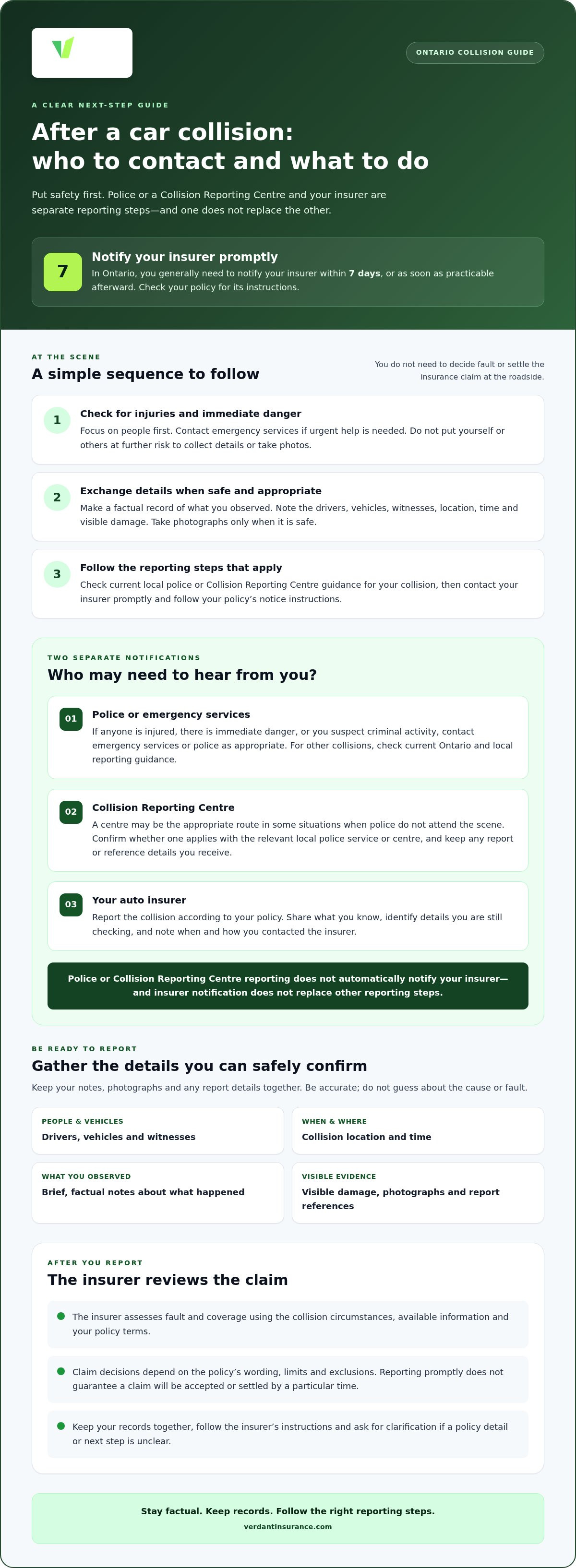
Use this simple sequence:
- 1. Check for injuries. Look for anyone who may need urgent help.
- 2. Contact emergency services if needed. Address immediate danger before gathering information.
- 3. Exchange details and document observations. Note the drivers, vehicles, witnesses, location, time, and visible damage. Keep the record factual.
Insurance reporting is a separate follow-up step. Once immediate safety needs are handled, contact the appropriate reporting authorities when required and notify your insurer according to its instructions. Reporting a car accident to insurance in Ontario doesn’t require deciding fault at the scene. The insurer assesses the claim using the information available, applicable rules, and the policy’s terms.
Keep your notes and photographs together so you can refer to them later. If you’re shaken or unsure whether you’ve captured everything, focus on the key facts you remember and share them accurately with the insurer.
When to contact police, a Collision Reporting Centre, and your insurer in Ontario
Reporting to police or a Collision Reporting Centre and notifying your insurer are separate steps. Which route applies can depend on the collision, its location, and current Ontario criteria. Check official guidance for your circumstances, then contact your insurer promptly and follow your policy’s notice instructions.
How to check whether police or a Collision Reporting Centre is involved
If anyone is injured, there’s immediate danger, or you suspect criminal activity, contact emergency services or police as appropriate. For other collisions, don’t assume every incident follows the same process. Check current Ontario police or Collision Reporting Centre guidance for the location and details involved. The Financial Services Regulatory Authority of Ontario (FSRA) also explains what to do immediately after an accident, including where to look for reporting direction.
A Collision Reporting Centre may be the appropriate route in some situations when police don’t attend the scene. Confirm whether one applies to your collision and follow instructions from the relevant local police service or centre. Keep any report or reference details you receive, as your insurer may ask for them.
How soon to notify your auto insurer
Contact your insurer as soon as practical, even if you’re still confirming details or arranging a police report. Check your policy for how and when to give notice, since instructions can vary by insurer and policy. If you’re unsure which channel to use or what information to provide, ask the insurer directly.
When reporting a car accident to insurance in Ontario, keep the process straightforward: share what you know, identify anything you’re still checking, and note when and how you contacted the insurer. Prompt notice starts communication, but it doesn’t guarantee a claim will be accepted or settled by a particular time. Claim decisions depend on the circumstances and the policy’s wording, limits, and exclusions.
Police reporting and insurer notification are separate steps. Completing one doesn’t automatically complete the other. Follow each party’s instructions and save relevant records. If policy language is unclear, a broker can help explain it, while the insurer remains responsible for claim decisions.
Reporting a car accident to insurance Ontario drivers should prepare for
A clear, factual record can make your conversation with the insurer easier. Before you call or begin an online report, gather what you know and keep supporting documents together. You don’t need every detail confirmed; mark anything unknown rather than filling gaps with guesses. The insurer may ask for additional information through its own reporting process.
Build a clear collision record before making the call
Use this checklist to organize the details you have. Not every item will be available or relevant to every collision.
- When and where: Note the date, approximate time, and location, such as the road or intersection and nearby landmarks.
- Vehicles and people: Record the vehicles involved and the names and contact details of drivers and other involved parties, as available.
- Witnesses: Keep contact details for witnesses who agreed to share them.
- What you observed: Write down the sequence of events and visible damage in plain, factual language.
- Supporting records: Keep relevant photographs, notes, and any police or Collision Reporting Centre reference information you received.
Separate what you saw firsthand from what someone else told you. If you don’t know a detail, label it as unknown or say you’re still confirming it. That’s more useful than presenting an estimate or assumption as fact. Take and store photographs only where it’s safe and appropriate, and keep copies of communications and documents related to the report.
Explain what happened clearly to the insurer
When reporting a car accident to insurance in Ontario, describe events in the order they happened. For example, explain where each vehicle was and what you observed before and after the impact. Keep your account concise. Avoid guessing about another driver’s actions or deciding who was at fault; the insurer reviews the information as part of its claim assessment.
Answer questions honestly and distinguish what you personally observed from details you learned later. If you’re uncertain, say so. Ask the insurer what documents or next steps it needs for this claim, and note any instructions, reference details, and follow-up requests.
Keep sensitive personal or financial information private unless the insurer explains why it’s needed and how to provide it securely. Use the insurer’s confirmed contact method or reporting channel rather than sending sensitive documents through an unverified link or address. An organized record helps you respond consistently if the insurer asks for clarification, while the insurer’s process determines what information is required.
What happens after you report a car accident to insurance in Ontario
Reporting a collision begins the insurer’s review, but it doesn’t determine the outcome on the spot. Depending on the claim, the insurer may ask questions, review the information and documents you provide, and explain what it needs next. The process varies by insurer, policy, and circumstances.
How insurers review a reported collision
The insurer may contact you for more details or request records related to the collision. Keep your notes and communications organized, and ask for clarification if an instruction or request isn’t clear. Follow the directions for your specific claim rather than assuming every claim follows the same process.
The insurer assesses responsibility using applicable rules and the information available. It also considers whether the policy responds to the reported loss, based on its wording, limits, exclusions, and your circumstances. Reporting a collision isn’t the same as admitting fault. Give an honest, factual account and wait for the insurer to explain its assessment. A report alone doesn’t guarantee coverage, repair authorization, or a particular settlement.
Could reporting a collision affect your insurance premium?
A reported collision doesn’t automatically mean your premium will change, but there’s no guarantee it won’t. Any effect depends on the circumstances, the insurer’s practices, and your policy details. If you’re concerned, ask your insurer how the incident may be considered at renewal and what factors apply to your situation.
Review your policy terms when considering coverage and price. Verdant’s Ontario car insurance buying guide provides broader context about policy terms and premium considerations. A clean driving record may be relevant to how an insurer assesses risk, but it doesn’t guarantee a discount or a specific rate. The guide also discusses clean-record car insurance considerations.
As you continue reporting a car accident to insurance in Ontario, keep a record of instructions, questions, and claim reference details. If policy wording is unclear, a broker may be able to explain general insurance terms. The insurer remains responsible for claim decisions, which depend on the policy wording, limits, exclusions, and individual circumstances.
After reporting a car accident: follow up and get Ontario insurance guidance
After reporting a car accident to insurance in Ontario, keep follow-up organized and use the insurer’s instructions for claim-specific next steps. A few simple records can help you track what’s been requested and what still needs clarification.
Keep claim records and track requested actions
Save copies of relevant documents and communications in one place. After each conversation, record the claim reference, contact date, who you spoke with, and any documents or actions requested. If the insurer gives you a follow-up step, note it clearly and check your records before contacting them again.
- Keep the claim reference and insurer contact details together.
- Save messages, submitted documents, and relevant collision records.
- Track requested information and follow-up actions.
- Ask the insurer to explain any unclear request, instruction, or policy term.
Policy wording can be technical. If you’re unsure what a term means or how to find the relevant section, ask the insurer to clarify how it applies to the claim. Coverage depends on the policy wording, limits, exclusions, and individual circumstances. Don’t treat a general explanation as a decision about your specific claim.
When an Ontario insurance broker can help
An insurance broker can discuss auto insurance options and help explain general policy questions. Verdant Insurance is an Ontario brokerage, not the insurer handling your claim. The insurer remains responsible for its claim-handling process and decisions. For more on what to consider when choosing digital brokerage support, read the Ontario online insurance broker guide.
If you want to discuss your auto insurance needs or have a general question about policy language, you can speak with a Verdant broker. For questions about a reported claim, contact the insurer and follow its directions.
Move forward with a clear next step
After a collision, prioritize safety, then follow the appropriate police or Collision Reporting Centre process and notify your insurer according to its instructions. Keep a factual record and save relevant documents and communications. Ask questions when a request or policy term isn’t clear. These steps can make reporting a car accident to insurance in Ontario easier to manage, without assuming a report decides fault or guarantees coverage.
Your insurer reviews the claim and makes claim decisions. A broker can help explain general policy questions, but doesn’t process claims on the insurer’s behalf. Verdant Insurance is an Ontario brokerage that offers auto insurance through partner insurers, along with online quote and policy-management options and dedicated support.
With organized records and clear communication, you can take the follow-up one step at a time. You don’t need to resolve every question at once.
Frequently Asked Questions
What should I do first after a car accident in Ontario?
First, check whether anyone needs urgent help and focus on safety. Contact emergency services if urgent assistance is needed. Once it’s safe, exchange relevant details and record what you observed. Check current Ontario police or Collision Reporting Centre guidance for your situation, then contact your insurer as soon as practical and follow your policy’s instructions. Stick to facts. Don’t guess about fault or promise that a loss is covered.
Do I have to report every car accident to insurance in Ontario?
Whether a collision needs to be reported can depend on the circumstances, current Ontario rules, and your policy terms. Don’t assume you can skip reporting because the damage looks minor. Check current official guidance for any police or Collision Reporting Centre steps that may apply, and review your policy’s notice instructions. If you’re uncertain, contact your insurer and ask what it requires for your situation.
How soon should I report a car accident to my insurer in Ontario?
Contact your insurer as soon as practical after the collision and check your policy for its specific notice instructions. The process and timing can vary by insurer, policy wording, and circumstances. If you’re unsure what to provide, ask the insurer directly rather than waiting until every detail is confirmed. Keep a note of when you made contact, whom you spoke with, and any instructions you received.
Does reporting a car accident mean I am admitting fault?
No. Reporting a collision is not the same as admitting responsibility or deciding who was at fault. Describe what you observed clearly and factually, and separate firsthand information from assumptions. The insurer assesses responsibility using applicable rules and the information available. The outcome depends on the circumstances and relevant requirements, so don’t promise yourself or another driver a particular fault decision or claim result.
Should I contact my insurer if the other driver caused the accident?
Yes, contact your own insurer and follow the reporting instructions in your policy, even if you believe the other driver caused the collision. Share the facts you know and any relevant records you have. Avoid deciding in advance how responsibility or coverage will be handled. The insurer reviews the circumstances, applicable rules, and policy wording before making claim decisions. Ask what information it needs for your report.
What information do I need to report a car accident?
Prepare the collision date, approximate time and location, details about the drivers and vehicles involved, witness contact information, and a factual account of what happened. Keep relevant notes, photographs, and any available police or Collision Reporting Centre reference details. Your insurer may request other information through its own process. Clearly identify anything you don’t know instead of guessing, and follow the insurer’s instructions about what to provide.
Will reporting a car accident increase my insurance premium in Ontario?
A premium change isn’t automatic, but you also can’t assume a reported collision will have no effect. Any impact can depend on the collision, insurer practices, your policy, and your individual circumstances. Ask your insurer how the incident may be considered under your policy. Coverage and pricing vary, so don’t rely on a guaranteed outcome or general advice as a definite prediction of your future premium.


