
What if the lower-looking online quote isn’t the better fit? A fast quote can be convenient, but the price alone doesn’t show who can advise you, what coverage is included, or where to turn for support.
It’s reasonable to want a simple process and a fair comparison. When comparing online direct insurers to Ontario brokers, the key difference is who you’re dealing with: a direct insurer offers its own company’s policies, while a brokerage can present options from partner insurers. The options available depend on the brokerage and your circumstances, and buying directly isn’t automatically cheaper.
To compare quotes fairly, look beyond the premium. Check that limits, deductibles, exclusions, and optional coverages line up, then consider who can answer questions and assist if you need to make a claim. A broker may also offer an online quote and policy-management experience, so digital convenience doesn’t necessarily mean buying directly from an insurer.
This article explains how direct insurers and brokerages differ, what to review when comparing policy details and service, and how to choose a quote process that feels clear and manageable for you.
Key Takeaways
- Direct insurers sell their own policies, while brokers arrange coverage through insurer partners. An online quote process can belong to either type of provider.
- When comparing online direct insurers to Ontario brokers, check who provides advice, what options are available, and who supports you after purchase.
- Don’t assume either route will cost less. Compare quotes only after checking that coverage, limits, deductibles, and other relevant details align.
- Before choosing, confirm the insurer, what the quote includes, and whom to contact with questions or a claim.
- Verdant is a Markham-based Ontario brokerage with online quote and policy-management tools and dedicated support.
Online Direct Insurers vs. Ontario Brokers: What Is the Difference?
Direct insurers sell policies offered by their own insurance company. Ontario brokers arrange insurance through insurer relationships available to their brokerage. The distinction is about who provides the policy and arranges the coverage, not whether the process happens online or in person. That’s the key to comparing online direct insurers to Ontario brokers: an online quote could come from an insurer or from a brokerage.
In short, a direct insurer is the policy provider, while a brokerage is an intermediary that helps arrange coverage with an insurer. A general explanation of the insurance broker role can help clarify this distinction. A brokerage’s insurer access and available products vary, so don’t assume that every broker can offer policies from every insurer.
What buying directly from an insurer means
When you buy directly, you deal with the insurer offering the policy. Depending on that company’s process, you may enter information online, review a quote, ask questions, and complete a purchase through its website or another service channel. These steps aren’t the same everywhere. Policy terms, eligibility, and available service options depend on the insurer and your individual circumstances.
Direct access can make it clear which company is offering the quote. Still, check the insurer’s name and ask how to get help before you buy. An online form or quote tool alone doesn’t tell you what support will be available later.
What an Ontario insurance broker does
A broker helps arrange insurance through relationships with insurers available to that brokerage. Depending on the broker’s options, this may let you consider quotes from more than one insurer, but the available choices vary. A broker can help clarify what a quote includes, explain differences shown in the documents, and identify questions to raise with the insurer.
That assistance isn’t a substitute for reviewing the policy wording. Actual coverage depends on the insurer, eligibility, policy terms, limits, and exclusions. In Ontario, the Registered Insurance Brokers of Ontario (RIBO) regulates insurance brokers. If you’re unsure who you’re dealing with, ask whether the provider is an insurer or a brokerage, and which insurer would issue the policy.
How Quotes, Advice, and Policy Support Can Differ in Ontario
A quote process can feel similar online, but the help available before and after purchase may differ. When comparing online direct insurers to Ontario brokers, look at who collects your information, who can answer questions, and who you’ll contact for policy service or claims guidance. The exact process and support arrangements vary by provider, so confirm them before choosing.
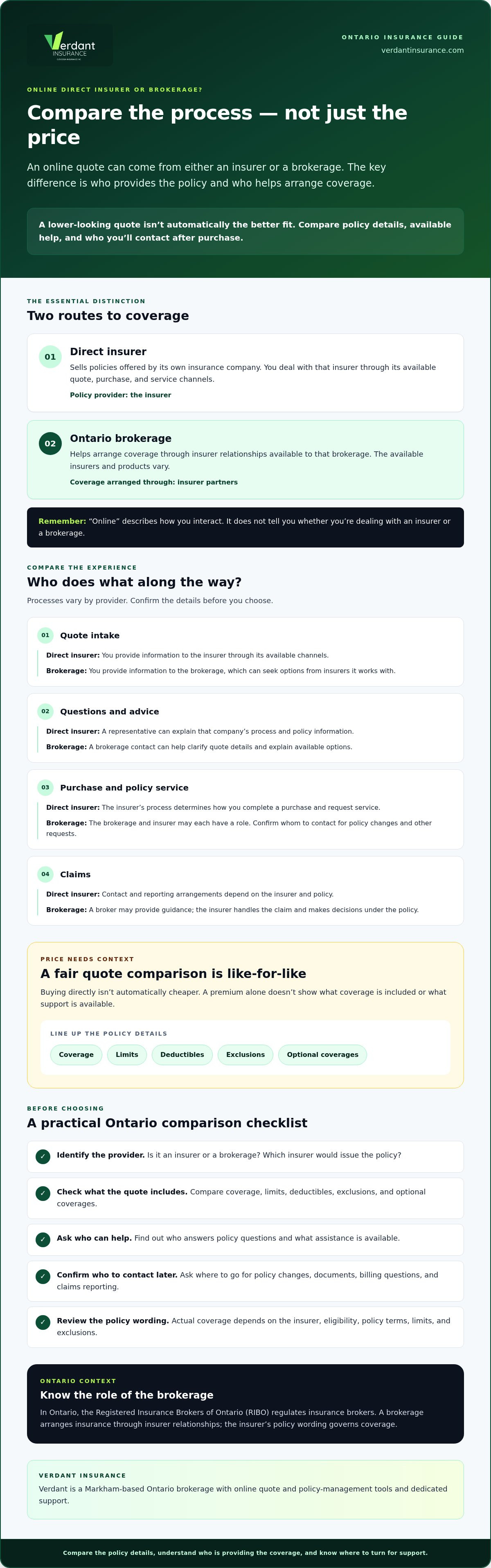
| Stage | Direct insurer | Brokerage |
|---|---|---|
| Quote intake | You provide information to the insurer through its available channels. | You provide information to a brokerage, which can seek options from insurers it works with. |
| Questions and advice | An insurer representative can explain that company’s process and policy information. | A brokerage contact can help clarify quote details and explain available options. |
| Purchase and service | The insurer’s process determines how you complete the purchase and request service. | The brokerage and insurer may each have roles. Confirm whom to contact for policy changes and other requests. |
| Claims | Contact and reporting arrangements depend on the insurer and policy. | A broker may provide guidance, but the insurer handles the claim and makes decisions under the policy. |
Who answers questions and helps arrange coverage?
With a direct insurer, you deal with a representative or service channel for that company. With a brokerage, you work with a brokerage contact who can help arrange coverage through insurer relationships available to that brokerage. The assistance and options depend on the provider and your circumstances. Neither route guarantees a particular fit or outcome, so ask who can clarify the quote and what they can help with.
Who handles policy changes and claims questions?
Before you buy, find out where to report a claim and whom to contact about changes, documents, or billing. A broker may be able to guide you through questions, but the insurer’s policy wording governs coverage, limits, and exclusions. Claims handling and contact arrangements vary by insurer and policy. For Ontario auto insurance information, consult the Financial Services Regulatory Authority of Ontario (FSRA), the provincial regulator for auto insurance. RIBO regulates Ontario insurance brokers; neither regulator’s role should be read as an endorsement of a particular provider.
An online process can still include brokerage support. Ontario residents looking for an online brokerage option can review Verdant’s insurance brokerage services and confirm what support is available for their needs.
Does Buying Direct Online Always Cost Less Than Using a Broker?
No. Don’t assume that buying directly online will cost less, or that using a broker will cost more. Pricing and quote availability vary by insurer and individual circumstances. A lower displayed premium alone does not establish equivalent coverage: the quote may differ in what it includes, its limits, deductibles, or exclusions.
The channel can affect how you get information and assistance, but it doesn’t determine whether a quote is the right comparison. An online process may be convenient for entering details and reviewing an initial price. A broker may help you compare options available through that brokerage and clarify differences. The actual process and support vary by provider, so consider both the policy details and how you prefer to ask questions.
How to compare quotes on an equivalent basis
Before weighing premiums, check whether each quote reflects the same risk details and coverage choices. For auto insurance, confirm the listed drivers and the coverages, limits, and deductibles shown. For home or business insurance, check that the property or business details and quoted coverage scope match as closely as possible. A difference in the information provided can affect what an insurer offers.
Review the quote and policy documents for exclusions and optional coverages. Check whether each option is included, excluded, or quoted separately. If an item is unclear, ask the insurer or broker to explain what the documents say and point out material differences. The policy wording, limits, and exclusions ultimately determine coverage.
What can affect the price and availability of a quote?
Insurers assess applications using their own pricing and underwriting processes. The information supplied and the applicant’s individual circumstances can affect both the price and whether a quote is available. As a result, the same person or property may not receive identical terms or pricing from different insurers. Confirm the details of your own quote with the provider rather than relying on a general estimate or an online price that may not reflect the complete application.
- Match the details: Check that the information submitted is accurate and consistent across quotes.
- Compare the coverage: Review limits, deductibles, exclusions, and optional items, not just the premium.
- Ask about differences: Have the provider explain any variation you can’t reconcile in the quote documents.
- Consider the process: Weigh online convenience against the guidance and support channels available from that provider.
When comparing online direct insurers to Ontario brokers, treat price as one part of the decision. An equivalent comparison helps you understand what each quote offers, while a conversation with the provider can help clarify questions before you choose.
A Practical Checklist for Comparing Ontario Insurers and Brokers
Use this checklist to compare more than the first quote amount. As you’re comparing online direct insurers to Ontario brokers, confirm who is arranging the policy, what the quote covers, and where you can get help after purchase.
- Identify the provider. Is the quote from an insurer selling its own policy or a brokerage arranging coverage through insurer partners? Ask which insurer would issue the policy and what details are still subject to confirmation.
- Compare the quote scope. Check that the information you provided is consistent, including relevant driver, property, or business details. Ask whether optional coverages are included, excluded, or quoted separately.
- Review the policy details. Compare coverage types, limits, deductibles, and exclusions. If the quote summary seems different from the policy documents, ask the provider to clarify the difference. The policy wording governs coverage.
- Confirm ongoing support. Ask whom to contact for policy changes, questions, and claims reporting. Confirm whether the insurer, brokerage, or both have a role, and check which contact methods are available.
- Check Ontario provider information. If you want to verify a provider’s status, consult current information from the relevant Ontario regulator. RIBO regulates insurance brokers in Ontario; FSRA oversees financial services sectors that include insurance. Regulatory oversight isn’t an endorsement of a particular provider or policy.
Questions to ask before choosing a quote
Keep your questions direct: “Which insurer would issue this policy?” “What information or terms remain subject to confirmation?” “Who should I contact for changes or claims reporting?” If you’re unsure how a quote detail relates to the policy wording, ask the provider to point you to the applicable document language. For more context on selecting a digital brokerage, read this online insurance broker guide.
When an Ontario broker may suit your needs
A broker may be worth considering if you value help reviewing available options and discussing questions with a brokerage contact. The insurer markets and products available depend on the specific brokerage and your circumstances, so ask what options it can explore. For auto shoppers, this Ontario car insurance buying guide offers additional points to consider as you compare.
Choosing an Online Insurance Route That Fits Your Needs
The right route depends on the help you want and the policy in front of you, not simply whether you start online. As you finish comparing online direct insurers to Ontario brokers, weigh three things: who is offering the policy, whether the quoted details meet your needs, and what support you can expect. Your circumstances and the insurer’s policy terms matter more than the channel alone.
Match the process to the help you want
Buying directly online may suit you if the insurer’s quote and purchase process is clear and its available support works for you. A brokerage may be worth considering if you’d like help discussing options offered through that specific brokerage. Neither route guarantees a particular result, and a broker’s available insurer markets and products vary.
Online access doesn’t automatically mean you’re dealing directly with an insurance company. Verdant Insurance is a Markham-based Ontario brokerage with an online platform for quotes and policy management, plus dedicated support. It arranges auto, home, business, travel, and tenant insurance through partner insurers. It isn’t an insurer, and its available options depend on the insurer and your individual circumstances.
What to confirm before you bind a policy
Before relying on a quote, review the documents and confirm the details with the provider. Check:
- Insurer: Which company would issue the policy?
- Policy details: Do the coverage types, limits, deductibles, and exclusions match what you intend to purchase?
- Effective date: What date is shown in the policy documents?
- Conditions and eligibility: Are any details still outstanding or subject to insurer confirmation?
- Policy status: Has the provider confirmed that the policy is in effect, or is the information only a quote?
A quote isn’t proof that coverage has started. Don’t assume a policy is bound until the insurer or broker confirms its status. If a document is unclear, ask the provider to explain it before you proceed. Coverage remains subject to the insurer’s eligibility requirements and the policy wording, including its limits and exclusions.
For Ontario readers who want to consider a brokerage with online tools and dedicated support, Verdant Insurance offers a local option in Markham. Explore Verdant Insurance’s insurance options and review which process feels right for your needs.
Choose the Route That Gives You Clarity
The right insurance process isn’t defined by whether it happens online. Focus on who is arranging the policy, compare equivalent coverage details, and confirm what support is available before and after purchase. A lower quote doesn’t tell the whole story if limits, deductibles, exclusions, or policy terms differ.
That’s the practical value of comparing online direct insurers to Ontario brokers: you can weigh convenience alongside the provider’s role, the options available to you, and the service you may need. Your choice should reflect your circumstances, and coverage and eligibility remain subject to the insurer’s terms.
Verdant Insurance is a Markham-based Ontario brokerage with online tools for quotes and policy management, plus dedicated support. Through partner insurers, it offers auto, home, business, travel, and tenant insurance. If you’re in Ontario and want to explore a brokerage’s online process, take a look at the available options.
With the provider and policy details clear, you can move forward with greater confidence in the process you choose.
Frequently Asked Questions
Is an online insurance broker the same as a direct insurer?
No. An online insurance broker is still a brokerage, even if you get a quote and manage your policy digitally. A broker arranges coverage through insurer partners available to that brokerage. A direct insurer sells its own company’s policies. The online channel describes how you interact with the provider, not who issues the policy. Ask which insurer would provide the coverage and who will support you after purchase.
Do Ontario insurance brokers always find a cheaper policy?
No. A broker can help you consider options from insurers it works with, but there’s no guarantee that a broker-arranged policy will cost less than buying directly. Pricing and eligibility vary by insurer and individual circumstances. Compare quotes only after checking that the coverage, limits, deductibles, exclusions, and information used for each quote align. A lower premium by itself doesn’t show that two policies offer equivalent coverage.
Can I buy auto insurance directly online in Ontario?
Yes, you may be able to buy auto insurance online directly from an insurer if it offers that process and your application meets its requirements. The steps, available options, and eligibility depend on the insurer and your circumstances. Review the quote and policy documents carefully, including coverages, limits, deductibles, and exclusions. Confirm the policy’s status and effective date with the provider rather than assuming an online quote means coverage has started.
What should I compare when reviewing direct and broker insurance quotes?
Compare the details behind each quote, not just the premium. Check that the same drivers, property, or other relevant information are listed, then review coverage types, limits, deductibles, exclusions, and optional coverages. Note what’s included, omitted, or quoted separately. If a quote summary and policy document appear inconsistent, ask the insurer or broker to clarify. Coverage is governed by the insurer’s policy wording and confirmed terms.
Does an insurance broker work for the customer or the insurer?
An insurance broker acts as an intermediary, helping a customer arrange coverage through insurers the brokerage works with. Brokers are distinct from direct insurer representatives, who offer their company’s policies. In Ontario, brokers are regulated by the Registered Insurance Brokers of Ontario (RIBO). Ask the brokerage which insurers it can approach for your situation, how it is compensated, and what assistance it can provide when reviewing quote details.
Who handles an insurance claim when I buy through a broker?
The insurer handles the claim and makes decisions under the policy, whether you bought directly or through a broker. A broker may be able to provide guidance or help you understand whom to contact, but it doesn’t replace the insurer’s claims process. Before purchasing, confirm how to report a claim and what support the brokerage can offer. The insurer’s policy wording, limits, and exclusions apply, and arrangements vary by policy.
How can I check whether an Ontario insurance broker is legitimate?
Check the broker or brokerage using current information from the Registered Insurance Brokers of Ontario (RIBO), the regulator for insurance brokers in Ontario. Confirm that the name and contact details match the provider you’re considering, and contact RIBO directly if you’re uncertain about its status. You can also ask which insurer would issue the policy and request written quote and policy documents. Regulatory status isn’t an endorsement of a policy or provider.