

Choosing rental property insurance in Ontario isn’t always as simple as deciding between landlord and commercial coverage. A tenant schedule for commercial property insurance in Ontario helps present who occupies the building and how each space is used, giving insurers important context when assessing a quote.
If you own commercial property in Ontario, you may want clear answers about what to include in a tenant schedule and how tenant details can affect an insurance assessment. Accurate information helps describe the property; missing or outdated occupancy details can leave the insurer with an incomplete picture.
This article explains what a tenant schedule is, which details to gather, and how tenant activities and occupancy can affect a commercial property insurance quote. It also explains what the schedule does not replace and how to consider coverage for the building, rental income, and tenant-related exposures.
Key Takeaways
- A tenant schedule gives insurers a clearer picture of who occupies each space and how the property is being used.
- Tenant details can help explain how occupancy, business activities, and building features may affect a quote.
- Compare quotes using consistent coverage limits and deductibles, and read exclusions alongside the premium.
- Coverage for extra operating expenses after an insured interruption depends on the policy’s terms and the loss involved.
- Commercial property insurance can be a relevant next step for Ontario owners preparing a quote for a tenant-occupied building.
Additional expenses when leased premises are unusable
If an insured peril makes a leased unit unusable, a business may face extra costs while trying to continue operating. Commercial tenant coverage may help with additional expenses needed to keep the business running, while commercial property insurance may address business interruption, lost income, and expenses during a temporary closure. The policy wording determines which expenses qualify.
For example, a shop closed by covered fire damage might need temporary premises or replacement equipment to serve customers. These are possible operating needs, not automatic benefits. Keep receipts and records of the interruption, and distinguish extra operating costs from ordinary expenses the business would have paid anyway.
Lease terms shape responsibility for repairs, rent, and other costs during an interruption. One lease may assign repairs to the landlord; another may make the business responsible for tenant improvements. Review the relevant clauses together. An agreement to maintain or insure part of the premises does not confirm that a policy will cover every related cost.
Commercial lease insurance requirements commonly address liability and the tenant’s responsibility for contents and improvements. A lease may require commercial general liability coverage and name the landlord as an additional insured. Requirements differ by lease, landlord, and insurer. The landlord’s building policy generally protects the structure, not the tenant’s inventory, furniture, or income.
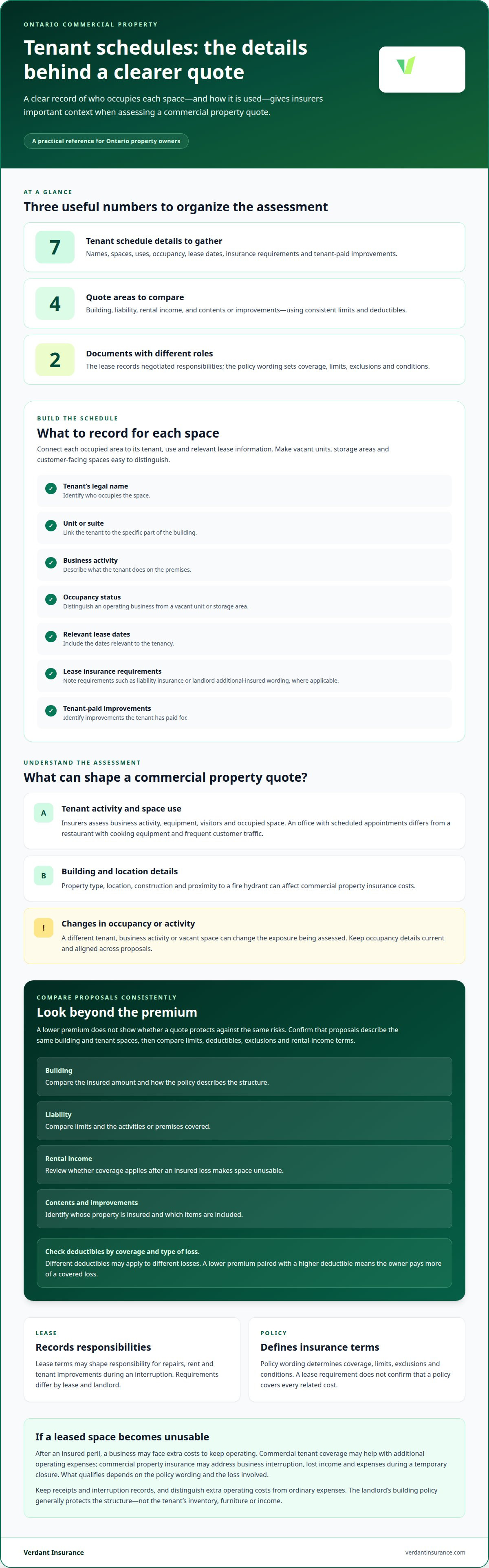
Before renting a unit, compare the lease’s insurance section with the business’s actual use. A restaurant, for example, may have different contents and operating needs from a professional office. Record each tenant’s legal name, unit or suite, business activity, occupancy status, and relevant lease dates. Include the lease’s insurance requirements and any tenant-paid improvements when preparing property details.
An Ontario commercial tenant schedule links each occupied space to its use and lease obligations. Include enough detail to distinguish a vacant unit from an operating business, or a storage space from a customer-facing shop. This context supports a more accurate quote assessment, but does not replace the lease or determine coverage.
For Ontario lease insurance requirements, treat the lease and policy as separate documents. The lease records negotiated responsibilities; policy wording sets coverage, limits, exclusions, and conditions. If a premises becomes unusable, this distinction helps clarify which expenses may be addressed by insurance and which are governed by the landlord-tenant agreement.
Comparing insurance quotes, limits, deductibles, and exclusions
A lower premium does not show whether a quote protects against the same risks. Compare proposals using matching limits and deductibles for the building, liability, contents, and rental income. If one quote excludes rental income coverage, its lower price may reflect less protection, not better value.
Start with the insured property schedule and coverage limits. Confirm that each quote describes the same building and tenant spaces, then compare how it treats landlord-owned equipment and tenant improvements. A broker can explain differences in the terms. The building’s insured value, its uses, and the selected coverage all affect the comparison.
Next, compare deductibles by coverage and type of loss. A quote may apply different deductibles to water damage and other insured losses. Consider how each deductible would affect the property owner after a claim. A lower premium paired with a higher deductible means the owner pays more of a covered loss.
- Building: Compare the insured amount and how the policy describes the structure.
- Liability: Compare limits and the activities or premises covered.
- Rental income: Review whether coverage applies after an insured loss makes space unusable.
- Contents and improvements: Identify whose property is insured and which items are included.
Then read exclusions and conditions, not just the summary page. A policy may exclude a cause of loss or restrict coverage based on how a unit is used. A vacant space, storage area, or tenant with a different business activity can change the exposure being insured. Compare the wording for each quote and note differences for the same tenant or unit.
Use the tenant schedule to compare proposals. If one lists a restaurant while another describes only a retail unit, the insurer may be assessing different exposures. Correct names, unit uses, and occupancy details help align the proposals. Changes in tenant activity can also affect the property’s risk profile and the terms offered.
Finally, ask the broker to explain material differences in limits, deductibles, exclusions, and rental-income terms. Compare the actual policy wording and endorsements alongside the quoted premium. The most useful comparison is between proposals describing the same rental property, tenant activity, and intended protection.
Factors affecting commercial tenant insurance premiums
Insurers assess a tenant’s business activity, equipment, visitors, and occupied space. An office with scheduled appointments presents a different exposure from a restaurant with cooking equipment and frequent customer traffic. These details describe how the tenant uses the premises and what could be affected by a loss.
Building and location details also matter. Commercial property insurance costs can depend on property type, location, construction, and proximity to a fire hydrant. A tenant schedule identifying each unit’s use gives the insurer context. For example, a storage unit and customer-facing shop in the same building involve different contents and activities.
Coverage choices affect the quoted premium. Selected limits, types of protection, and deductibles shape the amount and kinds of risk insured. A business covering equipment and inventory may have different needs from one with limited physical contents. Price and available terms vary by insurer and individual circumstances.
Claims history is another factor. Past claims can provide information about losses associated with the tenant or property. A previous water damage claim, for instance, may lead an insurer to consider the building’s plumbing, the affected unit, and steps taken afterward. Where possible, distinguish tenant losses from building-wide incidents.
- Business activity: Describe services, equipment, and customer visits.
- Occupancy: Identify which units are occupied, vacant, or used for storage.
- Property details: Include the building’s type, location, and construction information.
- Coverage choices: Record selected limits and deductibles for each requested protection.
Accurate occupancy details matter when a business moves, changes activities, or uses a unit temporarily. A vacant storefront later used for food preparation presents a different exposure from an empty unit. Updating the schedule when use changes helps keep the insurer’s description aligned with actual operations.
For an Ontario commercial property, a tenant schedule gives a fuller view of business activities and building risks. It does not determine the premium on its own. Insurers consider the full application, property characteristics, selected coverage, and relevant claims history when assessing terms.
Premium considerations can also include the contents limit, liability limit, deductible, rental location and construction, building age and claims history, personal insurance and claims history, endorsements, and property safety features. Ontario tenant insurance premiums may depend on these factors, so recording them accurately helps present the risk and requested protection. Ontario landlords should declare a legal basement suite to their insurer because its use affects coverage and underwriting. Ontario’s Measures Respecting Premises with Illegal Drug Activity Act, 2025 makes it an offence for commercial landlords to knowingly permit prescribed illegal drug activities on their premises.
For a commercial tenant, liability coverage may protect the business against claims involving damage to the landlord’s premises. Commercial property insurance may also cover business interruption expenses or lost income when an insured event forces a closure, subject to policy terms. These protections address different concerns: damage to premises and the costs of continuing operations. Accurate information about premises use helps insurers assess the coverage being considered.
Commercial tenant insurance in Ontario
Commercial tenant insurance addresses a business’s risks inside rented premises, rather than the landlord’s ownership of the building. In an Ontario lease, the landlord’s building policy generally covers the structure, while the tenant is responsible for its own belongings, inventory, equipment, and improvements. The exact division depends on the lease and insurance policies.
Commercial leases commonly set out insurance requirements. A contract may require commercial general liability insurance for bodily injury or property damage connected with the tenant’s use of the space. It may also require the landlord to be named as an additional insured. Requirements and limits vary by landlord and agreement; there is no single standard amount for every Ontario tenant.
Liability and property coverage address different exposures. Liability insurance may respond to covered claims involving third-party injury or property damage. Commercial property coverage may insure eligible business contents, inventory, equipment, or tenant improvements. Liability-only coverage typically does not insure those items. For example, a retailer’s customer injury exposure differs from the risk of damage to its stock or point-of-sale equipment.
Business interruption is another separate consideration. It isn’t typically included in commercial tenant insurance, but may help with lost income when an insured peril forces a business to close. Product liability and professional liability also aren’t usually automatic parts of a tenant policy. A business selling goods or providing professional services may have exposures those protections address.
A suitable insurance arrangement starts with the tenant’s actual operations and the lease wording. A restaurant, for instance, may need to account for cooking equipment, customer traffic, and stock. An office may instead have computers, furniture, and client visits. An insurance broker can help explain how requested coverage relates to the business’s operations and lease obligations.
- Read the lease: Identify required liability coverage, limits, and certificate wording.
- Describe the business: Include its activities, visitors, equipment, and inventory.
- Separate exposures: Distinguish tenant property from the landlord’s structure.
- Review policy wording: Check limits, exclusions, and how each coverage applies.
For Ontario businesses renting commercial space, the key point is simple: the lease states contractual duties, while the policy defines insured coverage. Neither document automatically replaces the other. Aligning the tenant’s operations, lease requirements, and requested insurance helps clarify the protection being considered.
What is a Tenant Schedule in Ontario Commercial Insurance?
A tenant schedule records who occupies each leased space and how each unit is used. For an Ontario commercial property quote, it describes the building’s occupancy instead of treating every unit as identical. A plaza with a pharmacy, restaurant, and vacant storefront has distinct uses an insurer needs to understand.
A tenant schedule for commercial property insurance in Ontario should connect each tenant to a specific address or unit. Include the tenant’s legal or operating name, suite number, business activity, and occupancy status. Add lease dates or other relevant lease details when available. For example, “Unit 2, florist, operating” gives clearer context than listing only a tenant’s name.
- Tenant identity: Name the business occupying each unit.
- Unit location: Identify the suite, floor, or other space reference.
- Use: Describe the activity, such as retail sales, food service, or office work.
- Occupancy: Note whether the space is occupied, vacant, or used for storage.
- Lease context: Record relevant dates and insurance obligations stated in the lease.
These details distinguish tenants with different activities and exposures. A restaurant may use cooking equipment and welcome customers, while an office may mainly contain computers and furniture. A vacant unit presents another occupancy condition. If a tenant changes business activity, updating the schedule keeps the property description aligned with its current use.
A tenant schedule can also help distinguish the landlord’s property from tenant-owned items. Depending on the policy wording and circumstances, property coverage may apply to the building, fixed appliances, or landlord-owned contents. Liability coverage is separate and may apply to the landlord’s legal liability, subject to the policy’s terms, limits, and exclusions. Tenant inventory and business equipment are generally separate from the building’s fixed systems, but the policy wording determines what is insured.
A tenant schedule is not an insurance policy, lease, or guarantee of coverage. It supports the quote assessment by describing the property and its occupants. The lease sets negotiated responsibilities, while policy wording defines applicable coverage, limits, and exclusions. The documents serve different purposes, even when they refer to the same unit.
For a multi-tenant building, consistency matters. Match each business name to its unit and describe its actual use instead of relying on broad labels such as “commercial.” A clear schedule gives the insurer a useful snapshot of occupancy and helps identify details that may affect the quote assessment.
Verdant Insurance: Commercial Property Insurance
Verdant Insurance helps Ontario commercial property owners compare insurance options for tenant-occupied buildings. This can be useful when preparing a quote, renewing coverage, or updating details after a tenant or business activity changes. A clear tenant schedule describes each space as part of the property’s overall picture.
For a quote discussion, gather details about the building’s use, occupied and vacant units, tenant activities, and landlord-owned property. Lease insurance clauses can explain the landlord’s responsibilities and the coverage tenants are expected to carry. For example, a plaza with a restaurant, office, and empty storefront has different occupancy details from a single-use building.
Commercial property insurance can cover the building, landlord-owned contents, liability, and rental income, subject to policy terms. Available protection depends on the insurer, wording, limits, exclusions, and the property’s circumstances. A tenant schedule supports the application by describing occupancy; it does not create coverage or replace the policy.
Organizing these details before discussing a quote can make the property information easier to review. Consider gathering:
- Each tenant’s name and unit or suite.
- The business activity and current occupancy status.
- Lease information relevant to insurance responsibilities.
- Building details and landlord-owned property information.
Changes deserve attention too. A vacant unit leased to a food business, for instance, changes how that space should be described. Share updated occupancy details when seeking a quote or reviewing coverage to keep the property description aligned with actual use. Insurer requirements and available terms vary with the building and its circumstances.
Owners seeking a next step can explore commercial property insurance in Ontario and consider how their tenant schedule fits the broader property discussion. This is especially relevant for owners preparing a new quote, reviewing a renewal, or assessing a change in tenants. Bring together the schedule, property details, and lease information so the discussion can focus on the building and its occupancy.
Contact Verdant Insurance to discuss commercial property insurance for your Ontario building.
Frequently Asked Questions
What Is Business Tenant Insurance?
Business tenant insurance is insurance arranged for a business operating from leased commercial premises. Depending on the policy, liability coverage may address legal costs from covered third-party injury, property damage, or personal and advertising injury claims. Some policies may also include medical payments coverage for certain customer injuries. For example, a retailer reviewing its protection can consider both customer-related liability and whether its own stock or equipment needs separate property coverage.
How do tenants and landlords divide property insurance responsibilities in Ontario commercial leases?
Read the lease and each party’s policy together to understand responsibilities for a particular loss. Identify who maintains tenant-paid improvements, such as installed shelving or partitions, and how the lease handles repairs after damage. Keep relevant lease clauses with the insurance records. This can clarify each party’s obligations without assuming the other party’s policy will respond.
How do tenant schedules affect commercial property insurance premiums in Ontario?
A schedule supports the insurer’s assessment by recording occupancy information alongside the quote application. It is not a standalone premium calculator. If a unit’s recorded use differs from the activity described elsewhere in the application, the insurer may need clarification before assessing the risk. Consistent tenant and unit details across submissions make proposals easier to compare, though premiums and terms depend on insurer assessment and individual circumstances.
What Ontario insurance requirements or regulations apply to commercial property tenant schedules?
No single schedule format applies to every Ontario commercial property quote. The lease sets the parties’ insurance obligations, while the insurer’s application process determines what occupancy information it requests. Keep a current tenant list with property and lease records, and provide details in the requested format. Treat insurance duties in the lease as separate from the schedule itself.
Does a commercial tenant schedule need to list the landlord, lender, or other interested parties?
Include the lease’s insurance requirements when preparing the schedule. Ontario commercial leases commonly require tenants to name the landlord as an additional insured on their liability policy. The schedule does not replace the lease or set policy coverage.


