

A landlord’s building insurance doesn’t automatically protect a restaurant tenant’s business. A restaurant tenant’s commercial plaza insurance in Ontario may include commercial general liability, coverage for the tenant’s contents and improvements, and business interruption protection. If the restaurant serves alcohol, liquor liability may also be relevant, while lease requirements vary.
Start with the lease. It clarifies who is responsible for the building, shared areas, and improvements, and what insurance the tenant must maintain. A certificate of insurance is evidence of coverage, but it does not change policy exclusions or automatically satisfy every lease obligation.
This article explains the coverage to consider for restaurant tenant commercial plaza insurance in Ontario, what can differ for restaurants, bars, takeout businesses, caterers, and food trucks, and which details help shape an insurance discussion. Equipment, stock, renovations, alcohol service, delivery arrangements, and business interruption planning all matter when a restaurant operates in a plaza.
Key Takeaways
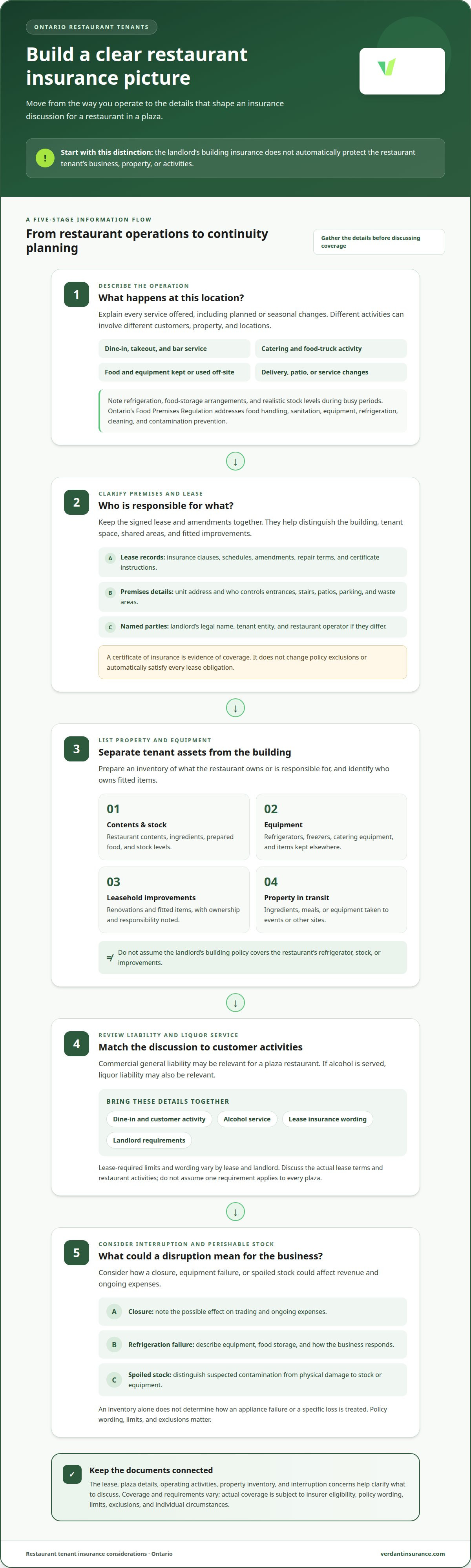
- Describe how your restaurant operates, including dine-in, takeout, catering, alcohol service, or food-truck activity, to help frame the insurance enquiry.
- Gather the lease and plaza details so responsibilities for the premises, shared areas, and insurance requirements are clear.
- Prepare an inventory of equipment, stock, contents, and leasehold improvements, including who owns fitted items.
- Review liability needs in light of customer activities and alcohol service; coverage and requirements can vary.
- Consider how a closure, equipment failure, or spoiled stock could affect revenue and ongoing expenses.
What to Gather About Your Restaurant’s Operations
Describe every service offered from the Ontario plaza location, including dine-in, takeout, catering, bar service, or food-truck operations. Include seasonal services and planned changes, such as adding patio dining or starting delivery. These details help tailor restaurant tenant commercial plaza insurance in Ontario to the activities the business actually performs. Dine-in brings customers into the restaurant, while catering also involves preparing and transporting food elsewhere.
Explain how food and equipment move between the kitchen and customers. Note whether ingredients are prepared on site, transported to events, stored elsewhere, or served from a food truck. Identify catering equipment, stock in transit, and goods kept away from the plaza. This helps distinguish the main-site operation from activities and property at other locations.
Describe the restaurant’s refrigeration and food-storage setup. Include its main refrigerators and freezers, where ingredients are held, and realistic stock levels during busy periods. Explain how the business handles refrigeration failure or suspected contamination. An inventory alone does not determine how an appliance failure is treated under a policy. Include the equipment used to store ingredients and prepared food safely.
- List services such as dine-in, takeout, catering, bar service, and food-truck operations.
- Describe refrigeration, food storage, and stock levels during busy periods.
- Note when ingredients, meals, or equipment travel to events or other sites.
- Include planned menu or service changes during the policy period.
Ontario’s Food Premises Regulation addresses food handling, sanitation, equipment, refrigeration, cleaning, and contamination prevention. Describe how food is prepared, stored, and served, including the restaurant’s handling procedures. In an insurance discussion, distinguish a food-safety complaint from physical damage to stock or equipment. Coverage for alleged illness, contamination, or equipment failure depends on the applicable policy wording, limits, and exclusions.
For example, a plaza restaurant catering weddings should describe both its on-site kitchen work and off-site food handling. A takeout business that also operates a food truck should explain where meals are prepared, stored, and served. These distinctions help shape the insurance discussion around the services offered, rather than treating every food business as having identical activities and property.
What to Gather About Your Plaza Premises and Lease
A plaza’s insurance arrangements do not automatically settle what the restaurant tenant must insure. Consider restaurant tenant commercial plaza insurance in Ontario alongside the signed lease, its amendments, and the interests identified in each document.
Coverage Types for Plaza Restaurants
Coverage for a restaurant in a plaza may involve separate policies for the building, the tenant’s property, and the restaurant’s operations. The plaza’s commercial policy does not automatically insure every tenant asset or activity. Gather the unit address and lease clauses covering insurance, repairs, and responsibility for damage. Note who controls shared entrances, stairs, patios, parking, and waste areas, since the lease may assign responsibilities for them.
For example, record whether a patio belongs to the leased unit or is a shared area. Keep any lease schedule describing the space with the main agreement.
Lease-Required Tenant Coverage
Lease-required coverage is the insurance the tenant agrees to maintain under the signed lease. Check the lease for any commercial general liability insurance requirements and whether it requires the landlord to be named as an additional insured. Required limits and wording vary by lease and landlord. Gather the insurance clauses, schedules, amendments, and certificate instructions. A certificate provides evidence of insurance, but does not alter policy exclusions or automatically satisfy every lease obligation.
Keep the legal name of the tenant signing the lease alongside the restaurant operator’s name. If they are different entities, the documents help identify which parties and interests to discuss.
- Record the landlord’s legal name and the tenant entity named in the lease.
- Gather the insurance schedule, amendments, and certificate instructions.
- Note lease terms addressing repairs, shared areas, and operating expenses.
- Keep possession, renovation, and opening dates with the lease records.
The lease and property arrangements determine who is responsible for insuring the building, tenant contents, and fitted improvements. Do not assume the landlord’s building policy covers the restaurant’s refrigerator, stock, or improvements. Check the lease to see whether the landlord insures the building structure and whether related costs are charged to the tenant as operating expenses or common-area charges. The lease may describe those charges and identify responsibility for restoring improvements after damage.
Food spoilage and interrupted trading should not be inferred from plaza maintenance duties. Policy wording determines whether a specific loss is covered. Keep lease terms about damage, rent obligations, and tenant improvements together when discussing the premises. These records clarify the restaurant’s responsibilities and distinguish its property interests from the building and shared areas.
What to Gather About Restaurant Property and Equipment
Prepare a property schedule that separates the restaurant’s assets from items identified in the lease or other property documents. For each major item, record its description, owner, location, and estimated replacement and installation cost. A kitchen inventory might include refrigeration units, cooking equipment, furniture, and point-of-sale hardware. These details give the broker a consistent basis for discussing property values and coverage terms.
Protection for Restaurant Assets
A restaurant asset schedule records the property the business wants considered for insurance. List equipment, furniture, stock, and other contents separately, and keep purchase invoices and photographs as supporting records. For example, identify a commercial freezer by its location and replacement details rather than grouping it with general kitchen contents. The insurer’s quotation and policy wording set out covered property, insured events, limits, exclusions, and settlement terms.
Leasehold Improvements
Leasehold improvements are changes made to premises rented by the restaurant, such as fitted counters or kitchen installations. Record who paid for each improvement, who owns it under the lease, and its current replacement cost. Keep invoices, renovation plans, and relevant lease clauses together. These documents distinguish improvements from removable equipment and show which property interests are being considered for insurance.
For example, attach the invoice for a tenant-funded service counter to the improvement schedule. Use the lease wording to identify any terms about ownership or restoration.
Comparing Commercial Property Quotations with a Broker
A broker can compare quotations more meaningfully when each uses consistent property information. Provide the legal entity, premises address, ownership interests, asset values, requested settlement basis, limits, and deductibles. Then compare the insurers’ written quotations and policy wording for differences in covered property, exclusions, and outstanding requirements. A lower deductible may affect the quoted premium, but read the deductible and how it applies in the specific documents.
Keep quotation versions together and note which asset schedule and property values were supplied for each. This makes differences easier to identify.
Delivery, Catering, and Off-Site Property
List equipment, stock, or goods used away from the restaurant, including items taken to catering locations or carried in transit. Record where property is kept, how it is used, and whether it returns to the plaza. For example, identify serving equipment stored at an event venue separately from kitchen equipment at the restaurant. Review the quotation and policy wording to see how each location and property category is described.
For renovation work, keep contractor arrangements, project dates, and occupancy details with the property records. Updated documents help keep the premises description and asset information aligned.
What to Gather About Liability and Liquor Service
Commercial general liability addresses certain claims tied to restaurant operations, while alcohol service raises separate liquor liability considerations. For an Ontario restaurant tenant, required limits and policy terms depend on the lease, insurer, and business circumstances.
Customer, Supplier, and Food-Related Claims
Commercial general liability can respond to claims involving bodily injury, property damage, or personal injury connected with restaurant operations. A customer’s fall near the entrance or a supplier’s injury during a delivery illustrates why the restaurant’s activities matter. Coverage may also address legal fees and settlements for covered claims, subject to policy wording, limits, and exclusions.
Food-related allegations also need attention. Product liability coverage can help with legal costs and compensation claims if a customer alleges illness or injury from contaminated food or improper preparation. Keep details about food handling, service, and incident reporting together. After an incident, preserve relevant facts and follow reporting instructions without admitting liability or promising a settlement.
Liability Coverage Costs and Discounts
No single commercial liability limit applies to every Ontario restaurant tenant. The lease commonly sets required liability coverage and may require the landlord to be named as an additional insured. Review the lease’s limit and certificate wording alongside the restaurant’s operations. Insurer requirements, pricing, and any available discounts vary with the policy and business circumstances.
Review alcohol service separately. Restaurants serving liquor should consider liquor liability for claims arising from alcohol-related incidents involving intoxicated patrons. Commercial general liability typically excludes liquor-related claims, so do not assume it covers this exposure. Describe bar service, alcohol sales, and planned changes accurately. The insurer’s policy wording determines applicable coverage, limits, and exclusions.
For a useful assessment, gather the lease requirements and summarize relevant operations. Include whether customers dine in, order takeout, attend events, or receive catering. Explain how suppliers access the premises and how staff handle customer incidents. If the restaurant delivers, distinguish vehicle use from claims arising inside the premises. Auto insurance is separate from commercial property and liability coverage.
- Identify the lease’s required liability limits and additional-insured wording.
- Describe alcohol service and customer-facing activities.
- Note food preparation and incident-reporting practices.
- Separate delivery vehicle exposures from premises liability concerns.
Equipment breakdown or food spoilage can create property concerns, but neither replaces liability coverage. Keep these exposures distinct when reviewing the restaurant’s insurance needs.
What to Gather About Business Interruption and Perishable Stock
A closure can affect a restaurant’s income, continuing expenses, and refrigerated stock. Gather details about likely interruptions, equipment dependencies, and the legal business operating from the plaza.
Restaurant Business Interruption
Depending on the policy wording and the insured event, business interruption coverage may help with lost income, ongoing expenses, and necessary relocation costs when a restaurant is temporarily closed. Coverage, limits, and applicable conditions vary by insurer and policy. Its value depends on how long recovery could realistically take, not just the expected repair period. Gather operating figures, fixed expenses, and a recovery estimate. Compare the waiting period, limit, and indemnity period with that estimate.
A temporary kitchen or alternative service arrangement may create extra expenses. Whether a policy covers these costs depends on its wording and the circumstances. Include these possibilities in the interruption discussion, especially for a coffee shop that relies on one kitchen or refrigeration system.
Property Damage Claim Scenarios
Consider how property damage could interrupt trading and spoil perishable stock. A fire that closes the dining area, water damage affecting the kitchen, or a refrigeration failure could create different losses. Commercial property and business interruption coverage depend on the insured events, exclusions, limits, and other terms in the policy wording. A landlord’s repair responsibility does not automatically cover the tenant’s spoiled food or lost trading.
Separate rent obligations under the lease from business interruption wording. Also describe whether temporary service, such as preparing meals elsewhere, could involve extra expenses.
Identifying the Tenant and Insured Business
Use the correct legal names for the leaseholder, restaurant operator, and equipment owner. These may be different entities. Gather the final lease, amendments, financing agreements, possession date, renovation period, and planned opening date. For example, if one corporation signs the lease and another operates the café, identify both clearly in the insurance discussion.
Accurate identification helps connect the premises, business income, and owned property to the correct insured interest. It also matters before the first meal is served, particularly when equipment arrives during renovations.
Restaurant Coverage Questions
An Ontario restaurant tenant serving alcohol should consider liquor liability, since commercial general liability typically excludes liquor-related claims. Product liability can help address claims alleging illness or injury from contaminated food or improper preparation. Relevant protection depends on policy wording, exclusions, limits, and the restaurant’s operations.
No single insurance package suits every plaza restaurant. Lease requirements commonly include commercial general liability, while tenants should also assess their contents, improvements, business interruption, and equipment breakdown needs. Commercial property policies may cover fire or water damage, but coverage for specific events, property losses, and equipment failure depends on the policy wording, exclusions, and limits. Gather these scenarios, along with the restaurant’s rent and expense details, for a clear coverage discussion.
Restaurant Insurance Through Verdant Insurance
Preparing a restaurant insurance enquiry is easier when the lease, operating details, and asset information tell a consistent story. Verdant Insurance is an Ontario insurance brokerage that compares options from multiple insurers and provides personalized advice. It helps connect a restaurant’s information with insurance options; it does not act as the insurer.
Restaurant operations can combine several exposures in one location. A plaza café may serve customers at tables, offer takeout, store refrigerated stock, and install improvements in a leased unit. A broker can use these details, along with the lease and business records, to discuss relevant insurance needs. Coverage depends on insurer eligibility, policy wording, limits, exclusions, and individual circumstances.
For an enquiry, gather the materials that describe both the business and its premises. Useful information includes the legal names of the tenant and operating business, the plaza address, lease requirements, and possession or opening dates. Add an inventory of equipment, contents, stock, and leasehold improvements, plus details about catering, alcohol service, delivery, or off-site storage. These records help keep the insurance discussion focused and reduce avoidable gaps in the information.
Restaurant insurance involves distinct considerations, not one interchangeable policy. Commercial general liability, liquor liability, commercial property, equipment breakdown, and business interruption address different exposures. A broker can discuss how these needs relate to the restaurant’s activities and lease obligations. Availability and coverage depend on the insurer and policy terms.
Verdant’s restaurant insurance information is a relevant starting point for Ontario restaurant operators. For a commercial enquiry, organized documents can help communicate the location, business structure, assets, and coverage considerations. Include outstanding lease requirements or upcoming renovations, since these may affect the discussion. Keep copies of the final lease and amendments available with the operating details, so the information is consistent across the enquiry.
If your restaurant operates from a plaza, the next step is to share its business and premises details for an insurance discussion. Contact Verdant Insurance through the commercial quote form to start an enquiry.
Frequently Asked Questions
Is commercial general liability insurance legally required for Ontario restaurants?
Commercial general liability insurance is not generally required by Ontario law solely because a business is a restaurant. However, a plaza lease may make it a contractual requirement, and landlords commonly require tenants to carry it. For example, a lease may specify liability limits and certificate wording. The restaurant’s obligations depend on its signed lease, while policy coverage remains subject to wording and exclusions.
How much does restaurant insurance cost in Ontario, and what affects the price?
Restaurant insurance pricing in Ontario varies by business. Factors include the restaurant’s format, services, location, property and equipment values, coverage choices, and liability exposures. A coffee shop with limited seating has different operations from a restaurant serving alcohol and catering off-site. Insurer underwriting and individual circumstances also affect available terms and pricing.
Who is responsible for insuring the building, tenant improvements, and contents in an Ontario plaza lease?
The landlord typically insures the building structure, while the restaurant tenant typically arranges protection for its own contents, inventory, and improvements it paid for. The lease and ownership of fitted items can affect who insures or restores them after damage. For instance, a tenant-funded counter may be treated differently from a landlord-owned building fixture. Review the lease clauses and improvement records together to clarify each interest.
How can a broker help an Ontario restaurant tenant obtain a certificate of insurance and name the landlord as an additional insured?
A broker can review the lease’s insurance requirements, collect the landlord’s legal name and certificate details, and coordinate the request with the insurer. Provide the correct tenant entity, plaza address, required limits, and any wording supplied by the landlord. The insurer’s policy terms govern whether the requested status can be added. A certificate records insurance information; it does not expand coverage or override exclusions.


