

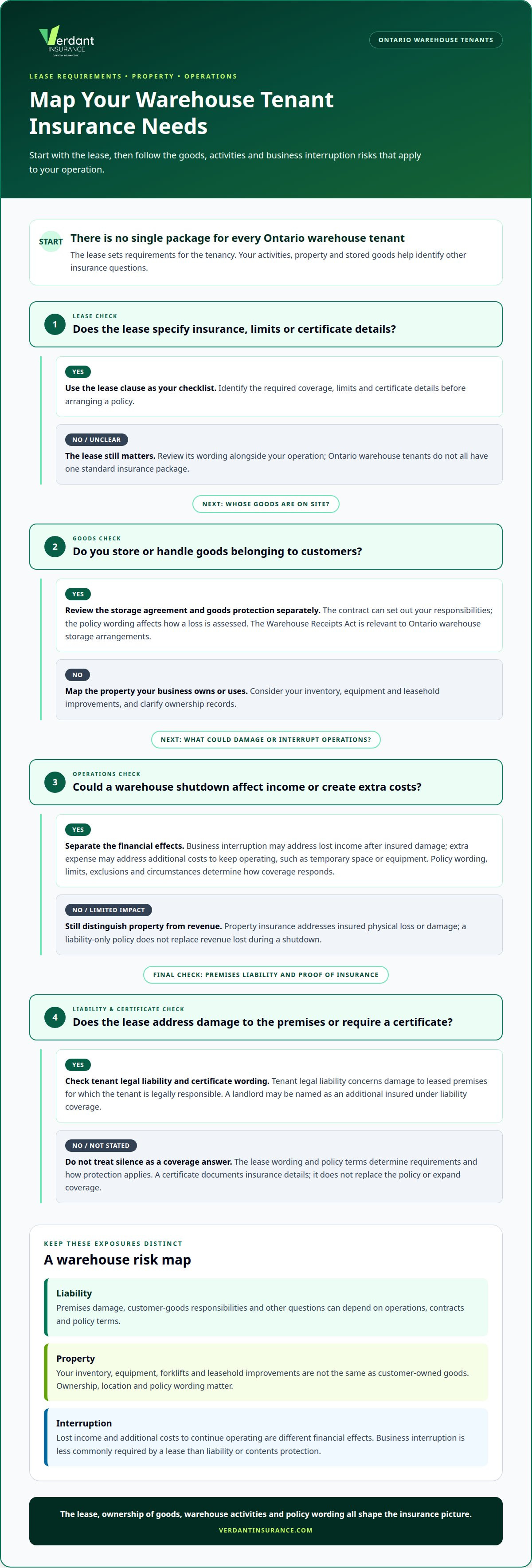
A warehouse lease can make insurance a condition of occupancy, but Ontario does not require every warehouse operator to carry one standard package. Warehouse tenant operations insurance in Ontario usually starts with the lease: commercial general liability is commonly required, often with the landlord named as an additional insured. Tenants may also need coverage for their inventory, equipment, and leasehold improvements, while customer goods may require separate protection.
That distinction matters because the landlord’s building insurance generally does not cover a tenant’s property or business losses. The protection needed also depends on warehouse activities, such as storing customers’ goods, operating equipment, and handling stock.
This article explains what a commercial lease may require, how certificates and claims fit into the process, and how warehouse operations can affect an insurance application. The lease wording, ownership and value of goods on site, and potential interruption to operations all matter when considering coverage.
Key Takeaways
- Use the lease’s insurance clause to identify required coverage, limits and certificate details before arranging a policy.
- Separate protection for your own stock and equipment from coverage for customers’ stored goods, and consider how a shutdown could affect income and extra expenses.
- Tenant legal liability may matter if your business or employees damage the leased premises; policy wording and limits shape how it responds.
- A certificate can document insurance details, but it doesn’t replace the policy or expand its coverage. Naming a landlord as an additional insured has a specific role under liability coverage.
- Warehouse activities and risk controls, including racking use and sprinkler protection, can influence how insurers assess the property. An industrial and warehouse insurance discussion can help frame the relevant details.
Is business tenant insurance important?
Business tenant insurance matters because a warehouse closure can interrupt sales while rent, payroll, and other operating costs continue. A lease may require business interruption insurance, but this is less commonly required than liability or contents protection. The coverages serve different purposes: property insurance addresses insured physical loss or damage, while business interruption insurance may address resulting lost income.
For example, if an insured fire makes a warehouse unusable, business interruption insurance may help address lost income during the interruption. The policy wording, limits, exclusions, and circumstances determine how coverage responds. Business interruption insurance is not necessarily included automatically in basic commercial tenant insurance; whether it is included or can be added depends on the insurer and policy. A liability-only policy will not replace revenue lost during a shutdown.
Extra expense coverage addresses another practical pressure: the cost of keeping operations going after insured damage. A warehouse operator might need temporary space, equipment, or other arrangements to continue serving customers. Depending on the policy, warehouse insurance may cover extra expenses, including the cost of operating from another site. These costs are distinct from the value of damaged contents or inventory.
Business interruption and extra expense coverage can work together, but they address different financial effects. Lost income reflects revenue affected by a closure; extra expenses are additional costs incurred to reduce disruption. For a distributor, temporary storage elsewhere could create an extra expense, while delayed fulfilment could affect revenue. The policy wording determines which losses qualify and how limits apply.
Rental income is a separate concern for warehouse owners. If insured damage makes a rented unit unusable, the owner may lose rent during repairs. Building insurance and rental-income protection are not interchangeable. A lease may pass building insurance costs through as operating or common-area maintenance charges, but that does not insure a tenant’s revenue or an owner’s lost rent.
For tenants, the lease is a useful starting point. Identify whether it requires business interruption insurance, and distinguish that requirement from its contents or liability provisions. A warehouse tenant’s activities, stock, and reliance on a single location help frame the interruption exposure. The lease and policy determine the specific requirements and available coverage.
Business interruption insurance is most relevant when a closure could disrupt income beyond the immediate property damage. Consider a warehouse that handles time-sensitive customer orders: temporary relocation may keep some operations running, while missed orders may still affect revenue. Separating lost income, extra expenses, contents, and rental income helps clarify the different risks before reviewing coverage.
What insurance does an Ontario commercial tenant typically have to carry under a lease?
There is no single insurance package for every Ontario warehouse tenant. The lease sets requirements for the tenancy, while the operation’s activities shape other coverage needs.
Tenant Liability for Premises Damage
Tenant legal liability concerns damage to leased premises for which the tenant is legally responsible. A lease may require liability coverage for damage connected to the tenant’s operations. For example, a business moving bulky goods should consider how its handling activities could relate to damage inside the unit. The lease wording and policy terms determine the required protection. Employee injury obligations should be considered separately from liability for damage to the premises.
Warehouse Liability for Customers’ Goods
A storage contract can set out the operator’s responsibilities for goods held for customers. This matters when a business accepts, stores, or handles items it does not own. For example, a tenant might store products for several clients under separate agreements. Both the contract terms and insurance policy affect how a loss is assessed. The Warehouse Receipts Act is relevant to Ontario warehouse storage arrangements, so consider storage agreements and insurance questions together.
Insurance Needs Across Warehouse Operations
Storage, distribution, manufacturing, and e-commerce involve different activities, and lease requirements may reflect those differences. A storage tenant receives and holds goods; a distributor handles orders and shipments; a manufacturer carries out production; an e-commerce operation may pick and pack orders. Each activity can raise distinct liability questions. Workplace injury protection is a separate consideration for employers. The lease and employment arrangements help identify insurance requirements to address.
Inventory, Equipment, and Transit Coverage
Coverage for inventory, equipment, forklifts, and goods in transit depends on what property is insured and where a loss occurs. A tenant’s stock stored in the unit differs from goods being transported between locations. For example, a forklift used only on site raises a different property question from a shipment handled by a carrier. Ownership records and the lease can help clarify which party has an interest in each item. The policy wording determines whether a particular loss is covered.
Insurance application, claims, and certificates
A warehouse insurance application describes the operation, location, property, and activities to be insured. Clear details help an insurer assess the risks presented by a tenant’s work. A storage facility holding customers’ goods differs from a distribution warehouse handling frequent shipments. The application should distinguish tenant-owned contents from customer property and identify leasehold improvements. These details help clarify the coverage being considered.
Operations can change after an application is completed. Adding manufacturing, storing different goods, or increasing stock levels may alter the risk profile. Insurers may consider claims history, but their review periods vary. Past losses and operational changes can therefore matter during an application or renewal. An accurate description gives the insurer a clearer picture of the business and its premises.
A certificate of insurance shows details such as policy dates and stated limits. Landlords may request one as evidence that a tenant has arranged the insurance required by the lease. A certificate is not the policy itself and does not extend coverage beyond the policy wording. If the lease calls for specific insurance, the certificate details should correspond to that requirement.
For example, a certificate may show liability coverage, while the tenant also wants protection for stock or equipment. The certificate alone does not establish that those contents are insured. Leasehold improvements, customer goods, and business income involve different coverage considerations. The policy wording, limits, exclusions, and insured property determine what protection applies.
Claims handling after a loss depends on the event and the policy. A fire that damages tenant improvements differs from customer goods damaged during storage. Useful records may include inventory lists, purchase documents, photographs, maintenance records, and the relevant storage contract. These help show what was affected, who owned it, and how the loss occurred. Keep claim details consistent with the application’s description of operations and property.
A warehouse operator may also need to clarify whether a claim concerns its own property or goods held for a customer. That distinction can affect which coverage is relevant. For example, a damaged forklift owned by the tenant differs from a customer’s damaged stored inventory. Policy terms determine whether a particular loss qualifies, and a certificate cannot settle that interpretation. Accurate applications, current certificates, and organized claim records each serve a different purpose.
Landlord as additional insured
An additional insured is a party added to another party’s liability policy for specified protection. Ontario commercial leases commonly require tenants to name the landlord as an additional insured. This arrangement connects the landlord’s protection to liability arising from the tenant’s activities. For example, a visitor injured during warehouse operations could bring a claim involving the tenant and landlord.
Naming the landlord does not make them the policyholder or insure the building itself. The tenant’s liability coverage responds according to its wording, limits, and exclusions. It does not automatically cover the tenant’s inventory, forklifts, or leasehold improvements. Those property interests are distinct from liability arising from the tenant’s use of leased premises.
The lease explains the landlord’s insurance requirements, including who must be named and what coverage applies. A warehouse tenant handling deliveries may face different liability circumstances from one storing goods without frequent visitor access. Naming the landlord does not transfer responsibility for every loss at the property. The connection between a claim and the tenant’s operations remains important.
An insurance certificate can show that a landlord is listed as an additional insured, but the policy wording controls coverage. A certificate does not create broader protection than the underlying policy provides. If the lease names a property owner or management entity, the names should match the agreement. This helps avoid confusion when the landlord requests proof of insurance.
A landlord may also request a waiver of subrogation in the tenant’s insurance documents. Subrogation is when an insurer seeks recovery from another party after paying a covered claim. A waiver can affect recovery rights between the tenant’s insurer and the landlord. Its application depends on the policy wording and the parties’ agreement, so consider it alongside the lease’s insurance clause.
For example, if a tenant’s operations cause damage and the landlord is named on the liability policy, the claim’s facts and policy terms shape the response. The additional insured designation does not itself establish fault or guarantee payment. Policy limits and exclusions still apply. The landlord’s building policy and the tenant’s liability coverage serve different purposes.
Insurance requirements can also change when a tenant’s activities or lease arrangements change. A distribution business adding manufacturing, or a new landlord taking over the property, may affect the information in the agreement and insurance documents. Keeping those details aligned supports clearer administration. The landlord’s additional insured status remains subject to the policy terms and the specific relationship described.
Racking collapse and sprinkler protection
Racking and sprinkler systems can shape how an insurer assesses warehouse risks. For tenants, rack design, installation, loading practices, and stored goods help describe operations. Whether a warehouse policy covers racking collapse caused by overloading or improper installation depends on the insurer and policy wording. A collapse could damage inventory, equipment, and the leased building, so the cause and policy wording matter.
Overloading a rack or installing it improperly may create a different claim scenario from damage caused by another insured event. The distinction matters because an exclusion can limit or remove coverage for a particular cause. A warehouse tenant’s records of rack specifications, installation, inspections, and repairs can help explain the setup. These details should reflect actual conditions, not only the planned layout.
Sprinkler protection raises a separate question: what happens if water escapes and damages stored goods? A tenant should understand how the policy treats sprinkler leakage, including any applicable exclusions, limits, or deductibles. Coverage for the building, tenant-owned stock, and customers’ inventory may involve different insurance interests. The policy wording identifies which property and causes of loss are insured.
Flood risk also deserves attention. “Flood” can have a specific meaning in policy wording, and coverage may be treated differently from other water damage. A warehouse near a watercourse and a unit affected by a plumbing leak present distinct circumstances. Policy definitions and exclusions determine how these events are addressed, so the cause and location of water entry matter.
Business interruption is another exposure to consider alongside physical damage. A sprinkler leak could make a storage area unusable, while a racking collapse could interrupt picking and dispatch. Whether lost income or extra expenses qualify depends on the policy terms and the event causing the shutdown. A warehouse’s reliance on particular equipment, stock, or a single operating site helps describe the potential interruption.
A broker can use operational details to explain the risks presented in an insurance application. Relevant information may include the kinds of goods stored, how racks are loaded, the sprinkler system, and previous damage or repairs. Changes to inventory or warehouse layout can also alter the risks being assessed. Clear records help distinguish racking, water, flood, and interruption concerns when discussing coverage and exclusions.
Verdant Insurance: Industrial and Warehouse Property Insurance
Verdant Insurance helps Ontario businesses explore insurance options as a brokerage, rather than issuing policies directly. For warehouse tenants, a broker can compare available business insurance options and explain differences in coverage and policy terms. This can be useful when reviewing a proposal, preparing for renewal, or understanding how policy features relate to business priorities.
The discussion can focus on the tenant’s objectives and the trade-offs between available options. For example, a business may want to understand how property protection and business interruption are addressed in different proposals. A broker can explain the options and assist with changes or claims-related questions, subject to the insurer’s processes and policy terms.
Verdant’s industrial and warehouse property insurance information provides a relevant starting point for Ontario businesses considering warehouse-related insurance. The brokerage works with multiple insurers, and available options depend on insurer appetite and the individual business. Policy wording, eligibility, limits, and exclusions remain important when considering any proposal.
To start a discussion, gather the business’s priorities, existing insurance documents, and any proposal or renewal materials you want help understanding. Many documents can be completed electronically where permitted, though requirements vary by insurer. Clear questions about policy terms help focus the conversation on the decisions the business needs to make.
To discuss your Ontario business insurance needs, contact Verdant Insurance.
Frequently Asked Questions
Does a warehouse policy cover a customer's goods automatically?
No. A warehouse tenant should not assume a policy automatically protects every item in its custody. Consider a seasonal peak when customer stock at the site rises above its usual level. The maximum value held at one time can affect how much protection may be needed. Storage records identifying the customer, goods, and dates held can also help establish what was on site if a loss occurs.
Who Needs This Coverage?
Businesses that own, rent, or operate warehouse space may need coverage suited to their responsibilities. A tenant storing its own products faces different property questions from a logistics operator handling shipments for clients. Even a business using a warehouse only for overflow stock has property at that location to account for. Relevant insurance depends on who operates the site, what happens there, and which party bears each risk.
What insurance coverage does a warehouse tenant in Ontario need?
A useful starting point is to match coverage categories to the tenant’s actual risks, rather than assume one standard package. A tenant might consider liability for third-party claims, property protection for business assets, and interruption protection if a covered event disrupts operations. Businesses selling products or providing professional services may have separate liability exposures. Whether coverage applies depends on the policy wording, limits, exclusions, and the operation described.
Who is responsible for insuring a warehouse building, contents, and tenant improvements in Ontario?
Responsibility follows the property interest and the lease allocation, so distinctions between items matter. For example, a tenant-funded office build-out may be treated differently from a landlord-installed loading bay. The lease may also explain who maintains or replaces particular fixtures. A property schedule or improvement records can help distinguish the tenant’s investment from the building structure. The policy wording then determines how insured property is defined and valued.
What commercial general liability limits do Ontario warehouse leases typically require?
There is no single limit that applies to every warehouse lease; the insurance clause states the contractual requirement. Read the limit wording carefully, including whether it refers to each occurrence, the policy period’s aggregate, or both. Those terms describe different caps and are not interchangeable. A tenant with several customer contracts may also face separate insurance terms in each agreement, so consider the lease and service contracts together.
What Ontario rules or lease clauses affect warehouse tenant insurance requirements?
Insurance clauses can address more than the type and amount of coverage. A tenant may encounter wording about additional insured status, waiver of subrogation, notice of cancellation, or delivery of certificates. The signed lease is central to understanding the parties’ agreed obligations, while storage agreements can allocate responsibilities for goods separately. For example, a customer contract may set a liability cap that differs from the tenant’s lease requirements.
What information should an Ontario warehouse tenant provide to a broker when comparing quotes and arranging the required insurance certificates?
Along with the lease, provide the exact legal names of the tenant, landlord, and any property manager named in the insurance clause. Describe how the space is used, including activities that differ from the original application. A seasonal inventory peak, a new service, or an added warehouse location can change the risk picture. For preparing a certificate, clear entity names and the requested wording help avoid corrections caused by mismatched records.


