
The legal minimum for your car insurance isn’t necessarily enough to protect you financially after a serious accident. In 2026, the minimum car insurance coverage Ontario requires includes C$200,000 in third-party liability coverage, uninsured automobile coverage, and medical, rehabilitation, and attendant care benefits. A standard policy also includes Direct Compensation Property Damage coverage.
It’s understandable to focus on meeting the legal requirement, but minimum coverage and suitable protection aren’t the same thing. Since July 1, 2026, several accident benefits, including income replacement and caregiver benefits, are optional rather than automatically included. Choosing only mandatory coverage could leave gaps, depending on your needs and circumstances.
This guide explains what Ontario requires, what each coverage is designed to do, and where minimum limits may leave you exposed. It also outlines what to review before choosing or changing a policy, including optional benefits, liability limits, policy wording, and exclusions. The goal is to help you understand the baseline and decide whether it fits your situation.
Key Takeaways
- Learn which coverages Ontario requires and how they address injuries, liability, and vehicle damage.
- Treat the minimum car insurance coverage Ontario requires as a legal baseline, not an automatic match for your financial needs.
- Review your declarations page and policy documents for coverage limits, deductibles, exclusions, and effective dates before making changes.
- Check whether optional accident benefits fit your circumstances, and confirm who is covered by your policy.
- For policy-specific questions, an Ontario insurance broker can help explain available options and what to review.
What is Ontario's minimum car insurance for 2026?
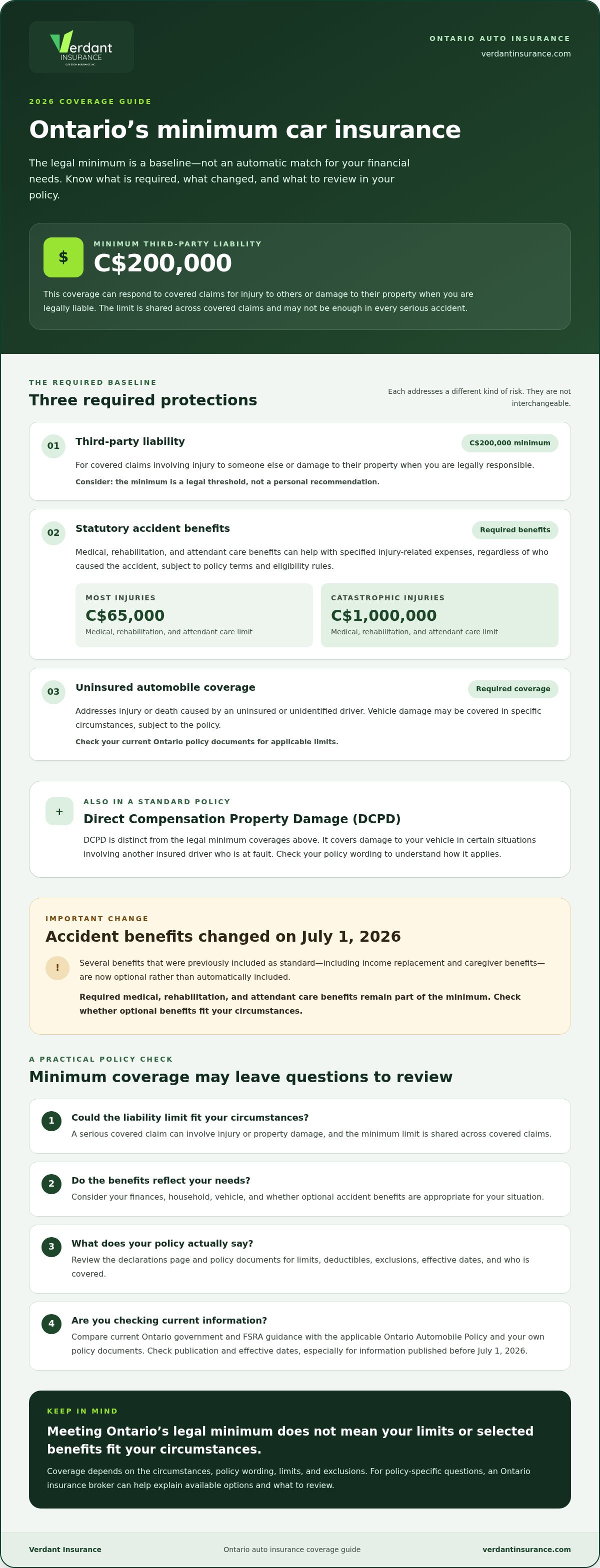
As of September 2026, the minimum car insurance coverage Ontario requires includes C$200,000 in third-party liability coverage, uninsured automobile coverage, and statutory accident benefits for medical, rehabilitation, and attendant care. This is a legal baseline, not a recommendation for every driver. Your needs may depend on your finances, household, vehicle, and the protection available under your policy.
Which coverages does Ontario require drivers to carry?
Ontario’s accident-benefit rules changed on July 1, 2026. Several benefits previously included as standard, such as income replacement and caregiver benefits, are now optional. The required medical, rehabilitation, and attendant care benefits have limits of C$65,000 for most injuries and C$1,000,000 for catastrophic injuries.
| Coverage | Minimum or limit | What it generally addresses |
|---|---|---|
| Third-party liability | C$200,000 | Injury or property damage to others for which you’re legally liable. |
| Statutory accident benefits | Medical, rehabilitation, and attendant care: C$65,000 for most injuries; C$1,000,000 for catastrophic injuries | Specified expenses related to injuries in an accident, subject to policy terms and benefit limits. |
| Uninsured automobile | Required coverage; check current Ontario policy documents for applicable limits | Injury or death caused by an uninsured or unidentified driver. Damage to your vehicle may be covered in specific circumstances, subject to the policy. |
Direct Compensation Property Damage (DCPD) is distinct from these legal minimums. It’s coverage in the standard policy for damage to your vehicle in certain situations involving another insured driver who is at fault. Check your policy wording to understand how it applies. The Ontario Automobile Policy (OAP 1) sets out the structure and terms used in Ontario’s standard automobile policy.
Where can drivers verify Ontario’s current minimums?
For a current check, compare the latest Ontario government and Financial Services Regulatory Authority of Ontario (FSRA) guidance with the applicable Ontario Automobile Policy and your own policy documents. Check publication and effective dates, especially for pages published before July 1, 2026. Older summaries may describe accident benefits that are no longer automatically included.
As of September 2026, Ontario’s minimum auto insurance requirements include C$200,000 in third-party liability, uninsured automobile coverage, and mandatory medical, rehabilitation, and attendant care benefits, with the July 1, 2026 accident-benefit changes in effect.
Meeting those requirements doesn’t mean your limits or selected benefits fit your circumstances. Review policy limits, exclusions, and optional benefits before deciding whether to change coverage.
What does each minimum car insurance coverage in Ontario actually protect?
Each coverage addresses a different kind of loss. Third-party liability generally concerns harm you cause to others; accident benefits address certain injuries after an accident; and uninsured automobile coverage responds to specific risks involving uninsured or unidentified drivers. These protections aren’t interchangeable, and the minimum car insurance coverage Ontario requires may not address every expense or situation you’re concerned about.
What does third-party liability insurance cover?
If you’re legally responsible for injuring someone or damaging their property in an auto accident, third-party liability coverage can respond to covered claims up to your policy limit. Ontario’s minimum limit is C$200,000. A claim could involve another person’s injury or damage to their vehicle or other property. The limit is shared across covered claims, so it may not be enough in every serious accident.
Whether a particular loss is covered depends on the circumstances, policy wording, limits, and exclusions. The minimum is a legal threshold, not a personal recommendation. Consider what you could be financially responsible for if a covered claim exceeded your available limit.
What are accident benefits and other required protections?
Statutory Accident Benefits Schedule (SABS) benefits can help with specified injury-related needs, regardless of who caused the accident, subject to the policy and eligibility rules. As of July 1, 2026, medical, rehabilitation, and attendant care benefits remain mandatory. Their standard limits are C$65,000 for most injuries and C$1,000,000 for catastrophic injuries. Income replacement, caregiver, housekeeping and home maintenance, non-earner, death, and funeral benefits are now optional rather than automatically included. Optional benefits apply to the named insured, their spouse, dependants, and drivers specifically listed on the policy.
From July 1, 2026, your auto insurer is the first payer for medical and rehabilitation costs after an accident, before private or workplace health plans. The exact coordination and payment of benefits depend on applicable rules and policy terms. The Financial Services Regulatory Authority of Ontario explains the coverages in its guide to the standard auto insurance policy.
Uninsured automobile coverage is also mandatory. It generally addresses injury or death caused by an uninsured or unidentified driver, and may cover vehicle damage caused by an identified uninsured driver. The policy determines how this protection applies. DCPD, by contrast, generally addresses damage to your vehicle in certain accidents involving another insured driver who is at fault. It’s part of the standard policy, but you can choose not to make a claim under it.
To understand how these protections fit together, review your limits, selected optional benefits, and policy exclusions. An Ontario broker can help you discuss available options in light of your circumstances. For information about Verdant’s auto insurance options, visit Verdant Insurance.
Is Ontario’s minimum car insurance coverage enough for your situation?
Meeting Ontario’s legal requirements means you have the required baseline, but it doesn’t automatically mean your finances are protected as you’d want after an accident. Whether the minimum car insurance coverage Ontario requires is enough depends on your circumstances, the coverage you choose, and your policy terms.
What could minimum limits mean after a serious accident?
If you’re legally responsible for covered injury or property damage, third-party liability insurance responds only up to the applicable policy limit. If covered damages exceed that limit, you could face personal financial exposure for the amount above it. The outcome of any claim depends on its facts, applicable law, and policy wording. This isn’t a prediction of what a particular accident would cost or how a claim would be handled.
Consider the financial impact you could manage without disrupting your household. Think about savings, property, other assets, and ongoing obligations. Mandatory accident benefits also have defined limits, and some benefits are optional under Ontario’s rules effective July 1, 2026. If you don’t select an optional benefit, don’t assume it’s included. Review your policy to confirm which benefits apply and to whom.
Who may want to review coverage beyond the minimum?
A closer review can be useful if you have assets you want to protect, regularly carry family members or other passengers, or rely on your vehicle for a long commute. Your vehicle’s use matters too: check that the information provided to your insurer accurately reflects how you drive, including any work-related use. These are prompts for review, not automatic reasons to choose a particular limit or benefit.
Legal compliance tells you whether you meet Ontario’s required baseline; coverage suitability depends on your finances, vehicle use, household needs, and policy terms.
To assess your situation, ask yourself:
- Could I manage costs that exceed a liability limit if I were legally responsible for a covered claim?
- Who regularly travels in my vehicle, and what financial support might my household need after an injury?
- Are optional accident benefits included, and who is covered by them?
- Does my policy reflect how I actually use the vehicle?
There isn’t one coverage choice that fits every Ontario driver. Compare your answers with the limits, benefits, exclusions, and deductibles shown in your policy documents. Coverage and eligibility depend on the insurer, policy wording, limits, exclusions, and individual circumstances. If anything is unclear, ask your insurer or broker to explain the terms before making a change.
How can Ontario drivers check their policy against the legal minimum?
A focused policy review can help you spot missing information, understand your limits, and prepare questions before making changes. Start with your declarations page, often called a coverage summary, then check the full policy documents for details the summary may not show. Compare what you find with current Ontario requirements and effective dates, especially for accident benefits that changed on July 1, 2026.
Which policy details should you review first?
Work through these details in order:
- People and vehicles: Confirm the named insureds, listed drivers, and insured vehicles are correct.
- Use and dates: Check that the described vehicle use reflects your circumstances, and note the policy’s start and end dates.
- Coverage and limits: Identify third-party liability limits, selected accident benefits, uninsured automobile coverage, and other listed protections. Compare them with current official Ontario guidance.
- Deductibles and exclusions: Find the deductibles that may apply and read the policy sections describing exclusions or limits on coverage.
- Full wording: Use the complete policy, not only a certificate or summary, to understand the terms and conditions.
This checklist can help you review the minimum car insurance coverage Ontario requires, but it can’t determine how a particular claim would be handled. Policy wording, limits, exclusions, insurer rules, and individual circumstances all matter.
What should you ask your insurer or broker?
If a term or limit is unclear, ask direct questions before changing coverage. For example: “Which accident benefits are included in my policy?” “Who is covered by the optional benefits I selected?” “What exclusions should I understand for my vehicle use?” and “Can you explain how this deductible applies?” Ask for policy-specific answers and request written documentation of any agreed changes. A verbal explanation can clarify your understanding, but it isn’t a policy amendment.
For broader context on comparing policy options, see this Ontario car insurance buying guide. If you’re deciding what to look for in a broker, the online insurance broker guide offers additional context. Coverage and eligibility vary by insurer and individual circumstances, so confirm policy-specific details before relying on them.
Where can Ontario drivers get help understanding minimum car insurance coverage?
Ontario’s legal minimums set a baseline, optional benefits let you consider additional protection, and your needs help determine whether a policy suits you. The minimum car insurance coverage Ontario requires doesn’t automatically reflect your finances, household, or how you use your vehicle. Before changing coverage, check current information from FSRA and ask your insurer or broker to explain how the policy wording applies to your circumstances.
When should you review your auto insurance coverage?
Review your policy when something changes that could affect the information on it or the protection you need. For example, you might start using your vehicle for a different purpose, add or remove a household driver, or reassess your finances and accident-benefit needs. Use these occasions to check that the policy details remain accurate and the selected limits and benefits still make sense to you.
Don’t assume a requested change is already in effect. Ask your insurer or broker to confirm whether it has been accepted, what terms apply, and its effective date. Keep the updated policy documents for your records, then check that they reflect what you agreed to.
How can a broker help clarify available options?
An Ontario insurance broker can discuss coverage options available through partner insurers and help you compare them with your questions and circumstances. A broker isn’t the insurer and can’t guarantee that a particular option will be available or suitable. Availability, eligibility, pricing, and coverage vary by insurer and individual circumstances; policy wording, limits, and exclusions govern the actual protection.
Before a conversation, gather your declarations page and write down anything you want clarified. Ask which accident benefits are included, which are optional, who they apply to, what exclusions to review, and how a requested change will be confirmed. If an answer is unclear, ask for the relevant policy document or written confirmation rather than treating an informal explanation as proof that the policy has changed.
Verdant Insurance is an Ontario-based brokerage in Markham that connects customers with partner insurers. If you’re weighing legal requirements against optional choices or have questions about your current policy, speak with a Verdant broker about your Ontario auto insurance needs.
Make your next policy review a confident one
Ontario’s legal minimum is a starting point, not a personal coverage recommendation. Knowing what each required protection does can help you identify where liability limits, accident benefits, or optional coverage may not match your needs. Check your policy’s limits, exclusions, listed drivers, and effective dates before deciding whether to make a change.
The minimum car insurance coverage Ontario requires also doesn’t tell you which optional benefits suit your household or finances. Confirm current legal details with official Ontario sources, and ask your insurer or broker to clarify how your policy applies. Confirm any change with the insurer, including when it takes effect.
Verdant Insurance is an Ontario-based brokerage located in Markham, offering auto insurance options through partner insurers. A broker can help you discuss available choices in light of your circumstances, while coverage and eligibility remain subject to insurer terms and policy wording.
A clear review can help you make an informed choice and feel more comfortable with the protection you’ve selected.
Frequently Asked Questions
What is the minimum car insurance coverage required in Ontario in 2026?
Ontario’s minimum car insurance coverage in 2026 includes C$200,000 in third-party liability, uninsured automobile coverage, and statutory accident benefits for medical, rehabilitation, and attendant care. The standard limits for those accident benefits are C$65,000 for most injuries and C$1,000,000 for catastrophic injuries. Since July 1, 2026, several other accident benefits, including income replacement, are optional rather than automatically included. Check current Ontario guidance and your policy documents for details.
Is third-party liability insurance mandatory in Ontario?
Yes. Third-party liability insurance is mandatory for Ontario drivers, and the legal minimum is C$200,000. It generally applies when an insured driver is legally responsible for injury to another person or damage to their property, subject to policy terms and exclusions. The minimum limit may not match every driver’s financial circumstances. Review your liability limit and ask your insurer or broker how the policy applies to your situation.
What happens if I drive without the required car insurance in Ontario?
Driving without valid required insurance in Ontario can lead to fines of C$5,000 to C$50,000 and a driver’s licence suspension of one year, according to the current information provided for this guide. The consequences can have serious financial and practical effects. If you’re unsure whether your policy is active or applies to the vehicle you’re driving, confirm its status with your insurer before driving.
Does Ontario’s minimum car insurance cover damage to my own vehicle?
Not in every situation. Direct Compensation Property Damage (DCPD) is part of a standard Ontario policy and generally addresses damage to your vehicle in certain accidents involving another insured driver who is at fault. You can choose not to make a DCPD claim. Other damage to your own vehicle may require optional coverage, depending on the circumstances and policy wording. Check your documents to see what protection you selected.
Can I choose more than the minimum car insurance coverage in Ontario?
Yes. You can ask about limits above the legal minimum and optional accident benefits or other coverage, subject to insurer availability, eligibility, and policy terms. For example, you may want to review liability limits in light of your assets or consider whether optional benefits fit your household’s needs. No single choice suits every driver, so compare options with your circumstances rather than assuming the minimum is enough.
How can I check whether my Ontario car insurance meets the minimum requirements?
Start with your declarations page or coverage summary. Check the named insureds, vehicles, policy dates, liability limit, accident benefits, and uninsured automobile coverage. Then review the full policy wording for exclusions, deductibles, and conditions, since a summary may not explain every detail. Compare the listed protections with current Ontario government or FSRA information. If anything is unclear, ask your insurer or broker to clarify before changing your coverage.