

A pool can be covered by home insurance, but it may affect both coverage and premiums. In Ontario, home insurance for properties with a pool may cover in-ground and permanently installed above-ground pools under other structures coverage. Under some policies, this coverage may be limited to 10% of the dwelling coverage amount. Whether pool damage or an injury-related liability claim is covered depends on the insurer’s eligibility rules and the policy’s wording, limits and exclusions.
It’s understandable to want clear answers before buying a home with a pool or installing one at your current property. A pool can affect premiums, and its condition, safety features and impact on the home can all influence how the property is insured. Disclosing the pool to your insurer helps ensure the policy reflects the property.
This article explains how pool coverage typically works, what insurers may consider about pool condition and safety, and how a pool’s added value can affect coverage needs and premiums. You’ll also learn why pool and policy details matter when reviewing protection for damage and liability.
Key Takeaways
- Learn how pool type affects whether it may be treated as a permanent structure or personal property under a home policy.
- See how pool features, safety measures, location and insurer risk assessments can influence premiums.
- Understand why pool condition and the cause of damage matter when an insurer assesses a claim.
- Explore how fencing, gates and compliance with local bylaws relate to pool safety and insurance considerations.
- Consider whether your home’s coverage reflects the pool and any changes it brings to the property’s value.
Does Home Insurance Cover Swimming Pools in Ontario?
Ontario home insurance may cover a swimming pool, but protection depends on the pool type and policy wording. Insurers may also consider pool safety and liability when setting coverage terms.
Pool Coverage by Pool Type
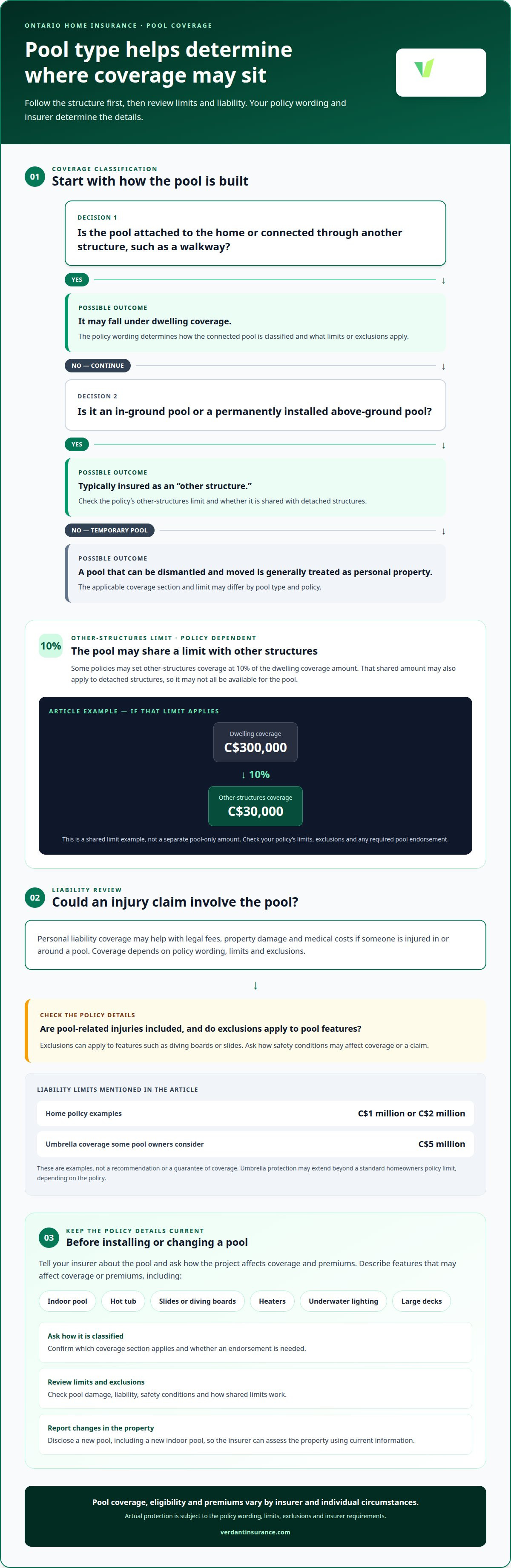
In-ground and permanently installed above-ground pools are typically insured as other structures under a homeowners policy. Temporary above-ground pools that can be dismantled and moved are generally treated as personal property. This distinction matters because the applicable coverage section and limit may differ. A pool attached to the home or connected through another structure, such as a walkway, may instead fall under dwelling coverage.
Other Structures Coverage Limits
Other structures coverage may have a limit equal to 10% of the dwelling coverage amount, depending on the policy. For example, a home insured for C$300,000 might have C$30,000 in other structures coverage if that limit applies. That shared limit can also apply to detached structures, so the pool may not have the full amount available on its own. Review how the insurance policy applies limits, exclusions and any required pool endorsement.
Liability and Umbrella Protection
Personal liability coverage may help with legal fees, property damage and medical costs if someone is injured in or around a pool, subject to policy wording, limits and exclusions. Home policies may have liability limits such as C$1 million or C$2 million, while some pool owners consider C$5 million through umbrella coverage. Check whether pool-related injuries are included, since exclusions can apply to features such as diving boards or slides. Umbrella insurance may provide liability protection beyond a standard homeowners policy’s limit, depending on the policy.
Coverage Updates and Insurer Questions
When comparing Canadian insurers, focus on how each treats pool types, other-structure limits, liability and safety conditions. Coverage, eligibility and premiums vary by insurer and individual circumstances. Not disclosing a pool could affect coverage or the insurer’s response to a claim, depending on the circumstances and policy terms. If safety conditions apply, ask the insurer how they may affect coverage or a claim.
Before installing a pool or hot tub, contact your insurer to ask how the project affects coverage and premiums. Ask whether the structure needs an endorsement, which safety features apply, and whether liability limits should change. Report a new indoor pool, too. Slides, diving boards, attached hot tubs, heaters, underwater lighting and large decks can affect coverage or premiums, so describe these features when discussing the installation.
Does a Pool Increase Home Insurance Premiums?
A swimming pool can raise home insurance premiums because insurers account for risks beyond the house itself. There’s no single pool surcharge for every Ontario home. Each insurer assesses the property using its own risk model, so the same pool may affect two households’ premiums differently.
Pool Effects on Premiums
Pool-related pricing reflects the insurer’s assessment of the whole property, not simply the presence of water. For example, an insurer may view an actively used pool differently from one left empty for a long time. Check your specific policy to see whether it has any terms or exclusions related to an empty pool. Homeowners should distinguish this coverage issue from a premium change.
The pool’s contribution to household risk can also change over time. A change in how the pool is used, such as hosting more guests, may alter the liability exposure the insurer assesses. That doesn’t mean every gathering automatically changes a premium. Rather, changes in use are relevant when the property is reviewed. For home insurance for properties with a pool, accurate details help insurers assess the actual risk instead of relying on outdated information.
Insurer comparisons are most useful when they consider more than the quoted premium. Review what each policy says about pool-related liability, damage and exclusions, as well as the conditions attached to coverage. A lower premium may reflect different terms, limits or exclusions, so price alone doesn’t show whether two offers provide comparable protection. Coverage and premiums vary by insurer and individual circumstances.
Indoor Pool Premium Effects
An indoor pool can change how an insurer classifies a home and assesses its overall risk. Some homes with indoor pools may be treated as luxury properties and insured through a specialty market. Owners may already carry excess liability coverage, which can form part of the broader insurance picture.
For a homeowner considering an indoor pool, the premium discussion should account for the building as a whole, not just the pool’s purchase or installation. The insurer may consider the property’s category and liability exposure. If guests regularly use the indoor pool, that use is relevant when reviewing the household’s protection. Before deciding that two premiums are directly comparable, ask how the proposed pool affects the insurer’s assessment and which policy terms apply.
Does pool condition affect insurance coverage?
Pool condition can affect how an insurer assesses damage claims and coverage. A sudden covered event differs from gradual deterioration or maintenance-related damage.
Pool Damage Claims and Depreciation
Depreciation reduces an item’s value to reflect age and wear, and it can matter when a pool damage claim is assessed. For example, an older liner or pump may not be valued like a new replacement. The policy wording determines how a covered loss is assessed, including applicable limits, exclusions and claim valuation terms.
Water Damage Prevention and Coverage
Maintain the pool and equipment to help prevent leaks or deterioration from going unnoticed. Regular indoor-pool maintenance can help prevent claims from gradual water damage. Coverage for gradual damage depends on the policy wording, limits and exclusions. Check for visible cracks and filter blockages, and address developing leaks before they affect the home.
Coverage for a pool crack depends on its cause and the policy wording, limits and exclusions. A crack caused by a covered peril may be covered, while a crack caused by an excluded peril may not be. A sudden event and gradual wear can therefore lead to different claim outcomes. Keep maintenance and repair records so the pool’s condition and completed work are clear when discussing a claim with the insurer.
Winter conditions matter in Ontario, too. Ice and snow weight can contribute to pool collapse, but whether collapse is covered depends on the policy wording, limits and exclusions. The cause and the policy’s covered perils and exclusions determine how the claim is handled.
Consider damage to pool equipment, such as a filter system, separately from damage to the pool structure. Sudden equipment failure can cause water damage, while ongoing leakage or gradual deterioration may be excluded. Review how the policy treats the pool, equipment and resulting damage. Liability insurance addresses injury-related claims, not the cost of repairing a cracked pool or replacing worn equipment.
After installing a pool or replacing equipment, keep invoices and records of the work and materials. If damage occurs, document the visible condition, what happened and any resulting damage to the home. These details help the insurer assess the cause against the policy’s terms, limits and exclusions.
Pool safety and drowning prevention
Pool barriers and safe supervision help reduce drowning risks for children. In Ontario, municipal requirements and insurer conditions can also affect liability coverage and claims.
Pool Safety Features and Requirements
Pool safety features include barriers, self-closing gates, covers and alarms. Applicable requirements depend on the property and local bylaws. Ontario pool owners should obtain relevant permits and comply with municipal rules. Insurers may also require safety measures, such as fencing or alarms, depending on the home. If an incident occurs when a pool doesn’t meet applicable safety requirements, the circumstances and relevant policy terms may affect how a claim is assessed.
Fencing and Drowning Prevention
A pool fence creates a barrier between children and the water, helping prevent unsupervised access. Municipal requirements for fence height and design vary, so one town’s standard may not apply elsewhere. For example, Toronto requires a fence at least 1.2 metres high around a private swimming pool. Gates that close and latch on their own can help keep the enclosure secure.
Fence placement matters, too. A fence directly around the pool separates the water from the wider yard instead of relying on a boundary fence around the entire property. Above-ground pool owners should remove the ladder when the pool isn’t in use. A pool cover designed to support a child’s weight can add another layer of protection, but it doesn’t replace supervision.
Supervision remains essential, even with barriers and covers in place. Designate a responsible adult to watch the pool area without distractions, and ensure adults in the household have CPR training. Children should be actively supervised in and around the water. These steps address risks a fence or alarm alone cannot prevent.
Winter brings different hazards. Snow and ice can contribute to pool collapse, and some policies may not cover damage from those causes. Keep children away from a closed pool area, and don’t treat ice on the pool as safe for walking or play. A secure barrier remains important when the pool isn’t in use.
Safety can affect insurance, too. An insurer may assess fencing, gates and other protections when considering pool-related liability coverage. If an injury is caused by an unsafe condition, the circumstances and applicable policy terms may affect how a claim is assessed, including in relation to local requirements. Maintain the enclosure and repair any gate that no longer closes or latches properly.
Increased property value and insurance costs
Adding a pool can change the home’s insured features and applicable coverage limits. Review the property details after installation rather than assuming the existing policy reflects the change.
A pool’s contribution to market value and the cost to rebuild the property are different considerations. Insurers assess the home and its structures under the policy terms, while a pool may be subject to a shared other-structures limit. For example, the limit may not be enough for a pool and other detached structures together. Updated property details help show what needs protection.
Reducing Insurance Costs
Cost-control choices include maintaining safety features and reviewing the deductible and coverage together. Any pricing effect of pool maintenance, fencing, safety measures or a deductible change depends on the insurer and individual circumstances. The article’s deductible example is increasing it from C$500 to C$1,000. A higher deductible also means paying more out of pocket on an eligible claim.
Before choosing a higher deductible, consider whether it fits your budget. Ask how pool features, safety measures and liability limits affect the premium, and whether the policy limits still suit the property. Insurers assess these details differently, so compare coverage terms as well as premiums.
Pool Replacement Costs
Replacing a pool means accounting for more than the pool shell. The pool type and size, attached equipment, deck and site work can all affect the replacement project. A damaged in-ground pool may involve different work from replacing a temporary above-ground pool. These differences matter when considering whether existing limits would respond to a covered loss.
Keep records of installation details, upgrades and equipment, then review them when updating the home’s insured information. If the pool is damaged, the cause and policy wording determine whether the loss is covered. Normal wear and tear isn’t covered under the policy described in this article, and a failed pool isn’t automatically covered unless collapse results from a covered peril.
Winter preparation matters, too: ice and snow weight can contribute to pool collapse, which some policies exclude. Review the policy’s collapse terms and applicable limits before relying on coverage for replacement.
Verdant Insurance: Homeowner Insurance
Verdant Insurance can help Ontario homeowners explore Homeowner Insurance options when a pool changes their property’s coverage needs. As a brokerage, it helps connect your home details and insurance priorities with available policy options, while the insurer’s wording sets the coverage, limits and exclusions.
Consider contacting Verdant before installing a pool or hot tub, after buying a home with one, or when adding features such as a deck, heater or attached spa. These changes can affect how the property is described and assessed. Sharing accurate details gives the discussion a practical starting point, including the pool’s type, location, condition and safety features.
A useful review goes beyond the pool itself. It can consider how the home’s dwelling coverage relates to other structures, whether the available limits reflect the property, and how personal liability coverage applies to pool-related injuries. For example, a detached pool structure and one connected to the house may be treated differently under policy terms. The exact wording matters, so policy documents remain central to understanding coverage.
Bring relevant information to the discussion, such as installation or renovation details, equipment, fencing and any changes in how the pool is used. If you’re buying a home, details about an existing pool can help frame questions about coverage and premium changes before closing. If you already own the property, updating the insurer after installation helps keep it informed about the changed risk.
Homeowner Insurance can also be reviewed alongside broader household needs. A pool may change the home’s value, rebuilding or replacement costs, and the liability protection you want to consider. Verdant’s online platform supports quote requests and policy management, with dedicated support to help make the process easier to understand.
Premiums, eligibility and coverage terms depend on the insurer and the individual property. Verdant Insurance is a brokerage, not the insurer, so the policy wording and insurer’s decision determine the actual protection. Reviewing those details can help you understand what the policy addresses and where limits or exclusions apply.
If you’re planning a pool installation or reviewing insurance for a home that already has one, request a free quote from Verdant Insurance to discuss Homeowner Insurance options.
Make Your Next Coverage Review Count
A pool changes the details insurers consider, so use your next policy review to make sure the property description reflects how you use and maintain it. For home insurance for properties with a pool, clear information about the pool and any property changes gives the coverage discussion a useful starting point.
Verdant Insurance offers Homeowner Insurance, Auto Insurance and Business Insurance. If you’re reviewing several parts of your household or property coverage, you can discuss those needs together without assuming they belong in one policy. The insurer’s policy wording, limits and exclusions determine the protection that applies, and details can vary by property and insurer.
A calm, informed review can help you decide which questions to raise and what coverage details matter most for your home. Pool ownership comes with responsibilities, but the insurance discussion can be clear and manageable.
When you’re ready, take the next step with a clearer picture of your home’s needs.
Frequently Asked Questions
Why does having a pool increase your liability exposure?
A pool creates an area where visitors could be injured, whether swimming or walking nearby. If someone alleges that a property condition contributed to an injury, the homeowner may face a liability claim. For example, a loose step leading to the pool could pose a hazard even when no one is in the water. Review how your policy addresses incidents involving guests.
Can swimming pools affect your homeowners insurance policy?
Yes. A pool can affect the insurer’s assessment of your property and the policy terms available. Changes such as installing a pool, adding equipment or altering how it’s used are relevant to the home’s risk information. Tell your insurer about these changes and review the resulting policy documents, including any conditions or exclusions that apply to the pool.
Do I need a fence around my pool for insurance?
Whether insurance requires a fence depends on the insurer’s conditions and the municipal rules that apply to your property. In Ontario, local pool enclosure requirements can differ by municipality, so a neighbour’s fence setup doesn’t establish what applies at your address. A fence and gate also need to function as intended; a gate that won’t latch can leave the enclosure unsecured.
Do insurance companies require fencing for pools?
Some insurers may make fencing or other safety measures a condition of coverage, but requirements differ by insurer and property. Municipal bylaws also apply independently of an insurer’s rules. For Ontario homeowners, both sets of requirements matter: satisfying a policy condition doesn’t automatically establish municipal compliance, and municipal compliance doesn’t determine every policy term. Read the conditions that apply to your pool.
How can you reduce your risk and the chance of pool-related claims?
Set clear pool-use rules for household members and guests, and keep the access area free of hazards such as loose paving stones or unsecured equipment. Have an adult actively supervise children near the water instead of relying on alarms or covers alone. Keep records of maintenance and repairs. If an incident occurs, note what happened and preserve relevant photographs and witness details.
Does home insurance in Canada cover swimming pools?
Home insurance for properties with a pool in Ontario may cover certain pool losses, but the policy terms determine what applies. A claim depends on the cause of damage, the relevant coverage section, limits and exclusions. For example, gradual deterioration is treated differently from damage caused by an insured event. Review the policy wording for the pool and related equipment rather than assuming every loss is covered.
How does a pool affect home insurance premiums in Canada?
For Ontario homeowners, a pool can affect premiums because insurers assess associated property and injury risks. The assessment may consider the pool’s condition, safety arrangements, location and other details of the home. Insurers use different risk models, so premium changes vary by insurer and individual circumstances. Compare coverage terms and exclusions alongside the premium rather than judging options on price alone.
What pool types and features must be disclosed to a Canadian home insurer?
Describe the pool’s type and installation, including whether it is in-ground, above-ground, temporary or indoors. Tell the insurer about attached spas or hot tubs and other features that change the property or its use. Report a new installation or significant alteration, and provide accurate details when asked about the home. The insurer uses this information to assess eligibility and policy terms.


