

A flooded basement doesn’t automatically mean a covered claim. Whether home insurance covers basement flooding in Ontario depends on where the water came from: sudden, accidental damage from an internal pipe or appliance may be covered, while sewer backup and overland flooding typically require optional coverage. The policy’s wording, limits and exclusions also matter.
It’s understandable to expect one policy to cover every kind of water damage, but coverage depends on where the water came from. This article explains which basement flooding scenarios may be covered in Ontario, what affects the cost of sewer backup coverage, and how optional overland water coverage works. You’ll also see how these protections differ, so you can understand what your policy may cover before flooding happens.
Key Takeaways
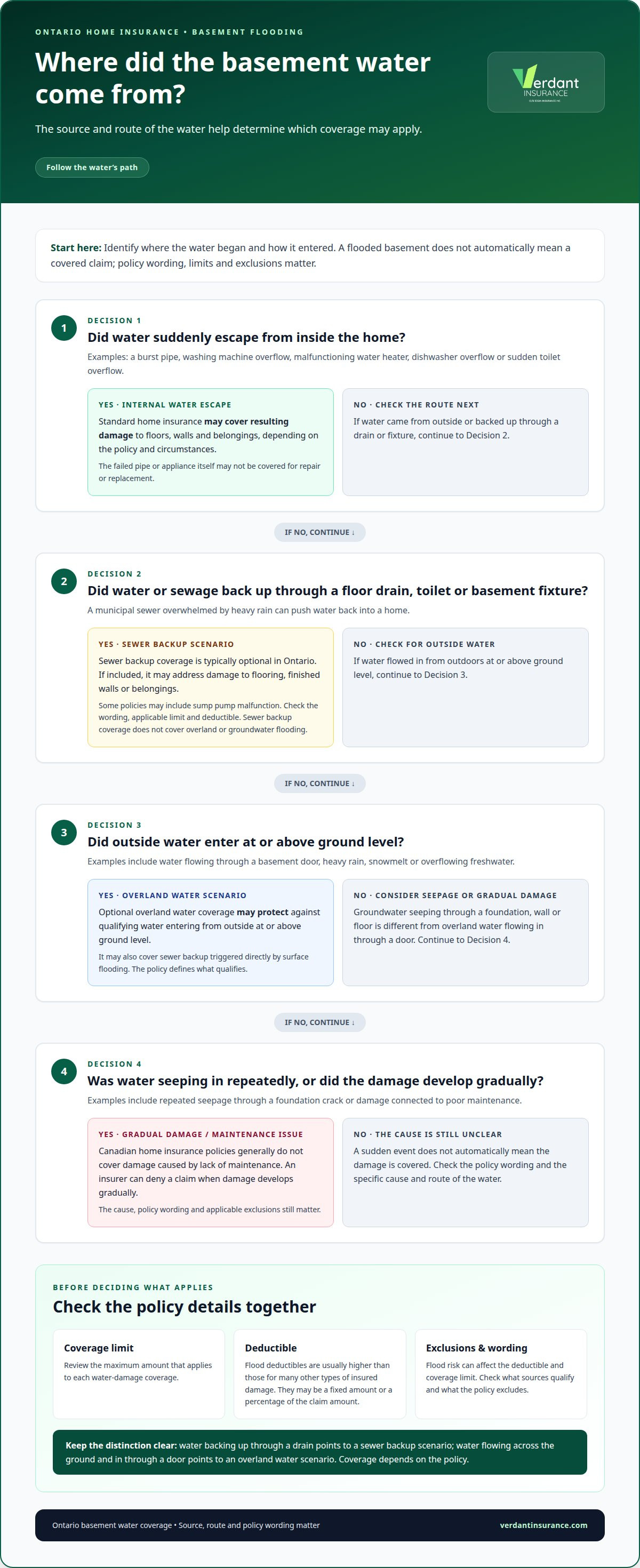
- Start by identifying where the water came from: sudden internal leaks, sewer backup and external flooding can be treated differently under a policy.
- Standard home insurance may cover sudden, accidental damage from an internal pipe or appliance, but gradual damage and maintenance problems are generally treated differently.
- Optional overland water coverage may protect against external water entering at or above ground level, such as from heavy rain, snowmelt or overflowing freshwater.
- Groundwater seeping through basement walls, floors or foundations is distinct from overland flooding; learn what protection and limits your policy includes.
Ontario Basement Flood Insurance: What's Covered and What's Not?
In Ontario, the source of basement water helps determine whether damage may be covered. A burst pipe, sewer backup, and rain entering through a basement window are different claim scenarios.
Sudden and Accidental Indoor Damage
Sudden and accidental indoor water damage means an unexpected escape of water from inside the home, such as a burst pipe or washing machine overflow. Coverage for resulting damage to floors, walls, and belongings depends on the policy and circumstances. The distinction matters: the policy may cover the water damage without paying to repair or replace the failed pipe or appliance itself.
Other examples include a malfunctioning water heater, dishwasher overflow, or sudden toilet overflow. A roof leak may also cause covered interior water damage, but damage to a roof caused by wear and tear or poor maintenance is generally treated differently. The policy wording sets out the applicable coverage and exclusions.
Sewer Backup and Overland Water
Sewer backup coverage applies to water or sewage backing up through floor drains, toilets, or basement fixtures. Overland water coverage addresses water entering from outside at or above ground level. This distinction matters after heavy rain: water pushed through a basement drain points to sewer backup, while water flowing through a door may involve overland flooding.
Sewer backup coverage is typically optional under Ontario home insurance, and it does not cover overland or groundwater flooding. Overland water coverage may protect against heavy rain, snowmelt, or overflowing freshwater bodies. It may also cover sewer backup triggered directly by surface flooding. The source and route of the water help distinguish these scenarios.
Claim Limits, Deductibles, and Exclusions
The policy wording identifies the deductible, coverage limit, and exclusions that apply to a basement flood claim. Flood deductibles are usually higher than those for many other types of insured damage. They may be a fixed dollar amount or a percentage of the claim amount. Flood risk can also affect the deductible and coverage limit.
Standard policies generally exclude external flooding unless the relevant optional protection applies. For example, groundwater seeping through a foundation is different from overland water flowing in through a door. Review the policy schedule and wording to understand which water damage limits and exclusions apply to each coverage.
Maintenance and Gradual Damage
An insurer can deny a claim when damage results from poor maintenance or develops gradually rather than happening suddenly. Repeated seepage through a foundation crack, for example, differs from water escaping suddenly from a burst indoor pipe. Canadian home insurance policies generally do not cover damage caused by a lack of maintenance.
Keep up with plumbing and drainage maintenance, and address visible leaks or foundation cracks before they worsen. A sudden event does not automatically mean damage is covered. The cause, policy wording, and applicable exclusions all matter.
For prevention, maintain a sump pump and consider a battery backup, install a backwater valve to help reduce sewer backup risk, and keep eavestroughs and downspouts clear. Flood risk can affect insurance premiums, deductibles, and coverage limits. Prevention equipment does not replace the need to understand your policy’s terms.
To check local flood risk in Ontario, consult your municipality’s official floodplain maps and flood-prevention information. Municipal websites are also the place to look for local protection programs. Eligibility and available support can differ by municipality.
How Much Does Sewer Backup Coverage Cost?
Sewer backup coverage is optional protection for damage caused when wastewater enters through basement drains, toilets, or other fixtures. In Ontario, a municipal sewer overwhelmed by heavy rain can push water back into a home. Depending on the policy wording, coverage may also extend to sump pump malfunction.
The cost of this coverage varies by insurer and individual circumstances. Flood risk can affect the premium, deductible, and coverage limit. The selected limit and deductible also shape the protection and cost shown in a home insurance quote. Compare those details together rather than looking at the premium alone.
What Sewer Backup Coverage May Include
A sewer backup endorsement can address damage to basement flooring, stored belongings, or finished walls after water backs up through a floor drain. Some policies also cover damage caused by a sump pump malfunction. The policy wording sets out which sources of backup qualify, what limits apply, and whether the deductible differs from other claims.
“Sewer and drain backup” can describe water entering through a drain or plumbing fixture, but the label alone doesn’t define every covered event. A toilet overflowing because a sewer line backs up, for example, differs from rainwater flowing across a lawn and entering through a basement door. The first may involve sewer backup coverage; the second is an overland water scenario.
How to Understand the Cost
There isn’t one sewer backup price for every Ontario home. The insurer, property flood risk, coverage limit, and deductible can affect the quoted cost. Ask how the quoted endorsement defines sewer or drain backup, whether sump pump failure is included, and what maximum amount applies. These details make it easier to compare the coverage in each quote.
A lower premium can come with a different deductible or limit, so compare the terms side by side. Check whether the amount shown applies annually, then read the policy schedule for the coverage limit and deductible. A basement with finished rooms or stored valuables may need a different limit from one used only for storage.
Ice Dams, Roof Drains, and Prevention
Ice dams create a separate water damage question. Sudden, accidental interior damage from an ice dam may be covered under a home policy, while repeated damage linked to poor maintenance may be excluded. A roof drain backup also needs to be assessed by its water source and route. Sewer backup coverage doesn’t automatically cover water entering from outside.
Reduce preventable backup risks by maintaining a sump pump, considering a battery backup, and installing a backwater valve. Keep eavestroughs and downspouts clear, and maintain grading that directs surface water away from the foundation. These steps help manage water around the home, but they don’t change the policy’s stated coverage, limits, or exclusions.
Optional overland flood coverage
Optional overland water coverage can protect an Ontario home when external water enters at or above ground level. It addresses a different route of water entry from sewer backup, so identifying how water reached the basement matters.
Flooding From Freshwater Sources
Overland flooding occurs when water from heavy rain, snowmelt, or an overflowing freshwater body travels across the ground and enters a home. For example, a creek overflowing after heavy rainfall can send surface water toward a basement door or window.
This optional coverage may apply to damage caused by water entering from outside. It can protect basement structural elements, electrical and plumbing systems, appliances, personal belongings stored below ground, and some finished materials. The policy’s limits and exclusions determine how those items are treated.
Homeowners can purchase flood coverage even if their property isn’t in a high-risk zone. Flood exposure can vary within a community, so consider how the property’s location and surrounding land direct water during rain or snowmelt.
Rain and Overland Flood Exclusions
Standard Ontario home insurance generally excludes basement flooding from rain and other external water sources unless applicable optional coverage is included. Rain entering through a basement window differs from sudden water damage caused by a burst indoor pipe, even if both damage the same carpet.
Overland water protection doesn’t cover every type of water intrusion. Groundwater seeping through foundation walls or floors, storm surge, and saltwater coastal flooding fall outside overland water coverage. Sewer backup coverage also doesn’t cover overland or groundwater flooding, although overland coverage may include sewer backup triggered directly by surface flooding.
That distinction matters after a storm: water flowing across a lawn toward a basement entrance is an overland scenario, while groundwater pushing through a foundation is different. The water source and route help distinguish the applicable coverage and exclusions.
Overland and Inland Flood Insurance
“Inland flood” may describe flooding from freshwater sources away from the coast, while overland coverage describes water entering from outside at or above ground level. For an Ontario homeowner, the practical question is whether the policy protects against the specific external water route that threatens the property.
Insurers may not offer flood coverage in very high-risk areas; where available, premiums may be higher. Flood risk can also affect deductibles and coverage limits. Read the policy schedule alongside the wording to understand the insured limit and deductible, rather than assuming all flood damage receives the same treatment.
For example, a home beside an overflowing freshwater river could face overland flooding, while a basement with water seeping through its foundation faces a groundwater issue. Those causes aren’t interchangeable, and overland protection doesn’t automatically cover groundwater damage. Distinguishing them helps clarify which exclusions and protections apply.
TL;DR - What does water damage coverage include?
In Ontario, standard home insurance generally excludes groundwater seepage through basement walls, floors, or foundations. Optional groundwater protection may cover resulting damage, subject to the policy’s exclusions.
Groundwater Through Basement Foundations
Groundwater enters when water passes through a basement wall, floor, foundation crack, or other below-ground opening. The route matters because seepage differs from sudden water escaping from an indoor pipe. For example, dampness spreading across a basement wall after prolonged rain points to a different cause than a pipe suddenly breaking beside that wall.
Groundwater protection may cover damage caused by water entering through walls, floors, or the foundation. The policy wording determines how that protection applies and which exclusions remain. A finished basement, stored belongings, and built-in systems can all be affected, so identify the damaged areas and water source when reviewing coverage.
Rain and Snowmelt Below Ground
Heavy rain and melting snow can saturate soil around a house, allowing groundwater to press against basement foundations. Water may then enter through a crack, joint, or floor. This below-ground route differs from surface water flowing through an open basement door, even if both events follow heavy rainfall.
Standard home insurance generally excludes damage from external flooding unless optional protection applies. Rain-related damage therefore depends on how the water entered and which coverage the policy includes. For instance, water seeping through a foundation after snowmelt is not automatically treated like a sudden indoor plumbing leak.
Groundwater Seepage and High Water Tables
A high water table means groundwater sits close to the ground surface, increasing pressure around below-ground walls and floors. Seepage can appear as damp patches, water at a floor-wall joint, or moisture through a foundation crack. These signs help distinguish groundwater entry from an appliance overflow or a sewer backup.
Optional groundwater protection may cover damage caused by water entering through basement walls, floors, or foundations, subject to policy exclusions. It does not mean every basement seepage claim is covered. Coverage depends on the protection included, its limits and exclusions, and the circumstances described in the policy.
- Note where water first appeared, such as a foundation crack or floor joint.
- Record whether heavy rain or snowmelt preceded the water entering the basement.
- Separate groundwater seepage from surface water entering through doors or windows.
- Identify affected items, including finished materials, appliances, and stored belongings.
These distinctions help clarify what the policy says about groundwater coverage. A sump pump can move collected water away, but it cannot repair a cracked foundation. Addressing drainage and foundation concerns helps reduce water entry, while optional coverage applies to insured damage under its stated terms.
Standard Ontario home insurance and basement flood coverage
A standard Ontario home insurance policy may cover sudden, accidental water damage inside the home, but generally excludes flooding from outside. The key distinction is the water’s source and route. A washing machine that suddenly overflows is different from rising water entering through a basement window during heavy weather.
For an indoor escape of water, coverage may apply to damage to floors, walls, and belongings. The broken appliance or pipe itself may not be covered for repair or replacement. For example, a sudden pipe failure could damage finished basement flooring, while the cost to replace the pipe remains separate from the resulting water damage claim.
External water needs a closer look. Standard coverage generally excludes surface water entering through doors or windows, groundwater seeping through a foundation, and damage from rising water. Heavy rain can create different events: rain entering through an opening, water backing up through a drain, and a nearby freshwater body overflowing do not necessarily fall under the same protection.
There are important distinctions. A broken water main may cause covered interior water damage, whether the break occurs on the property or outside it. A roof leak may damage ceilings or walls inside the home, while roof damage caused by wear and tear or poor maintenance is treated differently. Wind-driven rain may also be handled differently from water rising around the home during a storm.
Ice dams can lead to sudden, accidental water damage inside a home. Ongoing or repeated damage may instead be treated as a maintenance issue. Likewise, an appliance malfunction can trigger a sudden leak, but long-term seepage around an appliance points to a different cause. The home insurance policy’s wording sets out the relevant coverage and exclusions for each event.
After water enters, record the source and affected areas. Photographs can show whether damage began at an indoor appliance, roof, window, or basement drain. Contact your insurer promptly, and don’t assume coverage before the water source is identified. Note the weather, timing, and visible damage, as these details help describe what happened.
- Sudden indoor plumbing or appliance damage may be covered under standard protection.
- External flooding and groundwater commonly require applicable optional coverage.
- Damage to the failed item, such as a broken pipe, may be treated separately.
- Wear, repeated seepage, and poor maintenance can affect how a claim is assessed.
These differences explain why “water damage” doesn’t describe just one type of claim. A sudden indoor leak, rain entering through a basement window, and water rising from an overflowing freshwater source each involve a different route. Read the policy schedule and wording together to understand which events, limits, and exclusions apply to your home.
Verdant Insurance: Auto Insurance
Verdant Insurance can help Ontario homeowners explore Homeowner Insurance options suited to their property and coverage needs. If you’re reviewing sewer backup or overland water protection, a broker can help you understand how options, limits, deductibles, and exclusions fit together. Coverage and eligibility vary by insurer, and the policy wording determines what a claim may cover. Bring your questions about basement use, water entry risks, or existing protection into the conversation so you can make a more informed choice. For help reviewing your home insurance needs, contact Verdant Insurance.
Make Your Next Policy Review More Useful
If you’re still wondering whether home insurance covers basement flooding in Ontario, make your next step a practical review of your home and policy. Note which basement areas matter most to your household, including finished rooms, stored belongings, and equipment. Then compare those priorities with the protections and limits shown in your policy documents. This gives you clear questions to raise and keeps the discussion focused on your property’s needs.
A simple home record can also help you prepare: keep an up-to-date inventory of valuable basement contents and save photographs of the space. Coverage and eligibility vary by insurer and individual circumstances, so rely on your policy wording when making decisions. Verdant Insurance can help Ontario homeowners discuss their Homeowner Insurance needs and understand available coverage options.
A thoughtful review puts you in a better position to make informed choices for your home. Take the next step at a pace that feels right for you.
Frequently Asked Questions
What is water damage insurance in Canada?
Water damage insurance is protection within a home policy for certain losses caused by water. The policy may respond to a sudden plumbing leak, while flooding from outside or a drain backup may need optional coverage. For example, damage to a kitchen ceiling from a sudden pipe leak differs from water entering through a basement window. The policy wording defines covered causes, limits, deductibles, and exclusions.
Is foundation seepage covered by insurance?
Foundation seepage is generally excluded from standard home insurance, but optional groundwater protection may cover resulting damage. The cause and route matter: water pushing through a foundation wall differs from a sudden indoor pipe leak. Review the policy schedule for groundwater wording and limits, then check exclusions for seepage or repeated water entry. A visible crack or damp patch can help identify the affected area, but doesn’t determine coverage by itself.
Need to file a water damage claim?
Contact your insurer promptly after discovering water damage, and describe what happened, when you noticed it, and which rooms or belongings were affected. Take photographs before moving items, and keep receipts for reasonable emergency expenses. If you can safely stop the water source, do so. Avoid discarding damaged property before documenting it, and follow the insurer’s instructions for inspection and repairs.
What Most Homeowners Insurance Policies Actually Cover?
Home insurance typically protects the dwelling, personal property, personal liability, and certain additional living expenses, subject to policy terms, limits, and exclusions. That broad protection doesn’t mean every water event is insured. A sudden leak damaging a wall may be treated differently from ongoing moisture or external flooding. Check the coverage sections and endorsements together, especially if your basement contains valuable belongings or finished rooms.
What should I do after finding water in the basement?
Prioritize safety before entering a flooded basement. Keep away from standing water near electrical equipment, and shut off power only if you can do so safely. Photograph the water’s entry point and damaged contents, then contact your insurer promptly. Make a list of affected belongings, including their approximate age and condition. Don’t assume the source or coverage until the damage has been assessed.
Does standard home insurance in Ontario cover basement flooding?
For Ontario homeowners asking whether home insurance covers basement flooding, the answer depends on the water source. Standard policies may cover sudden, accidental damage from an internal plumbing failure, but generally exclude external flooding. Sewer backup and overland water protection are commonly optional. A drain, basement window, and foundation crack represent different entry routes, so describe the water’s path when discussing a loss.
What types of basement water damage are covered by Ontario home insurance?
Sudden, accidental indoor incidents may be covered, such as a burst pipe, water heater malfunction, or washing machine overflow. A broken water main may also cause covered interior damage. Coverage for resulting damage differs from paying to repair the failed pipe or appliance. Gradual seepage, maintenance-related damage, and external flooding are treated differently, so identify the event and review your policy’s relevant exclusions.
Is sewer backup coverage included in Ontario home insurance or an optional add-on?
Sewer backup coverage is typically an optional addition to Ontario home insurance. It may protect against water entering through basement drains or toilets after a sewer system backs up; some policies also address sump pump malfunction. The endorsement’s deductible, limit, and covered causes can differ, so compare those terms alongside the premium.


