

An empty commercial unit can affect more than rental income: standard commercial property policies usually restrict or exclude coverage for vacant property after 30 days. For vacant commercial unit insurance in Ontario, the key question is how the policy defines vacancy and what conditions apply to the unit.
It’s understandable to expect your building’s insurance to work as usual while you look for a tenant. But an empty unit can change how theft, fire, and other property claims are handled, even when the rest of the building is occupied.
This article explains what commercial property insurance may cover, when a vacant unit may qualify for coverage, and how vacancy rules can affect a claim. You’ll also learn what to clarify about vacancy permits, inspections, and policy conditions so you can discuss the property’s current use with a broker and understand the options available.
Key Takeaways
- Learn how commercial property insurance may protect a building, its contents and tenant improvements, and where a tenant’s own coverage fits.
- Understand why an empty unit can affect coverage even when other parts of the building remain occupied.
- See how policy wording, vacancy conditions and timely disclosure can influence theft and fire claims.
- Explore when a vacancy permit may help maintain coverage and what property safeguards it can require.
- Find out which details about the unit’s use and condition matter when discussing coverage options with a broker.
What does commercial property insurance cover in Ontario?
Commercial property insurance can cover business buildings and property against insured damage or loss. For an empty unit, policy wording and vacancy conditions can affect how coverage applies.
Coverage for Rented, Leased, and Owned Premises
Commercial property insurance is intended for businesses that own, rent, or lease premises for business use. Depending on the policy, covered property may include the building, contents, equipment, inventory, and tenant improvements. A landlord’s building coverage generally does not insure a tenant’s belongings or business losses, so each party’s property needs should be considered separately.
For example, a tenant may own shelving and inventory while the landlord owns the building structure. A commercial policy covers business property, while personal property insurance is designed for personal belongings, not commercial premises. The policy schedule and limits show which property is insured and for what amount.
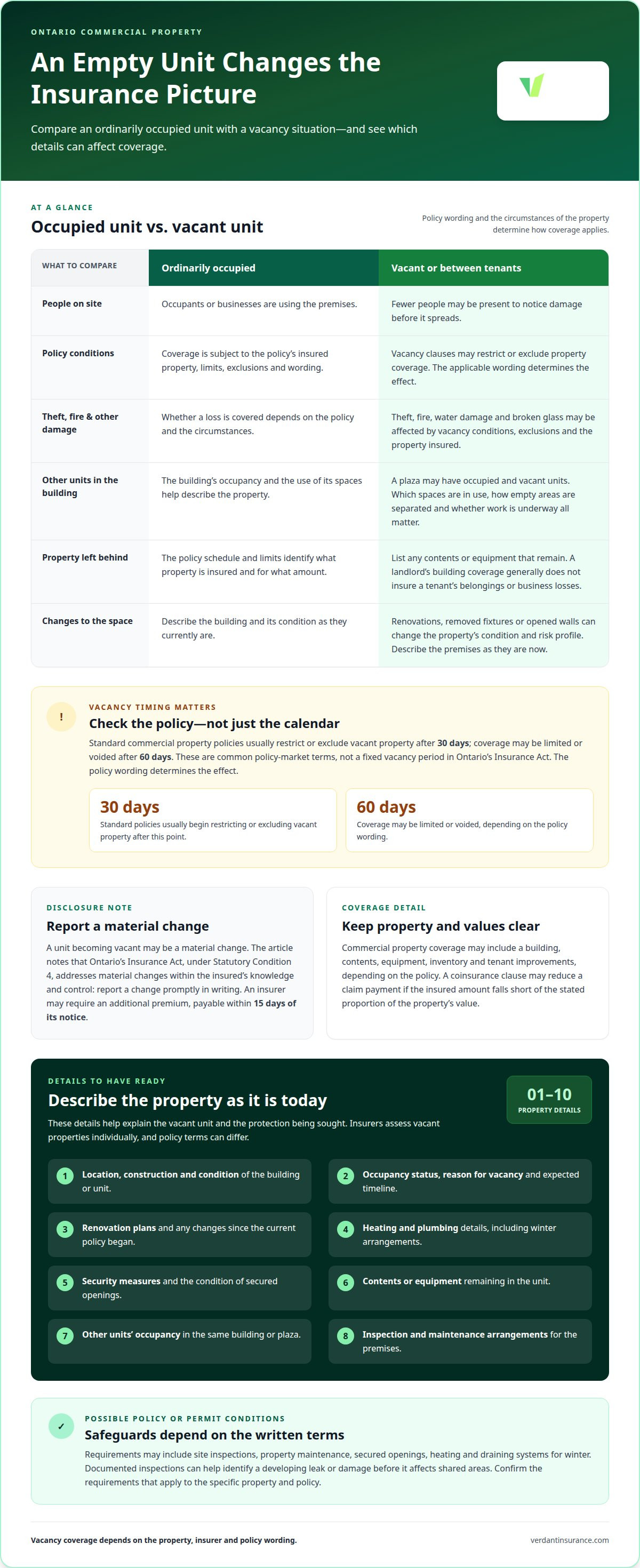
Ontario’s Insurance Act sets statutory conditions for fire insurance contracts. Under Statutory Condition 4, a material change within the insured’s knowledge and control can avoid the contract for the affected part unless promptly reported in writing, according to the Ontario Insurance Act. A unit becoming vacant may be a material change. After receiving notice, an insurer may require an additional premium, payable within fifteen days of its notice.
Coinsurance Requirements and Penalties
A coinsurance clause requires insurance at a stated proportion of the property’s value. If the insured amount falls short, a claim payment may be reduced by a coinsurance penalty, even when the loss is below the policy limit. Accurate valuations and limits matter when setting coverage.
Vacancy Clauses and Property Damage
A vacancy clause sets conditions or limits for property coverage while premises are empty. Standard commercial property policies usually restrict or exclude vacant property after 30 days; coverage may be limited or voided after 60 days. These are common policy-market terms, not a fixed vacancy period in Ontario’s Insurance Act. The applicable wording determines the effect on a claim.
Does standard commercial property insurance cover vandalism, theft, water damage, or broken glass while a unit is vacant? It may, but coverage depends on the policy’s vacancy conditions, exclusions, and insured property. For instance, a policy may treat building damage differently from missing contents. Glass breakage also depends on the wording. The circumstances of the loss and the policy terms together determine whether coverage applies.
Can I insure a vacant commercial building or empty plaza unit?
Yes, vacant commercial premises may be insured, including a unit between tenants, a building under renovation, or a plaza with partially vacant units. The insurer assesses the specific building, its use and condition, and the arrangements for the vacancy.
Insurance for Empty Commercial Buildings
Vacant property insurance addresses the changed circumstances of commercial premises without their usual occupants. It can be considered when an owner is preparing a building for sale or waiting for a new tenant. The Insurance Bureau of Canada describes a vacant building as one where occupants have moved out with no intention to return, or where no new occupant has moved in, according to the Insurance Bureau of Canada.
A plaza can have both occupied and vacant units. The overall occupancy picture includes which spaces remain in use, how vacant areas are separated, and whether work is underway. A storefront awaiting a tenant while other businesses remain open differs from a property with no occupants.
Risks of Vacant Buildings
With fewer people regularly present, damage may go unnoticed until it spreads. A leaking pipe, broken entry door, or fire alarm issue can affect the empty space and nearby units. Construction type, building condition, and the state of heating or plumbing systems help describe the property’s exposure to an insurer.
Renovations can further change the risk profile. Removing fixtures or opening walls, for example, may leave the unit in a different condition than when it was occupied. Owners should describe the premises as they are now, not just their intended condition after the work is complete.
Managing Risk and Protecting Property
Insurers may set safeguards for empty premises through policy or permit conditions. These may cover site inspections, property maintenance, secured openings, heating, and draining systems for winter. Requirements depend on the written terms. Documented inspections can also help identify a developing leak or damage before it affects shared areas in a plaza.
Contents and equipment need separate consideration from the structure. For example, an owner may leave maintenance equipment in a vacant unit while a tenant’s stock has been removed. A clear inventory of what remains helps describe the property at risk and the protection being sought.
Steps to Obtain Coverage
To arrange a quote, give the broker the property’s location, construction and condition, occupancy status, reason for vacancy, and expected timeline. Include renovation plans, heating and plumbing details, security measures, and a description of any contents or equipment remaining. Explain whether other units in the same building are occupied.
What information should I provide to an insurance broker to arrange coverage for a vacant commercial unit in Ontario? Provide the building and occupancy details, along with any planned work and changes since the current policy began. This gives the insurer a clearer picture of the premises and the protection you’re seeking.
Policy eligibility, limitations, and exclusions
Insurers assess vacant commercial properties individually, and policy terms can differ from those for occupied premises. The property’s condition, use, and anticipated vacancy are key to understanding which terms may apply.
Eligibility and Coverage Restrictions
Eligibility refers to whether an insurer will consider the property and what conditions or limits it may apply. A unit awaiting a tenant, a building being renovated, and premises prepared for sale represent different circumstances. Those details help insurers assess the property rather than treating every empty unit alike.
Restrictions may apply to particular property or types of loss. For example, coverage for a building does not necessarily mean contents and equipment left inside receive the same protection. General liability is also separate from property coverage: it concerns liability exposures, not physical damage to the building. The policy wording identifies applicable limits, exclusions, and conditions.
For a quote, explain the reason for the vacancy and the intended use, including whether work is underway or a new tenant is expected. Describe the building’s current condition and any property left inside. These details help insurers assess the risk and determine the terms they are prepared to offer.
Vacancy Time Limits
A policy’s vacancy time limit is the point at which its terms may change because the premises are empty. The wording determines how vacancy is defined, when the period begins, and what restrictions follow. The start date matters: a unit may become vacant when a tenant leaves, even if preparations for the next tenant have begun.
Arrangements may address a temporary vacancy or a longer-term need, but options vary by insurer and property. A shorter arrangement may suit a unit awaiting a tenant, while an ongoing policy may need to reflect a longer vacancy. The written terms, not the label used for an arrangement, explain its scope and duration.
What information do insurers require to quote vacant commercial property insurance? They need a clear description of the premises, its current occupancy, why it is empty, and the expected vacancy period. Explain whether renovations are planned and how the space will be used when occupied again. Accurate details help insurers assess the property and set applicable terms.
Vacancy permits and specialized insurance markets
A vacancy permit can extend or adjust property coverage while a commercial building is empty. Its term and conditions depend on the insurer’s written approval.
Vacancy permits for commercial buildings may be issued for 30, 60, or 90 days. An insurer may add a permit to a policy through an endorsement, allowing the arrangement to continue for a few months until a new tenant takes occupancy. This can help landlords manage an interim vacancy without treating the building as ordinarily occupied.
A permit is not automatic in Ontario. The law does not require an insurer to offer one, and the insurer may set conditions before agreeing. The written terms matter: owners need to understand which property coverage continues, what restrictions apply, and when authorization ends. If a new tenant arrives before the stated expiry, that change should also be reported to the insurer.
Common permit conditions include keeping heat on, draining systems for winter, securing doors and windows, and conducting regular, documented site checks. These requirements address specific risks while a building lacks regular occupants. For example, a winter vacancy may require a plan for heating or draining water systems. A site-check record can show that inspections took place as required.
How should I choose an insurer or broker for vacant commercial property insurance in Ontario? Focus on whether the broker can explain the permit’s written conditions, exclusions, term, and effect on property coverage. The insurer’s terms should fit the reason for the vacancy, the building’s condition, any renovation work, and the expected tenant timeline.
Ask for a clear explanation of how the endorsement changes the existing policy, including any remaining coverage for the structure, contents, and liability. For instance, a permit for an empty unit may not address a separate risk created by renovation work. The written wording, not the permit’s name, determines what applies.
Specialized insurance markets may be considered when an ordinary policy cannot accommodate the vacancy or its duration. A broker can present the building’s occupancy, condition, security measures, and planned use to insurers. Landlords should also report changes promptly, since a new tenant, a longer vacancy, or completed repairs can alter the risk being insured.
Claim scenarios involving theft and fire
A theft or fire claim at a vacant building depends on the policy wording and the circumstances of the loss. The vacancy status, any required notice, and the insured property involved can all matter.
Consider an empty retail unit where someone forces open a rear door and removes equipment. The claim involves both physical damage and missing property, but the policy may treat these losses differently. Contents coverage, security requirements, vacancy restrictions, and the owner’s records can affect the assessment. A landlord’s building policy also doesn’t automatically cover a former tenant’s inventory or business losses.
Vandalism involves similar distinctions. Graffiti on a wall, broken doors, and damaged windows are separate examples of damage to the premises. The policy’s covered property and exclusions determine whether each loss is insured. If the unit is part of an occupied plaza, the claim description should identify the affected unit and distinguish it from shared areas.
Fire raises different questions. For example, a vacant building suffers fire damage in winter after its heating system fails. The insurer may review the policy’s vacancy conditions, required heating or inspections, and the cause of the failure. A fire claim could also involve smoke damage, building repairs, and equipment inside the unit. Each part is assessed against the relevant coverage, limits, and exclusions.
Notice matters after an incident and when occupancy changes. Under Statutory Condition 4 of Ontario’s Insurance Act, a material change within the insured’s knowledge and control can affect the contract for the affected part unless promptly reported in writing. If a tenant leaves before a theft or fire, that change can be relevant to the claim. Keep dated notice and policy records together.
After a loss, preserve useful evidence without disturbing the scene more than necessary. Record the damage, keep available inspection logs, and retain invoices for emergency work or completed repairs. For a break-in, document damaged entry points and missing items. For a fire, keep records of cleanup and repair costs. A licensed contractor’s invoice can describe completed work, but it doesn’t determine coverage.
Premiums and claim outcomes aren’t interchangeable: paying premiums doesn’t remove policy conditions. A vacant building’s coverage depends on the contract in force when the loss occurs. Owners should report the vacancy accurately and promptly, then follow the insurer’s claims instructions. A new tenant, renovation, or change in heating arrangements can alter the property’s exposure and should be communicated in writing.
Explore Ontario commercial property insurance
Verdant Insurance
Verdant Insurance helps Ontario commercial property owners discuss how a vacant unit affects their insurance needs. As a brokerage, Verdant compares options from multiple insurers and explains relevant coverage and policy wording based on details such as occupancy changes, planned repairs, and property use. Coverage and eligibility depend on the insurer, policy terms, and the property’s circumstances.
For context on commercial property insurance in Ontario, consider how the building and its vacant spaces are described in the coverage. Sharing those details can help make the discussion more specific, whether a unit is between tenants or undergoing work.
For help discussing your commercial property insurance needs, contact Verdant Insurance.
Plan for the Unit’s Next Chapter
Planning for vacant commercial unit insurance in Ontario starts with looking ahead: the space may be empty today, under repair tomorrow, and leased again soon. Keep the insurer informed as its use changes, and make sure coverage discussions reflect the building’s next stage, not just its current vacancy. This forward-looking approach can help address questions before a tenant moves in or work begins.
Use the details you’ve gathered about the property, planned work, and expected occupancy to have a focused conversation about suitable options. Coverage terms depend on the insurer, policy wording, and individual circumstances, so clarity about the unit’s plans is essential. With a clear understanding of the next steps, you can manage the transition with greater confidence.
Frequently Asked Questions
How do I know if my commercial property is underinsured?
Your property may be underinsured if its insured amount no longer reflects the cost to rebuild it or replace covered property. Review the building value and limits at renewal and after a major addition or tenant improvement. For example, a new roof or upgraded building systems can change the replacement-cost picture. The policy’s coinsurance clause may also affect claim payments if coverage falls below the required amount.
What happens if my commercial property is vacant when a loss occurs?
A claim may be restricted or excluded if the property’s vacancy violates policy conditions. The insurer will consider the wording, the type of loss, and whether the vacancy was reported. For example, a break-in at a unit left empty longer than the policy allows may be treated differently from a loss during an approved vacancy period. Keep written notice and relevant policy documents available when reporting a claim.
Who Needs This Coverage?
Commercial property owners and landlords may need to address a unit’s vacancy in their building coverage. This matters when a tenant moves out, a space awaits renovation, or an owner prepares a property for sale. Commercial tenants have separate property concerns: the landlord’s building insurance generally doesn’t cover the tenant’s inventory, equipment, or business losses. The lease may also set out each party’s insurance responsibilities.
What insurance coverage is available for a vacant commercial unit in Ontario?
Options may include coverage for the building, contents, equipment, inventory, and tenant improvements, with protection for insured events such as fire, theft, vandalism, or water damage. The property’s use and vacancy terms affect what is available. For example, an owner may need building protection while a former tenant’s equipment has already been removed. Limits, exclusions, and insurer eligibility shape the final coverage.
How do Ontario insurers define a vacant or unoccupied commercial property?
The Insurance Bureau of Canada distinguishes vacancy from temporary absence. A vacant building has occupants who moved out with no intention to return, or no new occupant has moved in. An unoccupied building may still contain property while people are temporarily away. For example, a business closed for a short break with its contents inside may differ from a storefront whose tenant has left permanently.
How long can a commercial unit remain vacant before insurance coverage changes in Ontario?
Commercial property policies commonly restrict or exclude vacant property after 30 days, and coverage may be limited or voided after 60 days. These are policy and market conditions, not an automatic vacancy deadline under Ontario law. The actual trigger is set by the policy wording. A unit becoming empty should be reported promptly, since the insurer may need to address the changed risk before a loss.
What vacancy conditions must Ontario commercial property owners follow, such as inspections, utilities, and winterization?
Owners are often expected to inspect and maintain an empty property, secure openings, and keep heat on during winter. A vacancy permit may also require documented site checks or draining systems for winter. A dated inspection record, for instance, can show when the site was visited and whether a concern was noted. Follow the specific written conditions attached to the policy or permit, since requirements vary.
How does vacant commercial property insurance compare with standard commercial property insurance?
Standard commercial property insurance is generally arranged for occupied business premises, while vacant-property arrangements address the changed exposure of an empty building or unit. These may use a vacancy permit or specialized terms, with conditions tailored to the vacancy. For example, an owner preparing a unit for sale may need terms that reflect its empty status. Available protection and exclusions depend on the insurer and policy wording.


