

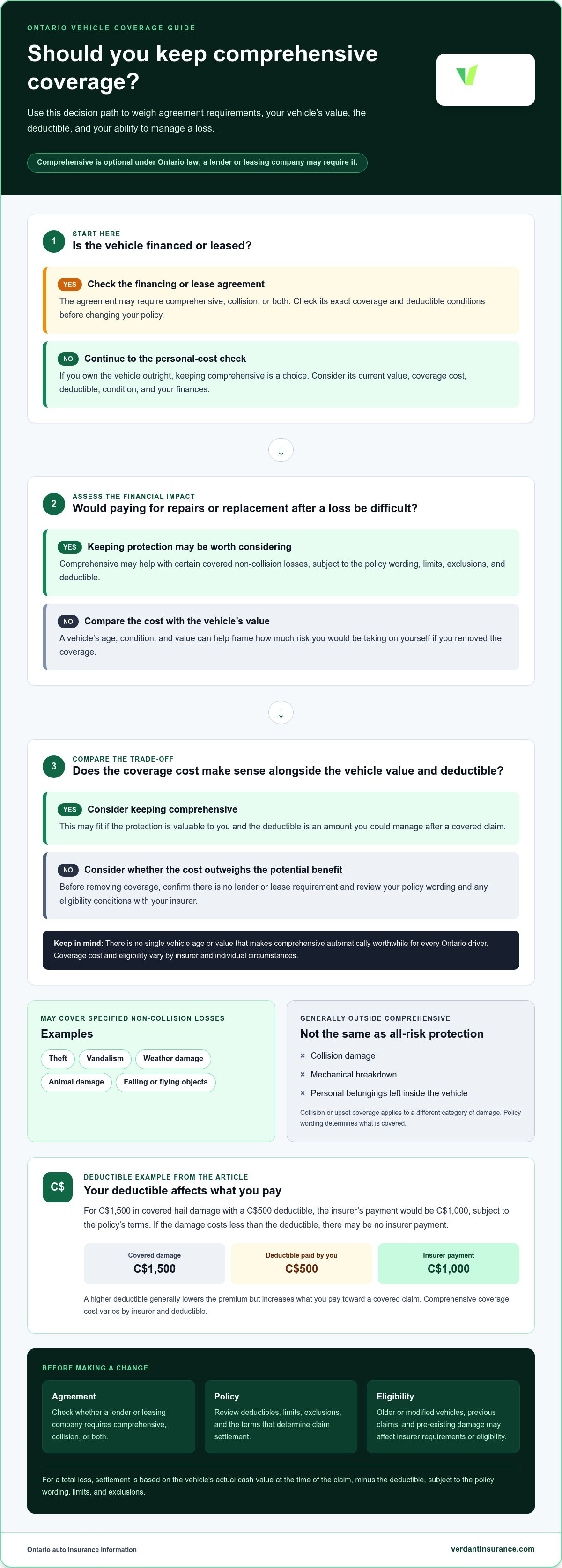
Comprehensive car insurance in Ontario can cover non-collision damage or loss caused by events such as theft, vandalism, weather, animals, and falling or flying objects. If you’re asking what comprehensive car insurance covers in Ontario, the key distinction is that it protects your vehicle against certain risks that collision coverage doesn’t. It isn’t required by Ontario law, though a lender or leasing company may require it.
It’s easy to assume comprehensive coverage protects your car from every kind of damage. It doesn’t: collisions, mechanical breakdowns, and personal belongings left inside the vehicle are generally outside its scope.
This article explains which events comprehensive coverage may protect against, how deductibles affect claims, and how comprehensive differs from collision coverage. You’ll also learn when it may be worth keeping, when the cost may outweigh the potential benefit, and what to review in your policy wording.
Key Takeaways
- Comprehensive coverage isn’t required by Ontario law, but a lender or leasing company may require it.
- It can cover certain non-collision losses, including theft, vandalism, weather damage, animal damage, and falling or flying objects.
- Choosing a deductible involves a trade-off: a higher deductible generally lowers the premium but means paying more out of pocket for a covered claim.
- Compare the vehicle’s value, deductible, and coverage cost when deciding whether to keep comprehensive protection.
- Collision damage, mechanical breakdown, and personal belongings are generally outside comprehensive coverage.
Is Comprehensive coverage mandatory?
No. Comprehensive coverage isn’t required by Ontario law, unlike mandatory third-party liability coverage. Ontario’s minimum liability insurance includes C$200,000 for claims involving bodily injury or property damage caused to others. That basic coverage doesn’t pay to repair damage to your own vehicle. Comprehensive is optional protection you can add to an insurance policy, and it has a separate deductible.
Comprehensive and collision coverage protect against different causes of vehicle damage. Comprehensive generally applies to specified non-collision losses, such as theft, vandalism, or weather damage. Collision or upset coverage applies when your vehicle collides with another object or tips over. Depending on the policy, you can have comprehensive without collision, or collision without comprehensive.
A deductible is the amount you pay toward a covered claim before the insurance company pays the remaining eligible amount. For example, with C$1,500 in covered hail damage and a C$500 deductible, the insurer’s payment would be C$1,000, subject to the policy’s terms. If the damage cost less than the deductible, there may be no insurer payment. The deductible applies per claim as specified in the insurance policy.
Choosing a deductible affects both the premium and your out-of-pocket share. A lower comprehensive deductible generally means a higher premium; a higher deductible generally means a lower premium. Consider whether you could comfortably pay the selected amount after a covered loss. For instance, a C$1,000 deductible means you would pay C$1,000 toward eligible repairs before the insurer pays the balance.
The cost of comprehensive coverage varies by insurer and deductible. It’s an additional cost on an existing policy, not a replacement for mandatory insurance. Compare the premium difference between deductible options with the amount you’d pay after a claim. Your vehicle, selected coverage, policy limits, and exclusions also affect what the insurer may pay.
If a covered claim results in a total loss, the settlement is based on the vehicle’s actual cash value at the time of the claim, minus the deductible. That isn’t automatically the amount you originally paid. For a repairable vehicle, the insurer may settle through repairs or replacement, subject to the policy wording, applicable limits, and exclusions. The deductible still affects your share of the claim.
A comprehensive claim becomes part of your claims history, and premium calculations vary by insurer and individual circumstances. Three comprehensive claims in three years could lead an insurer to withdraw the option of comprehensive coverage. Before filing, compare the estimated covered loss with your deductible and consider the policy’s exclusions. The policy wording determines how a claim is assessed and settled.
Whether comprehensive coverage is mandatory for financed or leased vehicles
Ontario law doesn’t require comprehensive coverage, but a lender or leasing company will likely require comprehensive and/or collision coverage as part of a vehicle financing or lease agreement. This requirement protects the vehicle that secures the loan or lease. Review the agreement’s exact terms before purchasing or changing your insurance policy. If you’ve paid off the loan, you can choose whether to keep comprehensive coverage.
For a financed vehicle, the lender has a financial interest in its condition until the loan is repaid. A lease agreement also sets conditions for the vehicle during the lease term. If the vehicle is stolen or damaged by weather, for example, comprehensive coverage may help address a covered loss. Collision coverage addresses a different category of damage. Since a lender may require one or both, don’t assume comprehensive alone meets the agreement’s insurance conditions.
Once you own the vehicle outright, weigh its value against your ability to pay for repairs or replacement after an unexpected loss. A newer vehicle with substantial value may be harder to replace out of pocket than an older vehicle with limited market value. Consider the premium, deductible, vehicle age, and condition together. The decision isn’t just about whether theft or weather damage is possible, but also about how much financial loss you could manage yourself.
Insurer rules can affect whether an older or modified vehicle qualifies. Some insurers may restrict comprehensive coverage for vehicles over 15 years old. An appraisal completed within the previous 12 months may affect eligibility. These are not universal cut-offs: vehicle condition, aftermarket modifications, previous comprehensive claims, and pre-existing damage can also influence eligibility or requirements. An insurer may restrict coverage or set additional conditions for an older vehicle.
Before changing coverage on a financed or leased vehicle, compare the policy requirements with the agreement. Check whether it calls for comprehensive, collision, or both, and note any deductible conditions. For a vehicle you own outright, compare the coverage cost with its current value and the amount you could pay after a loss. A heavily modified car or one with existing damage may have different eligibility considerations from an unmodified vehicle in good condition.
There’s no single age or value that makes comprehensive coverage automatically worthwhile for every Ontario driver. The vehicle’s condition and value, your finances, and insurer eligibility all matter. For a leased vehicle, the lease terms remain central; for a paid-off vehicle, the choice is optional. Review the agreement and policy wording together before removing protection, especially if the vehicle has aftermarket changes or a history of damage.
When comprehensive coverage may not be worth the cost
Comprehensive coverage is optional for a vehicle owned outright, so compare its premium with the protection it provides. A car worth less than around C$2,000 may not justify the cost of this coverage. That doesn’t make the answer automatic: the deductible, the vehicle’s condition, and your ability to handle replacement expenses also matter.
Use a simple comparison before deciding. Start with the vehicle’s current value, subtract the deductible, then compare the remaining amount with the cost of a six-month policy. This gives you an idea of the maximum potential benefit for a total loss, before considering exclusions or claim circumstances. If the vehicle’s value is close to the deductible, a covered claim could pay little after the deductible is subtracted.
For example, imagine an older car valued at C$2,000 with a C$1,000 deductible. A total-loss settlement based on actual cash value would leave at most C$1,000 before other policy terms apply. If the premium for six months takes a substantial share of that possible payment, paying for coverage may not fit your budget priorities. The calculation should use the vehicle’s actual value, not its original purchase price.
Coverage may still be worthwhile if replacing the vehicle would cause serious financial strain. A newer vehicle, limited savings, or dependence on your car for daily travel can change the decision. Comprehensive coverage can address risks such as theft, vandalism, and certain weather damage, while collision insurance applies to collision or upset losses. Liability coverage protects against covered claims involving harm or damage to others, not repairs to your own vehicle.
Consider the loss you’d have to fund yourself. If an unexpected theft left you unable to replace your car, the premium may be an acceptable expense. If you could pay for a replacement without disrupting essential bills, optional coverage may feel less valuable. The decision also differs from choosing collision insurance, which protects against a different set of vehicle damage risks.
Premiums depend on your circumstances, and the insurer, vehicle, selected deductible, and coverage details affect the cost provided in a quote. Compare the premium with the deductible and the vehicle’s value, then consider whether you could manage the remaining expenses after a loss. Don’t base your decision on liability coverage or the chance of an accident alone: comprehensive coverage addresses specific non-collision events.
Review the policy wording before removing coverage. Limits, exclusions, vehicle condition, and claim settlement terms shape the protection available. A low-value vehicle with a high deductible presents a different calculation from a newer car that would be difficult to replace. Reassess when the vehicle’s value or your finances change, rather than assuming the same choice will always suit you.
Exclusions, including mechanical breakdown and personal belongings
Comprehensive coverage protects against specific non-collision losses, not every problem involving a vehicle. In Ontario, collision or upset damage falls under collision coverage, not comprehensive. If a driver hits another vehicle or object, the cause of damage matters when the insurer assesses the claim. The policy wording, limits, deductible, and exclusions determine the final coverage.
Mechanical breakdown and ordinary wear and tear are generally excluded. For example, if an engine fails because a part wears out, comprehensive coverage typically won’t pay to repair or replace it. The same applies to gradual deterioration, rather than sudden damage caused by a covered peril. A separate warranty or maintenance plan is different from auto insurance and has its own terms.
Personal property inside the car is another common point of confusion. If a thief takes a laptop, phone, or bag from the vehicle, comprehensive auto coverage usually addresses damage to or theft of the insured vehicle, not those belongings. Stolen personal items usually fall under home or tenant insurance. The property policy’s terms determine whether the item and circumstances qualify.
There’s also an important theft exclusion. Comprehensive coverage excludes theft of the insured vehicle by someone who lives with the insured, or by an employee who drives, uses, services, or repairs it. For example, a vehicle taken by a household member may not be treated like a theft by a stranger. The relationship and circumstances matter under the policy wording.
Use a simple cause-and-item check when reviewing a loss:
- Vehicle damage: Identify what caused it, such as vandalism, theft, or a collision.
- Personal belongings: List the stolen or damaged items separately from vehicle parts.
- Mechanical issue: Distinguish sudden external damage from a failed or worn component.
- Policy terms: Review the applicable coverage, limits, deductible, and exclusions.
Repairs don’t necessarily include upgrades. If an insurer settles a covered vehicle claim through repair or replacement, the aim is to restore the car to its pre-damage condition. If repairs add improvements beyond that condition, the vehicle owner is responsible for those costs. For example, replacing a damaged standard part with a higher-grade upgrade may leave the added expense with the owner.
Carrying paying passengers can affect coverage, too. A standard Canadian auto policy excludes coverage when the vehicle carries paying passengers. If you use your car for ridesharing, treat that use as a separate insurance issue rather than assuming personal-use coverage applies. In each example, the key questions are what was damaged, what caused the loss, and whether the policy excludes it.
Comprehensive insurance coverage for weather, theft, animals, and falling or flying objects
In Ontario, comprehensive coverage may pay for certain non-collision vehicle losses, including theft, vandalism, weather, animal damage, and falling or flying objects. Windshield damage may also qualify, depending on the cause and the policy’s wording, limits, deductible, and exclusions.
Weather and Animal Damage
Comprehensive coverage may protect a vehicle from certain weather-related damage and damage caused by an animal. For example, hail can dent a car, while hitting a deer may damage its front end. These events differ from a collision with another vehicle or object, so collision coverage may not apply. The cause of damage helps determine which coverage may respond.
A storm can cause more than hail damage: a falling tree branch, for instance, may strike a parked vehicle. Comprehensive coverage can apply to vehicle losses from weather and falling objects, subject to the policy terms. If hail dents a car, the deductible affects the amount payable. Compare the repair estimate with the deductible before deciding whether to make a claim.
Theft and Falling or Flying Objects
Comprehensive coverage may pay for a vehicle stolen by someone outside the policy’s excluded relationships, or for damage caused by vandalism, falling objects, and flying debris. A branch dropping onto a parked car or debris striking it shows how an object can cause damage without a collision. The policy wording determines whether a specific event qualifies.
Theft and collision are separate risks. Collision coverage doesn’t cover theft of the insured vehicle, while comprehensive may address theft and resulting vehicle loss. If vandals break into a garage and damage a car, comprehensive coverage may apply to the vehicle damage. Keep details of the event and damage together when reporting a loss. The insurer assesses the claim under the policy’s limits, exclusions, and deductible.
Windshield and Glass Damage
Comprehensive coverage may cover windshield or other glass damage in Ontario when it results from an insured event, such as flying debris. It doesn’t automatically cover every crack or chip: the cause and policy wording matter. For example, glass struck by a flying object may be treated differently from damage connected to a collision.
Before arranging repairs, review your policy for the applicable deductible and claim requirements. A small chip may cost less to repair than the deductible, while a larger break may call for a different repair decision. Any insurer settlement remains subject to coverage terms, limits, and exclusions. This distinction helps drivers understand what their auto insurance protects and which costs may remain theirs.
Verdant Insurance: Auto Insurance
Verdant Insurance can help Ontario drivers explore auto insurance options, including whether comprehensive coverage fits their vehicle and financial priorities. A conversation with a broker can help you consider the risks you want covered, your deductible, and how the policy wording applies to your situation. Coverage, eligibility, and pricing vary by insurer and individual circumstances, so review the terms before choosing or changing coverage.
If you’re weighing comprehensive protection against its cost, or need to review your auto insurance options, contact Verdant Insurance to discuss your needs.
Make Your Next Coverage Decision With Confidence
Understanding what comprehensive car insurance covers in Ontario gives you a clearer basis for reviewing your policy. Before making a change, consider how you use your vehicle and whether your coverage still reflects your priorities. Note the factors behind your decision so you can revisit it if your circumstances change.
If you’d like help reviewing your options, Verdant Insurance is available to discuss your questions.
A considered choice today can make your next policy review more straightforward.
Frequently Asked Questions
What is Comprehensive Car Insurance?
Comprehensive car insurance is an optional part of an auto policy for specified losses to the insured vehicle. For what comprehensive car insurance covers in Ontario, the policy wording is the practical reference: the policy summary directs readers to section 7 for full details of vehicle loss and damage coverage. Review that section to understand how listed perils, exclusions, limits, and claim settlement terms apply to your vehicle.
What damage is excluded from comprehensive coverage in Ontario?
Coverage depends on the cause of loss and the peril listed in the policy. Specified perils coverage, for example, is narrower than comprehensive coverage and doesn’t include vandalism or flying objects. This distinction matters when comparing policy types or reviewing a proposed change. Check the coverage name and wording, rather than assuming every non-collision loss is included under a policy described as vehicle damage coverage.
Does comprehensive insurance cover theft, vandalism, fire, hail, and falling objects in Ontario?
Comprehensive coverage can include theft, vandalism, hail damage, and losses from falling or flying objects, subject to policy terms. Don’t assume fire is covered simply because a policy is called comprehensive: the wording and exclusions determine whether a particular fire loss qualifies. The same named peril can involve different circumstances, so describe what happened accurately when reporting a claim and rely on the policy’s covered-peril terms.
Is comprehensive car insurance mandatory in Ontario, or is it optional?
Comprehensive coverage is optional under Ontario law. This distinction is useful when reviewing a policy renewal: removing optional coverage changes protection for the vehicle, but doesn’t remove other required auto insurance. Before making a change, review the policy summary and any financing or lease agreement. If you own the vehicle outright, the decision depends on your willingness to pay for a qualifying vehicle loss yourself.
What comprehensive insurance deductibles and limits are common in Ontario?
A universal comprehensive limit doesn’t apply to every policy. Review section 7 of the policy for vehicle loss and damage terms, including limits and exclusions. The deductible is only one part of the claim calculation; the settlement terms also affect the amount payable.
How much does comprehensive car insurance cost in Ontario?
There isn’t one fixed Ontario price for comprehensive coverage. The premium reflects factors such as the vehicle, location, use, driving record, claims history, selected coverage, deductible, and insurer-specific rating factors. These details are considered together, so two drivers with similar vehicles can receive different quotes. Compare the coverage and deductible in each quote, not just the total premium, to understand what the policy provides.
Do Ontario lenders or leasing companies require comprehensive coverage?
A lender or leasing company will likely require comprehensive and/or collision coverage, but the agreement sets the specific condition. For a car with a loan, the insurance policy will usually include a loss payee clause, making the lender a beneficiary for a claim involving vehicle loss or damage. Consider both the agreement and policy wording before changing coverage or cancelling the policy.


