

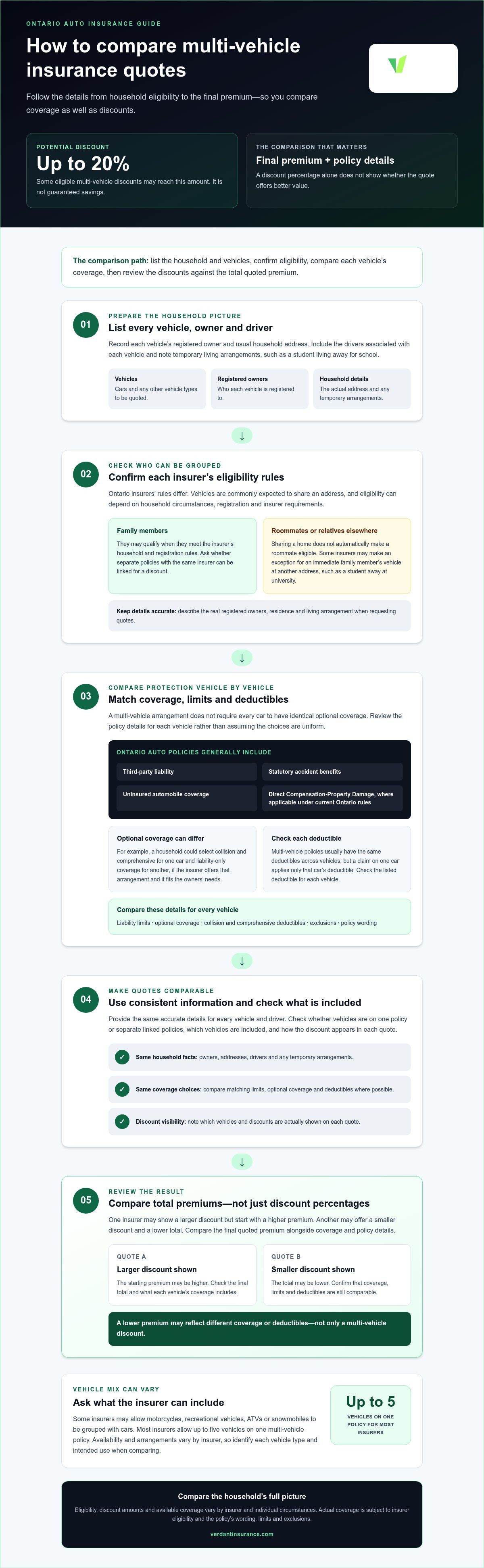
A multi-vehicle insurance discount in Ontario may reach 20% when two or more eligible vehicles are insured together. Insurers commonly expect the vehicles to share an address, though eligibility can vary. A discount is only part of the comparison: the vehicles’ coverage, drivers and policy details also affect the total cost.
It makes sense to look for one straightforward arrangement for a household’s cars, but a lower quoted premium doesn’t automatically mean better value. Comparing options side by side shows how a multi-vehicle insurance discount in Ontario applies and whether the coverage still fits each vehicle.
This guide explains who may be included, how coverage can differ between cars, and what to compare when reviewing quotes. It also covers when family members with separate policies at the same insurer may qualify for a discount, helping you assess the options with greater confidence.
Key Takeaways
- Compare the total cost and policy details side by side, not just the advertised discount.
- Match each vehicle’s coverage to its needs; one household may not need identical protection for every car.
- Consider how the household’s drivers, vehicle ownership and living arrangements may affect eligibility.
- When family members have separate policies, find out whether linking them with the same insurer could qualify for a discount.
- Reviewing your options with an Ontario insurance broker can help make quote differences easier to understand.
What is Multi-Vehicle or Multi-Car Insurance?
Multi-vehicle or multi-car insurance covers two or more vehicles through one insurer, on one policy or separate policies. Ontario insurers offer these discounts, while eligibility for family members and roommates depends on household, address, registration, and insurer rules.
Discount Eligibility and Savings
A multi-vehicle discount reduces eligible auto insurance premiums when vehicles are insured together. Some discounts may reach 20%, but that figure isn’t a guaranteed reduction or a promise of savings. The actual premium depends on the vehicles, drivers, coverage, and insurer’s rating rules.
Compare the final quoted premiums, not just the discount percentage. One insurer might show a larger discount but start with a higher premium; another might offer a smaller discount and a lower total. Ask how the discount applies across the household’s vehicles and whether it changes when a vehicle or driver is added.
“Multi-car” and “multi-vehicle” are often interchangeable terms. Insurers may use different labels, so compare what each quote includes rather than relying on the discount’s name.
Household and Vehicle Requirements
Many insurers require vehicles on a multi-vehicle policy to be registered at the same address. Eligibility may depend on whether the vehicles are registered to the same person or to spouses living at that address. When comparing options, provide accurate details about registered owners and the household’s residence.
Family members may qualify if they meet the insurer’s household and registration rules. Roommates aren’t automatically eligible just because they share a home; the insurer’s criteria determine whether their vehicles can be grouped. Some insurers may allow an immediate family member’s vehicle at another address, such as a child’s car while away at university.
Before comparing quotes, list each vehicle’s registered owner and usual household address. Note any temporary living arrangement, such as a student living away for school. Insurers often associate drivers and vehicles with one primary residence, while some make exceptions for students temporarily living elsewhere. These details help determine whether the vehicles can be treated as one household group.
Insurer Discount Availability
Ontario auto insurers offer multi-vehicle discounts, but eligibility rules and discount amounts differ. Available options depend on each household’s circumstances. Compare quotes from insurers that can assess your vehicle ownership, household, and driver details, then review the discount alongside the total premium.
When comparing quotes, provide consistent information for every vehicle and driver. Check which vehicles are included, whether the policies are combined or linked, and how the discount appears in each quote. This makes it easier to compare like with like, rather than mistaking different coverage choices for a better discount.
Keep registration and address details consistent with the household’s actual situation. If a relative lives elsewhere or a roommate owns a vehicle, describe the arrangement accurately. A clear comparison shows which insurers consider the vehicles eligible and what the discount means for the household’s overall premium.
Coverage options for multiple vehicles
A multi-vehicle arrangement doesn’t require every car to carry identical optional coverage. Compare the coverage, limits, and deductibles shown for each vehicle, then assess the household’s total premium alongside the protection listed.
Ontario auto policies generally include third-party liability, statutory accident benefits, uninsured automobile coverage, and Direct Compensation-Property Damage where applicable under current Ontario rules. Optional collision and comprehensive coverage can differ between vehicles. For example, a household could select both for one car and liability-only coverage for another, if the insurer offers that arrangement and it fits the owners’ needs.
Review each vehicle’s policy details rather than assuming a shared policy makes the choices uniform. Compare liability limits, optional coverage, deductibles, exclusions, and policy wording across quotes. If one quote has a different deductible or coverage selection, its lower premium may reflect that change rather than a multi-vehicle discount. Actual coverage depends on insurer eligibility and the policy’s terms, limits, and exclusions.
Vehicle type can affect what an insurer will include. Some insurers may allow motorcycles, recreational vehicles, ATVs, or snowmobiles to be grouped with cars. Most insurers allow up to five vehicles on one multi-vehicle policy. These arrangements vary by insurer, so list each vehicle type and intended use clearly when preparing a quote for multiple cars or other vehicles.
Deductibles also deserve a close look. Multi-vehicle policies usually have the same deductibles for all vehicles, but a claim on one car applies only that car’s deductible. Check the deductible beside each vehicle’s collision and comprehensive selections. This helps you understand what the quoted premium includes without assuming a claim on one vehicle automatically changes another vehicle’s deductible.
Can a multi-vehicle discount be combined with other Ontario auto insurance discounts? Discount eligibility and application vary by insurer. Compare the discounts actually listed on each quote, and consider the total premium and coverage rather than assuming separate discounts will all apply together.
Use this checklist to compare the policy details:
- Match liability limits and optional coverage for each vehicle.
- Compare collision and comprehensive deductibles individually.
- Review exclusions and policy wording alongside the premium.
- Check which vehicles and discounts appear in each quote.
A side-by-side review makes it easier to see whether the vehicle policy suits the household’s needs, not just whether its total looks lower. In Canada, the exact coverage and eligibility depend on insurer rules and each policy’s wording.
Including spouses, partners, and teenage drivers
Adding family drivers changes the quote, just as adding vehicles does. For an Ontario household with two cars, list each regular driver and the vehicle they use most. Insurers assess details such as vehicle type, number of drivers, driving history, and driving habits. A multi-vehicle discount and the household’s total premium depend on more than the car count.
Spouses who live at the same address may be eligible to insure vehicles together, subject to the insurer’s rules. Disclose partners and other household members accurately, including how often they drive each vehicle. A secondary driver’s experience and record can affect the quote, even if that person doesn’t own the car. Include every regular driver in the information provided for a quote.
A multi-vehicle discount relates to insuring multiple vehicles together. A multi-driver discount, where offered, relates to the drivers listed or insured. They aren’t the same, and eligibility for one doesn’t establish eligibility for the other. Compare quotes using the same drivers and vehicle details, then review the total premium and how each discount is applied.
Teenage drivers can have a noticeable effect on a family’s premium. Insurers generally consider drivers under 25 to be higher risk. The result depends on the teen’s driving history, the vehicle, and the insurer’s rating approach. For example, a family adding a newly licensed teen should compare quotes with that driver disclosed, rather than comparing a household quote that leaves them out.
Claims also matter, but a claim involving one vehicle doesn’t necessarily affect every car in the household. In a two-car household, a claim may increase the cost for the car involved without affecting a spouse’s vehicle if that spouse has a clean driving record. The claim circumstances and insurer’s rating rules still shape the result.
Before comparing, prepare one consistent driver-and-vehicle list:
- Record each vehicle’s owner and the household members who drive it.
- Include spouses, partners, teens, and regular secondary drivers.
- Note each driver’s history and the vehicle they use most.
- Compare the premium and discounts using the same household details.
This approach helps families see whether a combined arrangement suits their drivers, not just their cars. It also clarifies why adding a teen or recording a claim changes one quote more than another.
Possible discount when family members have separate policies with the same insurer
Ontario families may qualify for a multi-vehicle discount even when relatives have separate auto insurance policies with one insurer. Depending on the insurer’s eligibility rules, the arrangement may involve one policy or linked policies.
One Policy or Linked Policies
A single policy groups multiple vehicles under one insurance contract. Linked policies keep separate contracts while connecting eligible family vehicles with the same insurer. In Ontario, vehicles generally need to share one policy for a multi-vehicle discount, though separate parent and teenager policies with one insurer may also qualify. Compare the structure, discount, and total premium together.
For example, a parent and teenager may have separate policies with the same company. Ask how the insurer applies any household discount across both policies rather than assuming it appears on each one. Compare each policy’s drivers, vehicles, coverage, and renewal details before assessing the combined cost.
Managing Multiple Policies
Linked policies can keep each vehicle’s insurance separate while allowing a family to manage them through one insurer. This may suit households where different family members own their cars or prefer separate contracts. Check whether each policy has its own renewal date, payment arrangement, and documents, since linked policies don’t necessarily share identical terms.
A shared renewal date can make annual reviews easier, while separate dates may require more tracking. Keep a household list of policy numbers, vehicle details, named drivers, and renewal dates. This simple record helps families review their insurance together without confusing one person’s coverage with another’s.
What happens to a multi-vehicle discount if one vehicle or driver is removed from the policy? The insurer recalculates eligibility and the premium using the remaining vehicles and drivers. Removing a vehicle or driver can change the discount or the price of the remaining policies.
Report changes such as selling a car, moving a vehicle to another address, or a teenager getting their own policy. The insurer needs updated details to assess the household arrangement. If a family member leaves a shared policy, compare how the change affects both the departing driver’s insurance and the household’s remaining premiums.
Review the arrangement at renewal, especially after a vehicle or driver change. Compare the new terms with the previous policy, noting any change in discount, total premium, coverage, and renewal date. A quoted 20% discount, for example, matters only in context: the premium before the discount and the protection included also shape the value.
Use a consistent checklist when comparing one-policy and linked-policy options:
- List each family member, vehicle owner, and regular driver.
- Record each policy’s renewal date and coverage selections.
- Compare the total premium across all related policies.
- Review how removing a vehicle or driver changes the arrangement.
This comparison shows whether a single policy or linked policies better fit the family’s ownership and management preferences.
Comparing multi-vehicle insurance quotes
A useful quote comparison holds household details and coverage choices constant. That helps show whether a lower total reflects a discount, different protection, or both.
Start with one accurate record of every vehicle, owner, and regular driver. Include each vehicle’s make, model, use, and registered address, plus each driver’s history and driving details. Give the same information to every insurer or broker. If one quote lists a household driver and another doesn’t, their prices aren’t a fair comparison.
Next, compare the coverage line by line. Check liability limits, collision and comprehensive selections, deductibles, and any listed exclusions. Ontario policies generally include third-party liability, statutory accident benefits, uninsured automobile coverage, and Direct Compensation-Property Damage where applicable under current Ontario rules. Compare these components alongside optional coverage, since different selections can change both premium and protection.
Then review how the multi-vehicle discount appears. Compare the total premium for all vehicles, not just the discount label or percentage. The listed discount alone doesn’t show the full cost. Review the premium before and after discounts, where shown, and note any other discounts included in the quote. Ask how each total accounts for the household’s vehicles and drivers.
- Confirm every vehicle and regular driver is listed accurately.
- Match coverage limits, optional coverage, and deductibles.
- Compare each vehicle’s premium and the household’s combined total.
- Record discounts separately from coverage changes or other rating details.
- Review policy wording, exclusions, and the quoted policy term.
A broker can help explain differences between quotes and identify which details drive them. For example, if one insurer’s total is lower, check whether it reflects a different deductible, a missing driver, or different coverage. Ontario drivers can explore Verdant’s auto insurance options while weighing the price against the protection listed for each vehicle.
Keep the comparison for your next renewal. If a driver, vehicle, or driving pattern changes, update the details before reviewing quotes again. This gives you a consistent starting point and helps show what changed between quotes.
Verdant Insurance: Auto Insurance
Verdant Insurance helps Ontario drivers explore auto insurance options for households with multiple vehicles. If you’re comparing one policy with separate family policies, review how each quote lists drivers, vehicles, coverage, and any applicable discount.
Verdant is an insurance brokerage that can help you review quote details and understand differences between available options. Bring your vehicle and driver information, along with your preferred coverage selections, to make the comparison more useful. Premiums and eligibility vary by insurer and individual circumstances, so review policy terms as well as total cost.
When you’re ready to discuss your household’s auto insurance options, request a free quote from Verdant Insurance.
Make your next comparison count
Use your next renewal or household change as a chance to reassess what you need from each policy. A multi-vehicle insurance discount in Ontario is one consideration, but the right choice should also reflect your household’s drivers, vehicles, and preferred coverage. Keep details consistent across quotes for a clear, informed comparison.
For Ontario drivers who want help reviewing their options, Verdant Insurance offers Auto Insurance, Homeowner Insurance, and Business Insurance. An insurance broker can help you understand quote differences and consider how auto coverage fits your circumstances. Pricing, eligibility, and policy terms vary by insurer and individual situation.
A thoughtful comparison puts you in a better position to choose confidently. Request a free quote from Verdant Insurance when you’re ready.
Frequently Asked Questions
Can You Insure Two Cars on One Policy in Canada?
Yes, an insurer can place two cars on one policy when its rules and the ownership details fit. Before accepting, review the policy documents to ensure both vehicles appear correctly, with the right owners and listed drivers. If one car is replaced, tell the insurer and review the revised documents to keep the vehicle details accurate. Keep policy information accessible to everyone who manages the cars.
What Should You Consider Before Combining Vehicles?
Consider how the arrangement will work for each vehicle owner, not only its quoted premium. Decide who will manage policy changes, receive renewal documents, and coordinate payments. Then compare quotes using the same coverage assumptions and review each policy’s renewal timing. If a family member expects to sell or replace a car soon, account for that planned change when weighing the convenience of a shared arrangement.
What Vehicles Can Be Included?
Cars are commonly considered, and some insurers may also include motorcycles, RVs, ATVs, or snowmobiles. Vehicle details matter: describe each vehicle accurately, including its type and use, rather than grouping unlike vehicles under a general label. For a seasonal vehicle, explain how it is used and when it is driven. The insurer’s policy wording determines the available coverage and terms.
What if you have a claim history?
Give complete, accurate answers about each driver’s claims when requesting a quote. To prepare, gather existing policy documents and claim correspondence, then use them to recall which vehicle and driver were involved. Don’t leave out a claim because it involved another car in the household. Consistent details help insurers assess the application and make quotes easier to compare.
What if you have a high risk or a young driver in the household?
Include the driver in the household information and compare options before buying a vehicle. Verdant Insurance recommends getting an insurance quote before buying a car. This lets you consider how the specific vehicle and driver may affect available options before committing to a purchase. Provide accurate driving details, including relevant tickets, accidents, or cancellations, when requesting a quote.
How does a multi-vehicle insurance discount work in Ontario?
An insurer applies a pricing adjustment when a household’s vehicles meet its criteria for a multi-vehicle arrangement. Review the quote to see which vehicles receive the adjustment and how it affects the total premium. A discount label alone doesn’t show the value of the overall arrangement. Compare the final quoted amount and policy details using matching information for every vehicle.
What percentage discount do Ontario insurers offer for insuring multiple vehicles?
Ontario insurers may offer a discount of 10-20% for multiple cars insured under one policy, depending on the insurer. Treat that range as a guide, not as a guaranteed reduction on a household’s premium. The amount and calculation depend on the insurer’s pricing and the situation presented. Compare the quoted totals and the coverage shown, rather than choosing based on a percentage alone.
What are the eligibility requirements for a multi-car insurance discount in Ontario?
Eligibility commonly depends on vehicle registration, household address, ownership, and the insurer’s policy rules. Before requesting quotes, list vehicle owners and where each vehicle is registered. If a family member is away at university or has a separate policy, include that detail rather than assuming the vehicle qualifies or is excluded. Insurers assess these arrangements under their own eligibility criteria.


