

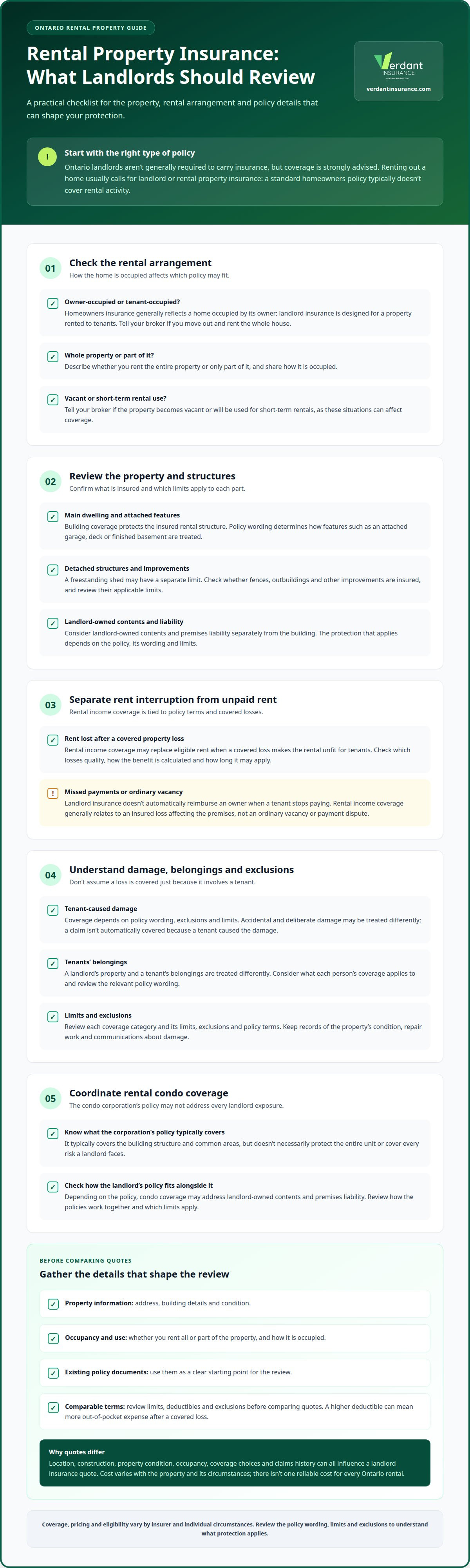
Renting out a home usually calls for landlord or rental property insurance, rather than a standard homeowners policy, which typically doesn’t cover rental activity. Landlords aren’t generally required to carry insurance, but coverage is strongly advised. When arranging home insurance for a rental property in Ontario, consider whether the property is a house or a condo and how it will be rented.
A condo corporation’s insurance doesn’t necessarily protect the entire unit or cover every risk a landlord faces. Its policy typically covers the building structure and common areas. Rental property insurance may protect the landlord’s property and, depending on the policy, lost rental income; condo coverage may also address landlord-owned contents and premises liability. This article explains what to review, including tenant damage, common exclusions, and the differences involved in insuring a rental condo.
Key Takeaways
- Renting out a home usually calls for rental dwelling coverage rather than a standard homeowners policy, even though landlords aren’t typically required to carry insurance.
- Review how the policy handles the building, landlord-owned contents, liability, and potential loss of rental income so you understand what protection applies.
- Tenant-caused damage and tenants’ belongings are treated differently; the policy wording and each person’s coverage matter.
- For a rental condo, consider how the landlord’s policy works alongside the condo corporation’s coverage for the building structure and common areas.
- Tell your broker if the property becomes vacant or will be used for short-term rentals, as these situations can affect coverage.
Do I need homeowners insurance if I have a rental property?
Ontario landlords aren’t generally required to carry insurance, but coverage is strongly advised. Renting out a home usually calls for landlord or rental property insurance, since a standard homeowners policy typically doesn’t cover rental activity.
Landlord and Homeowners Insurance
Homeowners insurance generally reflects a home occupied by its owner, while landlord insurance is designed for a property rented to tenants. The distinction matters because renting changes how the property is used and which risks the policy needs to address. If you move out and rent the whole house, for example, tell your broker rather than assuming your existing policy still fits.
Landlord insurance costs vary with the property and its circumstances. The quote depends on factors such as location, construction, condition, use, and selected coverage. There isn’t one reliable cost that applies to every Ontario rental. A detached house and a rented condo can have different insurance needs, so compare prices only when the policies, limits, and deductibles are also comparable.
Getting a Landlord Insurance Quote
A landlord insurance quote is based on details about the rental property and the protection you’re considering. Accurate information helps the quote reflect the property’s actual use, whether it’s a house, condo, or another residential rental. Before requesting a quote, gather the address, building details, occupancy information, and any existing policy documents to give the broker a clear starting point.
- Describe whether you rent the entire property or part of it.
- Share relevant details about the building, its condition, and how it’s occupied.
- Review the proposed limits, deductibles, and exclusions before comparing quotes.
To manage premiums, focus on choices that affect the quote rather than assuming a discount applies. Compare deductibles and coverage limits, and discuss whether property improvements or risk-reduction measures are relevant to the insurer’s assessment. A higher deductible can mean more out-of-pocket expense after a covered loss, so weigh that trade-off against the quoted premium. Keep property details accurate: a lower figure isn’t useful if it reflects the wrong occupancy or building information.
Location, construction, property condition, occupancy, coverage choices, and claims history can all influence a landlord insurance quote. These details help distinguish one rental’s risk profile from another’s. Tell your broker about changes in how the home is used, including a shift from owner-occupied to tenant-occupied, so the insurance reflects the rental arrangement.
Rental property and landlord insurance coverage
Landlord insurance may protect an owner’s rental property and cover lost rental income after a covered loss, subject to the policy terms. Home insurance for rental property in Ontario should reflect the building, how it’s used, and the protection selected.
Building and Structure Coverage
Building coverage protects the insured rental structure and may include attached features and, where covered, detached structures. An attached garage and a separate shed, for example, may be treated differently. Review the policy’s description of insured property and its limits, especially if the rental has a deck, fence, or outbuilding.
Consider the main dwelling, attached structures, and detached structures separately. Policy wording determines how features such as a finished basement or attached garage are treated, while a freestanding shed may have a separate limit. Check which structures are insured and the applicable limits. Don’t assume every improvement or outbuilding has the same protection.
Rental Income Replacement
Rental income coverage may replace eligible rent lost when a covered property loss makes the rental unfit for tenants. Repairs can interrupt rent even when the tenant didn’t cause the damage. The policy explains which losses qualify, how the benefit is calculated, and how long it may apply.
For example, if an insured event makes a unit uninhabitable during repairs, this coverage may help address the resulting income interruption. It doesn’t mean every vacancy or missed payment qualifies. Compare the policy terms with the rental agreement and expected rent, and note any stated limit or time period.
Tenant Damage and Unpaid Rent
Coverage for tenant-caused damage depends on the policy’s wording, exclusions, and limits. Accidental and deliberate damage, for instance, may be treated differently. A claim isn’t automatically covered just because a tenant caused the damage. Keep records of the property’s condition, repair work, and communications about any damage.
Unpaid rent differs from rent lost after covered physical damage. Landlord insurance doesn’t automatically reimburse an owner when a tenant stops paying. Rental income coverage generally relates to an insured loss affecting the premises, not an ordinary vacancy or payment dispute.
Choosing Coverage Limits
Coverage limits set the maximum payable amount for covered losses, subject to policy terms. Home insurance for rental property in Ontario should account for the building and the risks you want to insure. Consider the dwelling’s features, attached and detached structures, landlord-owned contents, liability exposure, and possible rent interruption.
Review each category separately instead of treating one overall limit as protection for everything. Check whether the building limit accounts for the main structure and whether separate limits apply to contents, detached structures, liability, or lost rent. Revisit these details after renovations, changes to the rental, or changes in expected rent.
Tenant-caused damage and exclusions
Tenant-caused damage isn’t automatically covered just because a renter caused it. The policy wording, limits, and exclusions determine whether damage to the landlord’s property is insured. Tenants’ belongings are separate: landlord insurance doesn’t cover their possessions, so tenants need their own tenant insurance for valuables such as furniture, clothing, and electronics.
How tenant-caused property damage is treated
Damage to the rental itself and damage to a tenant’s belongings are different insurance questions. A tenant’s damaged sofa belongs to the tenant, while a damaged landlord-owned floor is part of the property. The landlord’s policy may respond to some property damage, but coverage depends on its specific terms. Don’t assume accidental and deliberate damage receive identical treatment.
Keep useful records if damage occurs. Dated photographs can show the affected room, appliance, or fixture, while repair invoices document work completed. A move-in condition record and written communications can also help establish what changed during the tenancy. These records don’t guarantee coverage, but they give the insurer clearer information when assessing a reported loss.
Water damage and optional protection
Water losses can arise from different sources, and the policy wording determines which are covered. A leaking pipe inside a rental, for example, isn’t necessarily treated the same as water entering from outside. Some policies offer optional water-damage protection, but covered causes, exclusions, and limits depend on the insurer and policy.
Read water-related terms alongside the building coverage, rather than relying on a general phrase such as “water damage.” Check whether the policy describes the water source, affected property, and any applicable limit or deductible. If a rental has a basement, consider how water-related exclusions or optional protection could affect finished flooring and stored landlord-owned items.
Common exclusions and tenant belongings
A landlord policy doesn’t insure tenants’ personal belongings. If a tenant’s laptop or clothing is damaged, they should look to their own tenant insurance, not the landlord’s building coverage. The lease and the insurance policy serve different purposes: one sets rental terms, while the other describes insured property and covered losses.
Vacancy can also affect protection. If a tenant leaves and the rental becomes vacant or unoccupied, coverage may change or become limited. That matters if, for example, a water leak goes unnoticed in an empty unit. Tell your broker when occupancy changes, and review the policy’s vacancy wording before assuming the previous protection still applies.
For any reported loss, note the date, affected areas, and apparent cause, then keep photographs and repair records together. A clear account helps distinguish tenant property from landlord property and supports an accurate assessment under the policy’s exclusions and limits.
Common insurance exclusions
An exclusion describes a loss or property the policy doesn’t insure. For an Ontario rental, read exclusions alongside coverage limits, not as a separate checklist. A policy may describe protection for the building while excluding a tenant’s furniture, for example. The wording shows which property and circumstances the coverage applies to.
Start with the insured property section, then compare each exclusion with the rental’s actual use. A furnished unit, for example, may contain landlord-owned appliances and a tenant’s personal electronics. Those belongings don’t automatically fall under the same coverage. Check how the policy distinguishes the building, the landlord’s contents, and tenants’ property.
Water-related wording deserves a careful read because coverage can depend on how the damage occurred. A leak inside a unit and water entering from another source may be treated differently. Look for the policy’s stated causes, exclusions, limits, and any optional water-damage protection. The phrase “water damage” alone doesn’t explain which events are insured.
- Property: Identify whether the clause concerns the dwelling, landlord-owned contents, or tenant belongings.
- Cause: Note the event or source of damage described in the wording.
- Limit: Compare any stated maximum with the property or loss involved.
- Use: Match the policy description to how the unit is rented and occupied.
Occupancy changes can affect protection. If a tenant moves out and the property becomes vacant or unoccupied, coverage may change or become limited. That can matter if a leak develops while nobody is in the unit. Tell your broker when occupancy changes, and review the policy’s vacancy terms for any applicable conditions.
Short-term rentals need particular attention. A property used for frequent, short stays may require specialized insurance rather than long-term rental property coverage. A unit rented for brief visits, for example, has a different use pattern from a home leased to a long-term tenant. Describe the arrangement accurately so the insurance reflects how the property operates.
Keep a copy of the policy and mark clauses referring to vacancy, water, tenant property, or rental use. If a section uses a defined term, read its definition in the same document. A single word can narrow how an exclusion applies, while a separate limit can cap payment even when the loss is covered.
Review the wording again after a change in use, furnishings, or occupancy. A long-term lease becoming short-term stays, for instance, changes the rental arrangement described to the insurer. Clear records of the lease type and property contents help connect the policy terms to the actual rental.
Insurance for rental condos
A rental condo needs a different coverage review from a rented house because the condo corporation’s policy typically covers common areas and the building structure. A landlord policy may protect the unit, landlord-owned contents, and premises liability. Houses and duplexes have different building and occupancy arrangements, while short-term rentals may need specialized insurance instead of long-term rental coverage.
For a condo, determine where the corporation’s policy ends and the landlord’s policy begins. Read both policy descriptions and compare the insured property, limits, and exclusions. The corporation may insure the building structure, for example, while the landlord’s policy addresses the unit and the landlord’s personal property there. Don’t assume one policy replaces the other.
Landlord-owned contents matter in a furnished condo. A refrigerator or other item supplied with the rental is different from a tenant’s belongings. The landlord’s insurance may cover landlord-owned contents, while tenants need their own coverage for valuables. List the furnishings and appliances provided with the unit to assess what the landlord’s policy is intended to protect.
Premises liability is another part of a rental condo policy to review. It relates to the landlord’s responsibility for certain injuries or property damage connected with the premises. The policy wording defines covered situations, limits, and exclusions. Compare those terms with the unit’s use rather than treating the condo corporation’s building coverage as complete protection for the landlord.
A house, duplex, condo, and short-term rental each present different insurance details. A rented house centres on the dwelling and any structures included in its policy. For a duplex, consider how its units are occupied and insured. A condo involves coordination with the corporation’s policy. Short-term stays may require specialized coverage because they differ from a long-term tenancy.
For a condo, keep the corporation’s insurance information with the landlord policy documents. Note which policy addresses the structure, common areas, unit, landlord-owned contents, and liability. Then identify any gaps or overlapping descriptions to discuss with your broker. This comparison is especially useful after a unit renovation or a change in furnishings.
In a duplex, describe each unit’s rental arrangement accurately, including whether both units are rented or one is owner-occupied. For a short-term rental, describe the actual rental pattern instead of presenting it as a long-term lease. These details help align the insurance with the property’s use and prevent assumptions based only on its building type.
Rental condo protection works best as a coordinated picture: the corporation’s policy, the landlord’s policy, and the tenant’s own insurance each address different interests. Review the policy wording and limits for the unit, contents, and liability together, especially when the condo is furnished or its rental arrangement changes.
Verdant Insurance: Auto Insurance
Verdant Insurance helps Ontario property owners review their home insurance needs and understand how a rental arrangement affects coverage. If you’re preparing to rent out a house or condo, share how the property will be occupied, what belongings you’ll provide, and whether the rental is long-term or short-term. These details help shape a conversation around the property’s actual use.
As an insurance brokerage, Verdant can help you consider your options and the policy details relevant to your situation. Coverage, eligibility, limits, and exclusions vary by insurer and individual circumstances, so review the wording before relying on a policy for a rental property.
Request a free quote from Verdant Insurance to discuss your Ontario rental property coverage.
Make your next rental decision with confidence
As your property plans evolve, keep your insurance discussion aligned with how you use the home. Before renewing, adding furnishings, changing tenants, or switching from a long-term lease to short stays, note what has changed. A clear update helps frame a review of home insurance for a rental property in Ontario around the property’s current use and your priorities.
Verdant Insurance offers Home Insurance, including coverage for rental properties, as well as Auto Insurance and Business Insurance. Verdant’s insurance brokers can help you discuss your property insurance needs and how a rental arrangement fits into that conversation. Coverage and eligibility depend on insurer rules and the specific details of your situation.
Take the next step when you’re ready to discuss your property insurance needs.
A thoughtful review can help you understand the questions to raise about your rental property and take the next step with greater clarity.
Frequently Asked Questions
What is rented dwelling insurance?
Rented dwelling insurance is intended for a residential property the owner rents to tenants. It reflects the property’s rental use, unlike insurance arranged for an owner-occupied home. If you move out and lease a house, for example, describe that change when arranging coverage. The policy wording explains which parts of the building, landlord-owned contents, liability, or rental income are insured.
What insurance is a landlord responsible to have?
Ontario landlords aren’t generally required to have insurance, but they remain responsible for managing risks to their property and rental arrangements. Landlord coverage may address the owner’s building, liability exposure, and lost rental income after a covered loss, depending on the policy terms. It doesn’t insure a tenant’s personal belongings. A tenant’s furniture and the landlord’s supplied appliances, for example, involve different ownership interests.
Can I require my tenants to have tenant insurance?
A landlord can require tenants to obtain tenant insurance through a lease agreement. This can clarify that the tenant’s belongings need separate protection from the landlord’s building coverage. A renter’s clothing, laptop, and furniture, for example, aren’t insured by the landlord’s policy. State the requirement clearly in the lease and distinguish tenant insurance from coverage for the rental property itself.
What type of insurance do landlords need for rental property in Ontario?
Landlords typically need rental property or landlord insurance for a home leased to tenants, rather than relying on a standard owner-occupied home policy. The right arrangement depends on the property and how it’s rented. A long-term lease for a house differs from short-term guest stays, which may require specialized insurance. Describe the actual occupancy and rental pattern when arranging coverage.
How much does rental property insurance cost in Ontario?
There isn’t one price that applies to every Ontario rental. A quote depends on details such as the property’s location, construction, condition, occupancy, selected limits, and coverage options. A condo, detached house, and duplex can have different insurance needs. Compare quotes using matching coverage and deductibles, since a lower premium may reflect different limits or exclusions rather than equivalent protection.
What does Ontario landlord insurance cover, including property damage and liability?
Depending on the policy, landlord insurance may cover the rental building, landlord-owned contents, premises liability, and rental income lost after a covered event. A covered loss that makes a unit unusable could affect both repair costs and rent, for example. The policy’s wording, limits, and exclusions determine how those protections apply. Tenant belongings require separate tenant insurance.
Is landlord insurance required by law in Ontario or by mortgage lenders?
Landlords aren’t generally required to carry insurance, but a mortgage lender’s requirements are separate from Ontario’s general legal position. Review your mortgage agreement for any insurance conditions tied to the loan. A lender may specify insurance obligations for the property securing its mortgage, for example. Those contractual terms don’t change what the landlord’s policy covers, so consider the lender’s requirements alongside the policy wording.
What exclusions and risks should Ontario landlords know about, such as floods, sewer backup, and vacancy?
Flood and sewer-backup protection depend on the policy wording and any applicable optional coverage; don’t assume either event is included or excluded. Review the listed water sources, limits, and deductibles. Vacancy is another key risk: if a rental becomes vacant or unoccupied, coverage may change or become limited. Tell your broker when occupancy changes, especially between tenancies or during extended renovations.


