

A high-value home insurance premium in Ontario depends on rebuilding costs, the home’s features, its contents, location and selected coverage, not just its sale price. The right policy balances protection for the property and valuables with limits and deductibles that suit your needs.
It’s understandable to focus on the premium, but the coverage behind it matters just as much. This guide explains what can affect costs and which policy details to review, including protection for valuables, rebuilding flexibility and additional living expenses. You’ll also find practical ways to manage premiums and compare insurers, helping you make a more informed choice for your Ontario home.
Key Takeaways
- Assess the home’s rebuilding needs, valuable contents and sewer backup protection to spot gaps in your current coverage.
- Review your deductible, home safety measures and policy each year to identify practical ways to manage premiums.
- Understand how replacement cost coverage and repair matching can affect the way damage to a distinctive home is repaired.
- Check what additional living expenses your policy covers if an insured loss makes your home temporarily unlivable.
- Compare insurer options by coverage details, limits and exclusions, then work with an Ontario broker to make sense of the choices.
What Determines the Cost of Home Insurance in Ontario?
A high-value home insurance rate in Ontario reflects rebuilding needs, contents, location and the coverage selected. A policy may cost more than standard home insurance when it includes higher limits or additional features.
Core Dwelling, Contents, and Liability Coverage
Dwelling coverage may protect the insured home against covered physical damage. Contents coverage applies to belongings such as furniture, clothing, electronics and sporting equipment. Personal liability coverage may help with legal costs and medical expenses if someone is injured on your property, or with damage your property causes to a neighbouring home.
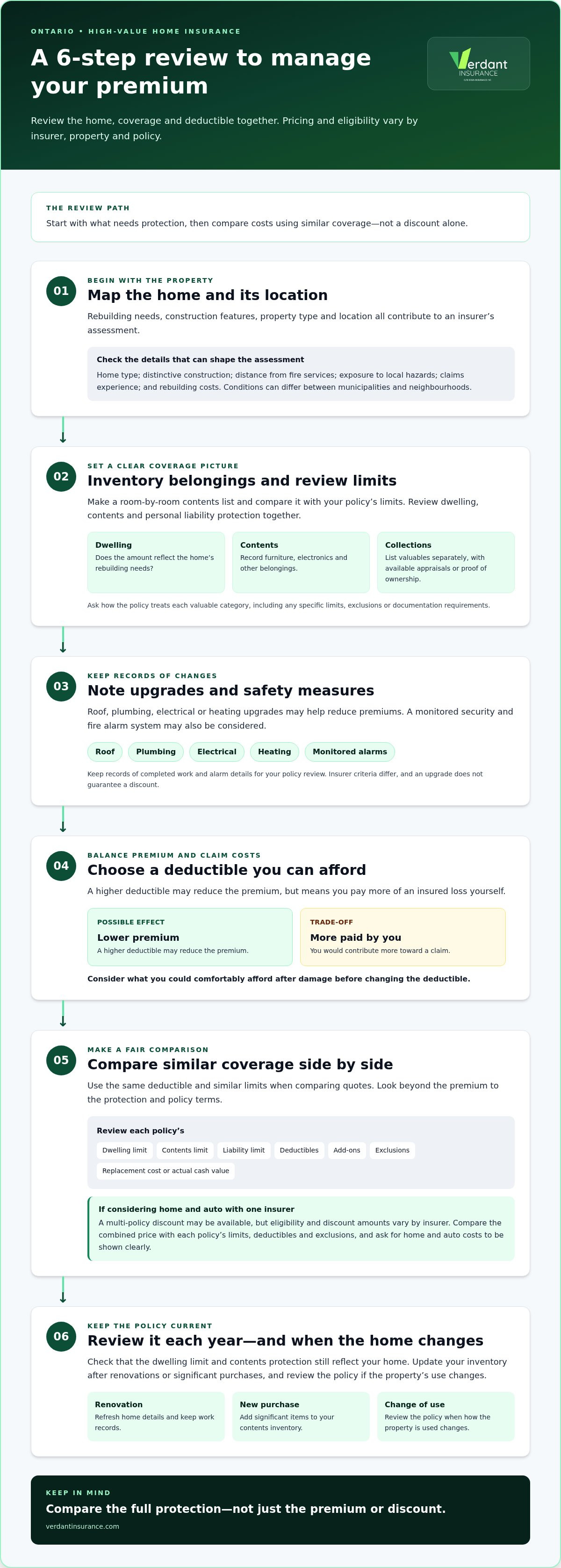
To identify gaps, make a room-by-room inventory and compare it with your policy’s contents limits. Record items such as electronics and furniture, then review the dwelling amount, contents limit and liability limit together. Many Ontario homeowners select liability limits of $1 million or $2 million, but the right amount depends on personal circumstances and policy terms.
Optional Coverage Add-ons
Sewer backup coverage may protect against damage to your home caused by a sewer backup. Check whether the policy includes this protection, what limit and deductible apply, and which exclusions are listed. The policy wording determines how a particular loss is handled, so don’t assume standard home insurance includes sewer backup protection.
Equipment breakdown coverage may protect against sudden or unexpected failures involving appliances, heating and cooling equipment, or home security systems. If you run a business from home, review your policy to understand whether business-related property damage is covered. Placing home and auto insurance with the same insurer may qualify for a multi-policy discount. Eligibility and discount amounts vary by insurer.
Coverage for Valuable Collections
Jewellery, fine art, wine collections, furs and luxury equipment can make contents limits harder to assess. Create an inventory listing each item, its description, purchase details and any available appraisal or proof of ownership. For example, record a jewellery collection separately from everyday household contents.
Ask how the policy treats each category, including any specific limits, exclusions or documentation requirements. High-value coverage may offer protection tailored to collections and distinctive home features, but actual terms depend on the insurer and policy.
Limits, Features, and Policy Comparisons
Compared with standard homeowners insurance, a high-value policy may provide higher limits for the dwelling, liability, collections and expensive equipment. Some policies may also offer cash settlement options or coverage for distinctive home features.
Compare the dwelling limit, contents coverage, liability protection, deductibles and available add-ons side by side. Replacement cost and actual cash value can lead to different outcomes: actual cash value accounts for depreciation, which may leave too little to buy a replacement item. Use your inventory and policy wording to spot gaps before choosing limits or features.
Ways to reduce premiums
Ontario homeowners can review deductibles, safety measures, home systems and coverage choices to manage premiums. Savings depend on the insurer, property and policy, so compare the full coverage rather than focusing on a discount alone.
Start with the deductible, the amount you pay toward an insured claim. A higher deductible may reduce the premium, but it also means paying more of a loss yourself. Consider what you could comfortably afford after damage before changing it. Then compare quotes using the same deductible and similar limits, so you’re making a fair comparison.
Home improvements can affect pricing. Upgrading a roof, plumbing, electrical or heating system may help reduce premiums, while a monitored security and fire alarm system may also be considered. Keep records of completed work and alarm details for your policy review. Insurer criteria differ, so an upgrade doesn’t guarantee a discount.
Use your annual review to check whether the dwelling limit and contents protection still reflect your home. Update your inventory after renovations or significant purchases, and review the policy when the property’s use changes. A claims-free history can affect pricing. Don’t assume an old policy still fits a home that has changed.
Location affects premiums across Ontario municipalities. Toronto, London and Kingston may have different local risk patterns, and conditions can vary between neighbourhoods. Distance from fire services, exposure to local hazards, claims experience and rebuilding costs can all influence an insurer’s assessment. City averages don’t predict an individual homeowner’s rate, especially for a high-value home with distinctive construction or contents.
Home type matters too. Detached homes, townhouses, condos and rental properties have different structures, responsibilities and coverage needs. A detached home’s rebuilding features differ from a condo unit’s interior and contents needs. Compare quotes for the correct property type, and check which protections apply to the building, belongings and liability.
Placing home and auto insurance with the same insurer may qualify for a multi-policy discount. Compare the combined price alongside each policy’s limits, deductibles and exclusions. A lower total is useful only if the protection still fits. Ask for the home and auto costs to be shown clearly so you can compare them with separate coverage.
After a high-value home insurance claim in Ontario, document the damage, keep receipts for related expenses and follow the insurer’s instructions. Once the claim is underway, review repairs or policy changes that could affect future coverage and premiums.
Property damage and rebuilding flexibility
Rebuilding flexibility depends on the home’s replacement needs, construction features and policy terms. To assess the property, renovations and contents, gather current home details, renovation records and a room-by-room contents list.
Rebuild Value and Property Characteristics
Replacement cost reflects the expenses to rebuild exterior and interior structural elements, including high-end built-in appliances. It differs from market value, which reflects the property’s sale value. A Markham example priced rebuilding a 1,900-square-foot detached home at C$1 million. That figure shows why floor area alone can’t capture every home’s rebuilding requirements.
Document custom finishes, distinctive materials and renovations because those features affect what a rebuild involves. Keep invoices, plans and photographs together, then review them against the dwelling limit. Many high-value policies include replacement cost coverage automatically, but policy wording sets the actual terms.
Weather, Rebuilding Costs, and Appraisals
Severe weather can cause widespread property damage and increase demand for rebuilding resources. Insured damage in Canada reached C$8.55 billion in 2024, the costliest year on record in the market facts. Average Canadian catastrophic losses rose to C$2.3 billion per year between 2011 and 2020. These figures underline why rebuilding protection deserves close attention.
To prepare a valuation file, update renovation details and photograph significant features. For contents, record valuable items and retain available purchase or appraisal documents. These materials help describe what needs replacing and support a clear discussion of limits with an insurance broker.
Ask how the policy handles a partial loss, such as damage to one section of a distinctive floor or wall. Partial-loss coverage may match repair materials to the originals or replace undamaged materials for consistency. This matters when a small repair would otherwise leave visibly different finishes beside the damaged area.
Compare home insurance quotes by checking the dwelling limit, replacement-cost wording and treatment of partial repairs. A lower premium may reflect different limits or policy features, so compare equivalent protection. Check how the policy addresses damage from fire, smoke, wind, falling objects or other insured causes. Covered causes and exclusions depend on the policy wording.
After an addition or major renovation, update the property details used for insurance. A newly finished space or built-in appliance, for example, changes what a future rebuild may involve. Keep renovation records with the home’s construction details, then review the policy limits and repair provisions. This helps keep coverage aligned with the property’s current features.
Additional living expenses
If a covered loss makes your home unlivable or forces an evacuation, some high-value home policies cover additional living expenses. This protection may help with the cost of living elsewhere while your home is repaired or rebuilt. The policy wording explains what triggers coverage, which expenses qualify and what limits apply. Review those details before a claim, not while arranging temporary accommodation.
Find the additional living expenses section in your policy. Note its coverage limit, any time restrictions and how the insurer defines an unlivable home or evacuation. Then check which expenses qualify and what records are required for a claim. Don’t assume every cost during displacement is covered. The wording, limits and exclusions determine how coverage responds.
Consider a specific scenario: a covered fire damages the kitchen and makes the home unlivable during repairs. Additional living expenses coverage may apply while the household is displaced. A separate evacuation may also qualify under some policies. These examples show why it’s useful to understand the trigger, covered period and applicable limits before an emergency.
Set up a simple system for claim records before you need one. Save receipts for expenses incurred after displacement, note each purchase’s date and purpose, and keep insurer correspondence together. For example, label a receipt with the repair event and the household member who paid. Clear records can help explain how expenses relate to the covered loss during a claim review.
Consider your household’s practical needs when reviewing coverage. A family with pets, accessibility requirements or a home office may need to think about how displacement affects daily routines. These details don’t determine what insurance will pay, but they can help you identify questions about policy wording and limits. Review relevant exclusions alongside the coverage description.
Rebuilding flexibility and temporary living protection address different needs. Replacement coverage concerns repairing or rebuilding insured property; additional living expenses cover displacement after a qualifying loss. During a policy review, compare these sections separately. Check that the dwelling limit addresses rebuilding and that the additional living expenses section sets out its own triggers and limits.
After an incident, follow the insurer’s claims instructions and keep organized expense records. Ask how to submit receipts, what information supports each expense and how the applicable limit is tracked. Record the claim reference and dates of key conversations. These steps create a practical timeline from the covered loss and any evacuation or displacement through repairs and the return home.
Include additional living expenses in your annual Ontario home insurance review. Read the current wording, note the limits and identify questions about what happens if a covered loss makes the home unlivable. Understanding this section helps households plan for temporary arrangements without assuming every expense will be reimbursed.
Ontario insurers offering high-value home insurance
Ontario homeowners can compare insurers offering coverage for higher-value properties, but policy details matter more than a company name alone. To request a quote, prepare property and renovation details, an inventory of valuable contents, and the limits you want to compare. Then review eligibility, policy wording, exclusions and deductibles.
Insurers differ in how they assess distinctive homes, collections and rebuilding requirements. Some policies may include higher dwelling or liability limits, replacement-cost features, equipment breakdown protection or additional living expenses. These features aren’t identical across home insurance policies. Compare the actual wording rather than assuming policies with similar labels provide the same protection.
Each insurance company sets its own underwriting approach and terms. A home’s age, construction, location, renovations and contents can affect available options. An insurance broker can present the property information and compare quotes from insurers they work with. The broker arranges insurance; the insurer issues the policy and sets its terms.
Use a consistent comparison process:
- Describe the dwelling, including construction, distinctive finishes and completed renovations.
- Prepare an inventory of jewellery, art, wine and other valuable contents.
- Compare dwelling and contents limits, liability, deductibles and replacement-cost wording.
- Review exclusions and optional protections, including sewer backup and additional living expenses.
- Ask how each insurer handles partial losses and distinctive repair materials.
These steps make quotes easier to compare. A lower premium, for example, may come with a different deductible, contents limit or optional coverage. Check each difference before weighing the price. Ask how collections are treated, whether an appraisal or other records can support their valuation, and how the policy addresses a claim involving a custom feature.
Availability and eligibility in Ontario depend on the insurer and property details. A home with extensive renovations or specialized materials may be assessed differently from a more typical dwelling. When comparing options, focus on policies available for your Ontario property and the insurer’s terms for that specific risk.
Before choosing, summarize each quote’s limits, exclusions, deductibles and included features in one comparison sheet. Mark any differences that could affect rebuilding, temporary living arrangements or valuables. This makes it easier to see whether policies offer similar protection instead of comparing premiums without context.
For an Ontario home, compare coverage and wording, not just insurer names. An insurance broker can help organize property details and explain quote differences; you can discuss Ontario home coverage with a broker.
Verdant Insurance: Auto Insurance
Verdant Insurance can help Ontario homeowners review their homeowner insurance needs and consider coverage options for a high-value property. As an insurance brokerage, Verdant can help you understand policy differences and compare options available through insurers it works with. Coverage, limits and eligibility depend on the insurer, policy wording and individual circumstances.
If you’re also reviewing your household’s auto insurance, discuss how home and auto coverage could be considered together. A broker can help organize property details, renovation information and valuable-contents records for a more informed coverage discussion. Request a free quote from Verdant Insurance to discuss your Ontario home insurance needs.
Make your next coverage review count
Use your next policy review to record the home’s details and the decisions that matter to your household. Note changes to the property, new valuables and questions about how specific policy terms apply. This gives you a practical starting point for discussing high-value home insurance in Ontario without assuming what a policy includes.
Verdant Insurance offers Homeowner Insurance, Auto Insurance and Business Insurance. Based in Markham and serving eligible clients throughout Ontario, Verdant can help you discuss home coverage and related insurance needs. Coverage, eligibility and policy terms vary by insurer and individual circumstances, so review the wording and limits that apply to your situation.
For help reviewing your Ontario coverage, contact Verdant Insurance.
A careful review can make a complex decision more manageable. Clarify what you need, then take the next step with greater confidence.
Frequently Asked Questions
What is not included in a typical home insurance policy?
Some losses fall outside home insurance or belong under another policy. For example, damage to or theft of a vehicle parked in a driveway is generally handled through auto insurance, not home insurance. Keep vehicle documentation and home claim records separate after an incident. For property damage, check the policy’s covered-loss wording to determine which section applies, rather than assuming every event at home belongs under one policy.
What qualifies as a high-value home?
Insurers assess whether a property fits high-value coverage based on its insurance characteristics, not simply the owner’s lifestyle or the home’s sale price. Before requesting a quote, gather renovation records, architectural details and appraisals for significant belongings. This gives the insurer a clearer picture of the property. Its underwriting criteria and policy terms determine how it classifies the home and which options it can offer.
What's behind home insurance premium increases in 2026?
Ontario home insurance premiums rose 4.2% year over year in Q2 2026. For a homeowner reviewing a renewal, compare the new policy documents with the previous term and note changes to premium, deductibles, limits and included protections. This helps distinguish a price change from a change in coverage. A province-wide trend does not explain an individual renewal by itself.
What counts as a high-value home in Ontario for insurance purposes?
In Ontario, insurers classify homes according to the property and its insurance profile, rather than using one universal label across all policies. A home with unusual architecture or valuable contents may need a more detailed assessment. Prepare clear descriptions and supporting records, then review how the insurer reflects those features in the quote and policy wording. Classification and available terms vary by insurer.
Which Ontario insurers offer high-value home insurance?
Insurer offerings and eligibility differ, and suitable options depend on the property. Rather than relying on a generic list of company names, compare available quotes for the same home and coverage needs. Check which insurer is named on each quote, then compare its wording, limits, exclusions and deductibles. An Ontario insurance broker can explain these differences and which markets are available for your property.
How much does high-value home insurance cost in Ontario?
The premium comes from an individual quote, not a single province-wide price for every high-value property. Provide consistent property details and coverage requests when seeking quotes, then compare the resulting policy documents. Review the payment schedule and any listed fees alongside the premium. The insurer’s quote reflects the information provided and the options selected for that home.
What factors affect high-value home insurance premiums in Ontario?
Insurers consider the property’s construction and insurance profile alongside the selected coverage. To make a quote request more accurate, gather the home’s age, construction details, renovation dates and information about protective devices. Note any prior claims and changes in occupancy. Consistent details help insurers assess the same risk profile and make it easier to understand why quotes may differ.
What exclusions and coverage limits should Ontario homeowners watch for?
Pay close attention to how a policy values items after a loss. Actual cash value accounts for depreciation, which may leave too little to buy a replacement item. Review whether limits apply to individual categories or specific belongings, and check how the deductible affects a claim. Keep the relevant policy pages with your inventory so you can find these terms quickly during a review.


